
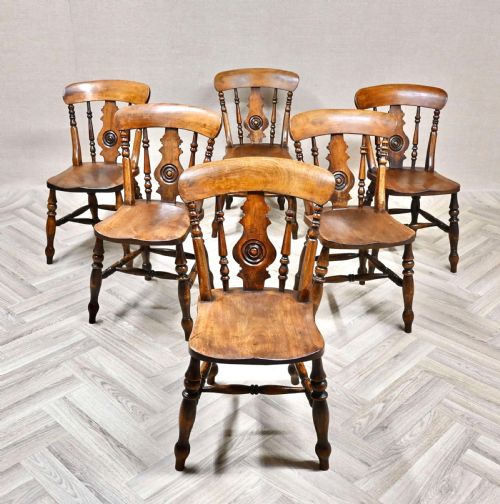
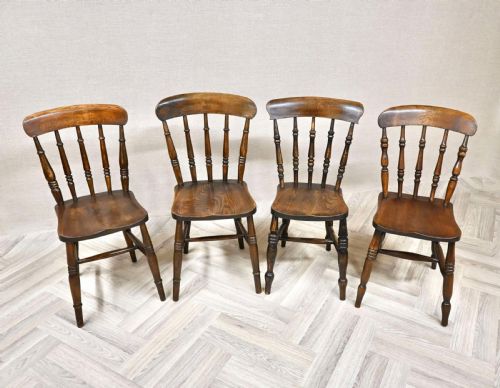

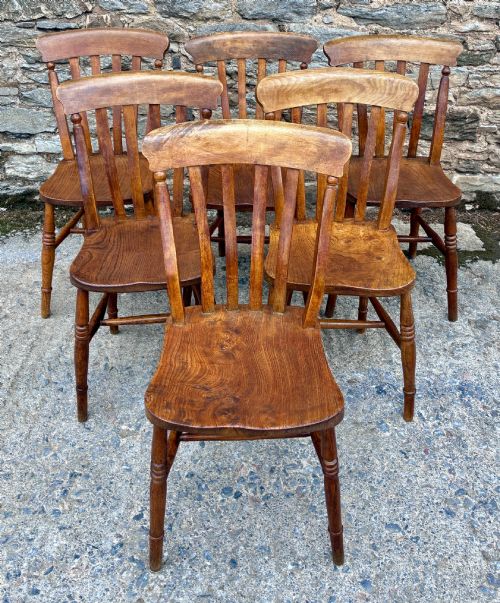
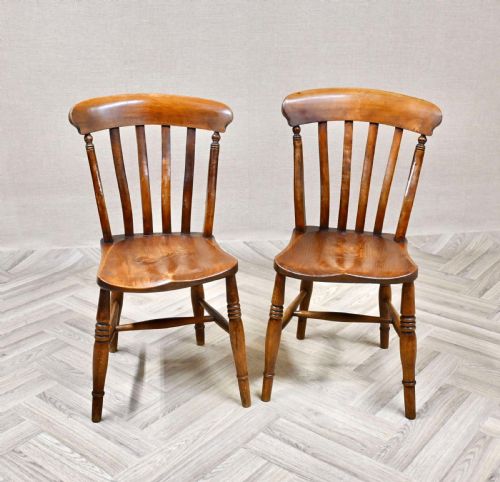
Rustic Wood Kitchen Chairs
These rustic wood kitchen chairs bring solid vernacular build and honest farmhouse character to daily seating.
Rustic Wood Kitchen Chairs
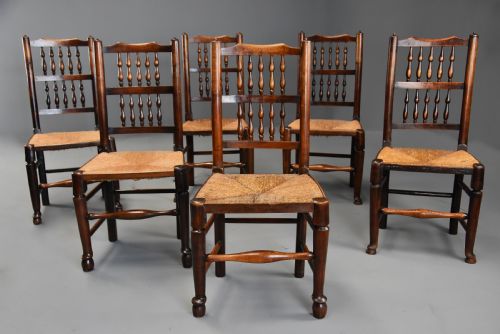
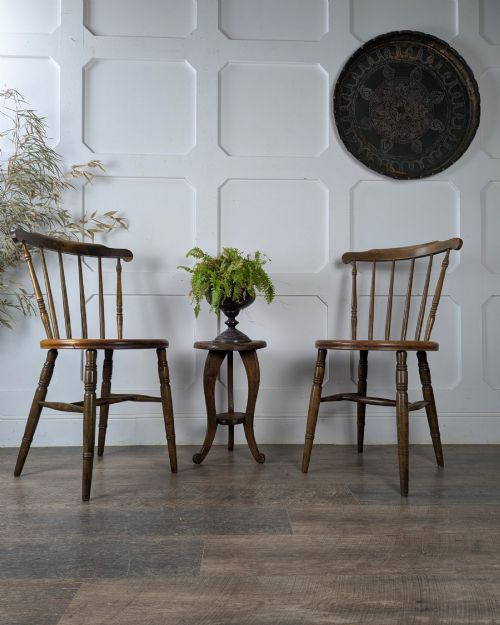
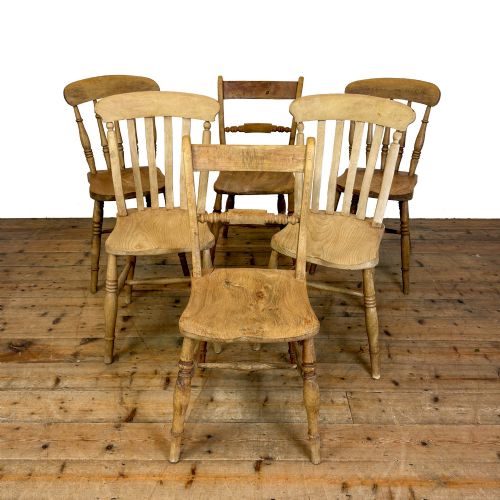
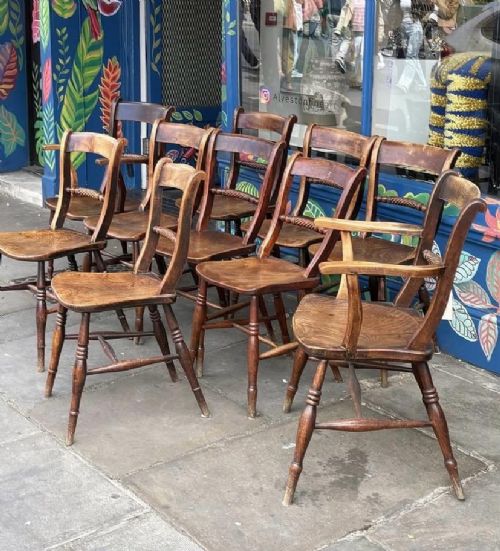
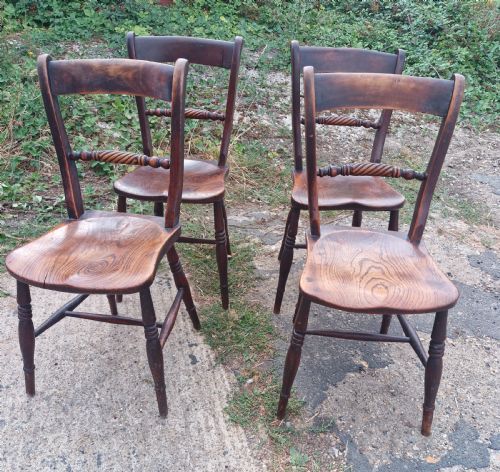
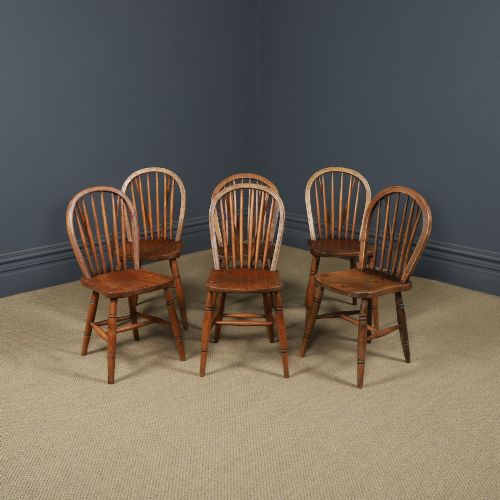
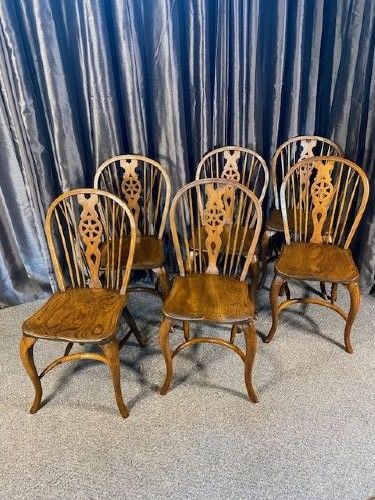
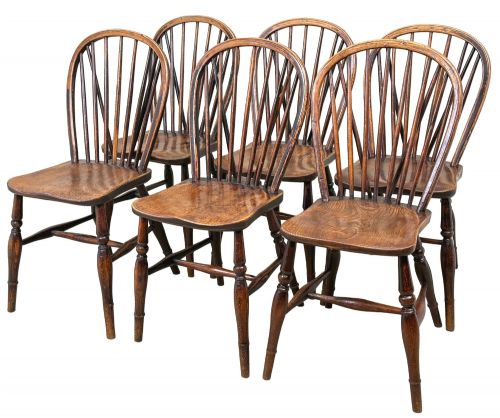
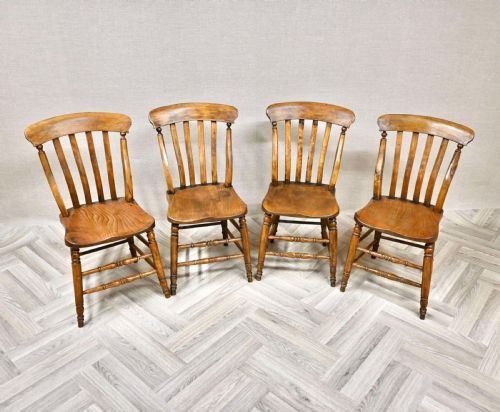
When you search for rustic wood kitchen chairs, you encounter practical vernacular seating shaped by nineteenth-century and early twentieth-century rural makers. These pieces span sturdy ladderbacks, stick backs, and various Windsor forms designed for everyday domestic use around the farmhouse table.
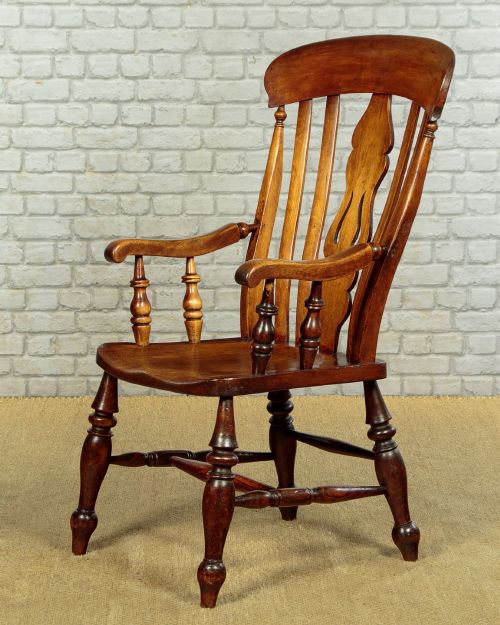
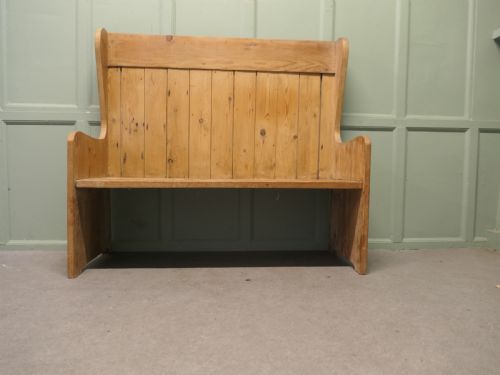
The varieties most often met on this page include sets and matched groups originating from Victorian and Edwardian periods. Dining chairs, carvers, and high-backed armchairs appear alongside benches and settles, reflecting the utilitarian needs of traditional country kitchens.
Materials and construction
Traditional makers built these chairs using native hardwoods such as ash, elm, beech, and oak, selecting each timber for specific structural demands. Tough elm provided resilient, split-resistant seats, while flexible ash and beech formed steam-bent bows, spindles, and legs.
Joinery relied on traditional methods including wedged tenons, mortise joints, and double stretchers to ensure lasting rigidity under heavy daily use. Rush seating also appears on ladderback frames, woven tightly to create durable platforms.
Listings feature nineteenth-century and early twentieth-century designs constructed from elm, ash, beech, oak, and rush.
Judging quality and integrity
Quality rests in the balance of timber selection, matching grain patterns across a set, and the preservation of original structural components. Superior examples maintain tight joints and honest surface wear without excessive rebuilding or replaced parts.
Subtle details such as deeply saddled elm seats, well-turned spindles, and retained patination distinguish finer country workshop production from simpler utility pieces.
The Rustic Wood Kitchen Chairs Glossary
- Lathe back
- A chair back incorporating flat, vertical wooden slats shaped on a lathe. These slats offer supportive contact for the sitter.
- Saddle seat
- A wooden chair seat hollowed out into a shallow curve for comfort. Makers shaped these thick elm slabs using adzes and scorps.
- Double stretcher
- Parallel rungs connecting the legs of a chair for added stability. They appear near the base on traditional farmhouse seating.
- Rush seat
- A seating surface woven from dried marsh reeds over a wooden frame. This technique creates a textured, supportive platform found on ladderback chairs.
Rustic Wood Kitchen Chairs: Frequently Asked Questions
How do I care for antique wood chairs?
Clean wooden surfaces gently with a dry cloth and occasionally nourish dry timber with appropriate natural wax.
Avoid placing these chairs near direct heat sources or in damp environments to prevent wood movement and joint failure.
Are these chairs comfortable for daily dining?
Many country chairs feature ergonomically shaped wooden saddle seats designed for hours of sitting around the hearth or table.
High-backed armchairs and supportive spindle backs offer considerable back support during long meals.
How can I date a country kitchen chair?
Examine the tool marks, construction methods, and timber patination to gauge age and workshop origin.
Turned components, fixing methods, and overall design proportions often point toward specific periods between the early nineteenth and early twentieth centuries.
Can I mix different styles of kitchen chairs?
Harlequin sets and matched groups of vernacular seating historically evolved through generations of domestic use.
Combining similar wood tones and regional forms creates an authentic, layered interior rather than a uniform suite.