


Rustic Tripod Side Table
A rustic tripod side table offers straightforward utility with three-legged stability, suiting plain interiors through unpretentious timber construction.
Rustic Tripod Side Table
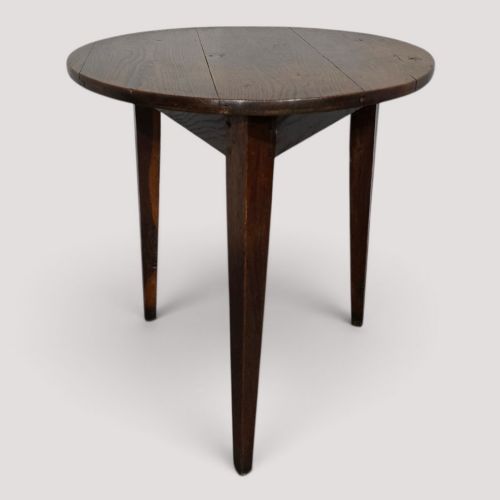
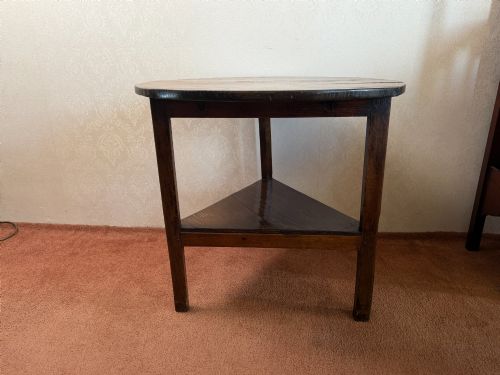
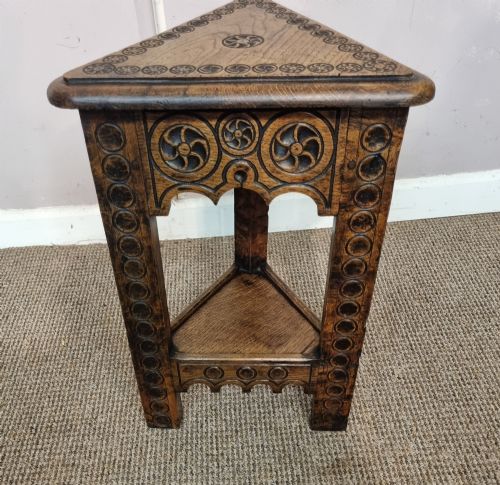
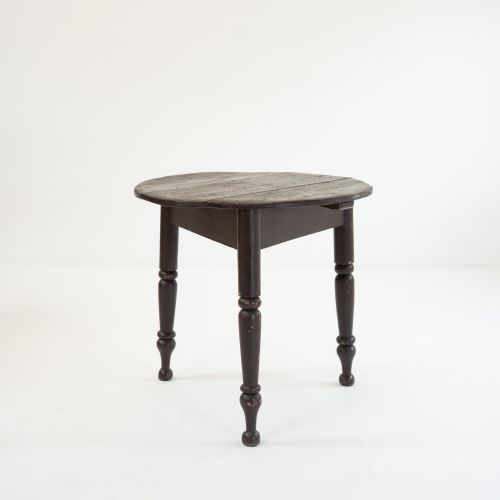
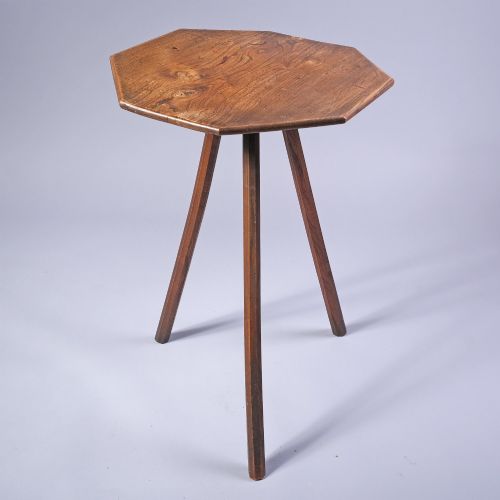
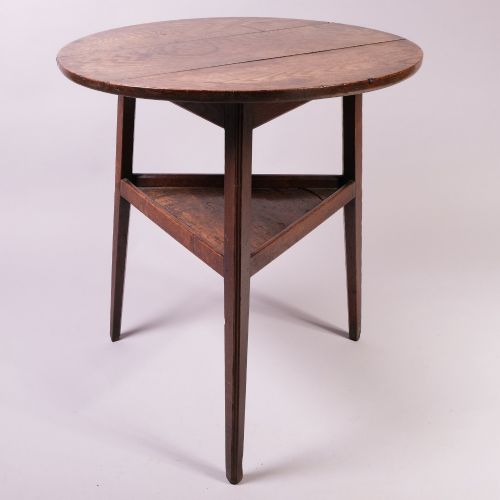
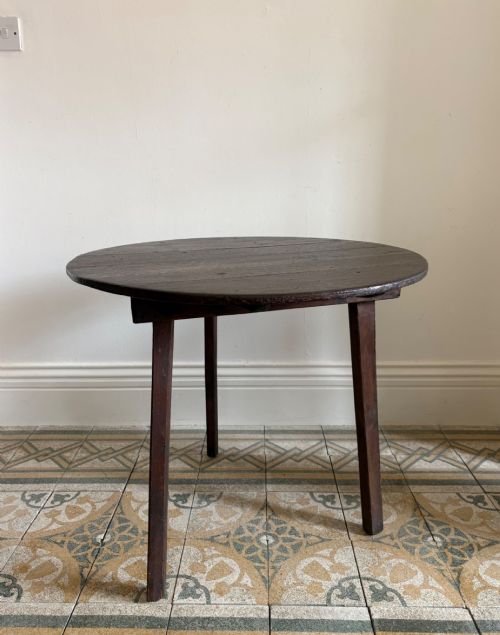
A rustic tripod side table typically appears as a traditional cricket table with a circular top resting on three splayed legs. These utilitarian pieces emerge from 18th century and 19th century vernacular traditions across English and French rural workshops.
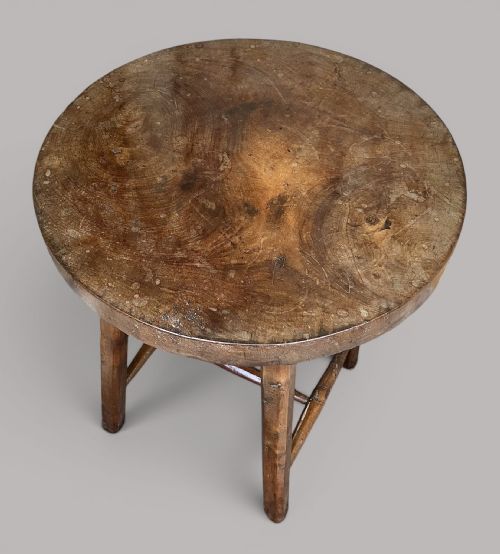
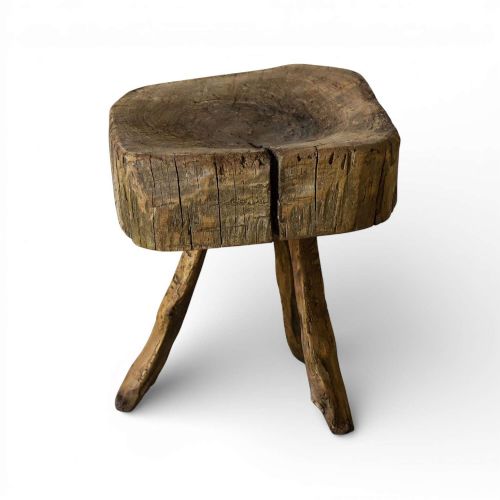
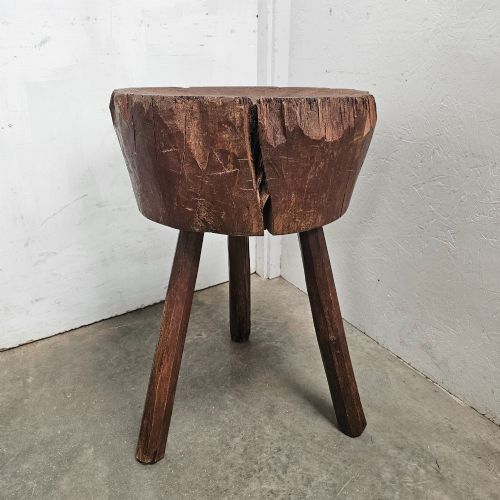
Makers constructed these sturdy items primarily for functional use in farmhouse kitchens and domestic spaces. Examples on this page include frequent variants such as oak plank tops, painted pine bases, and occasional chopping blocks.
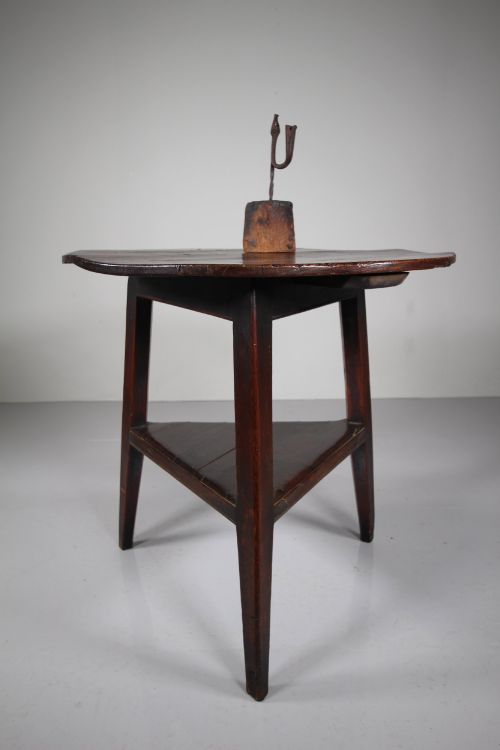
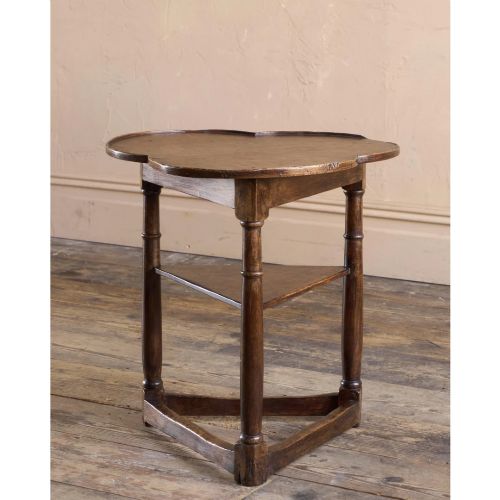
The regional styles span Georgian vernacular, French provincial, and English country aesthetics. Buyers encounter simple three-legged designs alongside circular occasional tables and triangular lift top formats.
Materials and construction methods
Carpenters utilised native timbers including oak, elm, ash, and pine for durability and local availability. Plank tops connect directly to three turned or gnarled legs driven into sockets or secured beneath.
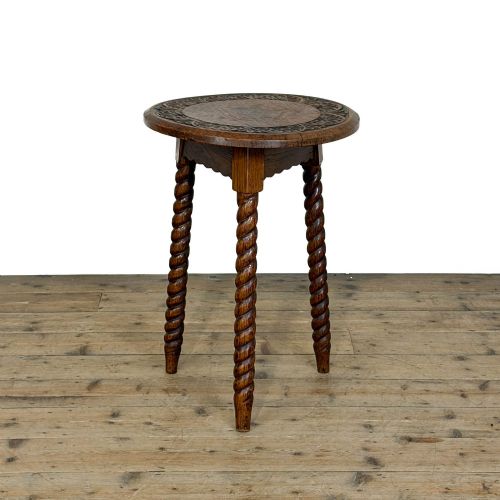
Surface treatments range from natural waxed grain and exposed timber to original paint finishes. Some examples incorporate iron reinforcement, bobbin turned elements, and carved details.
Listings feature periods from the 18th century and 19th century alongside 1930s designs in oak, pine, elm, and ash.
Assessing quality in rustic tripod side tables
Quality depends upon the integrity of the original timber and the honesty of the construction. Superior examples retain their original surface patination, untouched legs, and unwarped plank tops.
The relationship between the top and the three supporting legs dictates structural firmness. Refinished surfaces or replaced components alter the historical character compared to untouched vernacular pieces.
The Rustic Tripod Side Table Glossary
- Cricket table
- A small wooden table featuring a circular top supported by three legs. These tripod tables provide stability on uneven farmhouse floors.
- Vernacular
- Everyday objects built by local craftspeople for practical use rather than following formal academic design rules. This style defines much of the rural furniture found here.
- Chopping block
- A heavy timber block utilised for food preparation in kitchens. These utilitarian forms share the robust three-legged or pedestal format of side tables.
- Trefoil top
- A tabletop shape resembling a three-lobed clover leaf. This uncommon variant appears on select 18th century examples.
- Pad foot
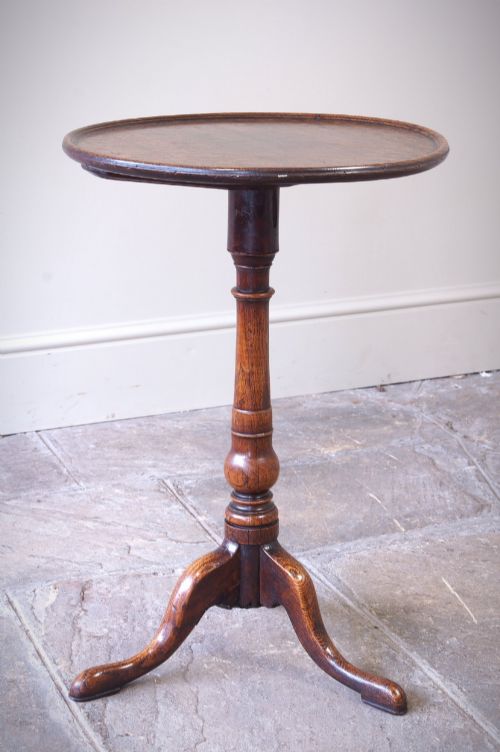
- A rounded foot at the base of a cabriole or straight leg that rests flat on the floor. This detail surfaces on Georgian vernacular pieces.
Rustic Tripod Side Table: Frequently Asked Questions
What is a cricket table?
A cricket table is a traditional three-legged side table with a circular wooden top. The tripod design ensures the table remains steady on flagstone or uneven floors.
Craftspeople built these pieces from native timbers like oak and pine for daily household chores.
How do I use a tripod table today?
These tables function well as bedside stands, lamp tables, or corner display surfaces in living areas. Their compact footprint fits narrow spaces where four-legged furniture proves too bulky.
Placing them away from direct heat sources protects the old timber from drying and splitting.
Are these tables French or English?
The listings include both English country pieces and French provincial examples. English workshops frequently used oak and ash, while French makers often utilised elm and beech.
Regional turning styles and choice of paint finishes help distinguish the origin of each piece.
How do I care for antique pine?
Antique pine and oak require minimal maintenance beyond dusting with a dry cloth. Avoid commercial polishes that build up sticky residues on aged wood.
Applying a traditional beeswax occasionally preserves the dry patination of the timber.