

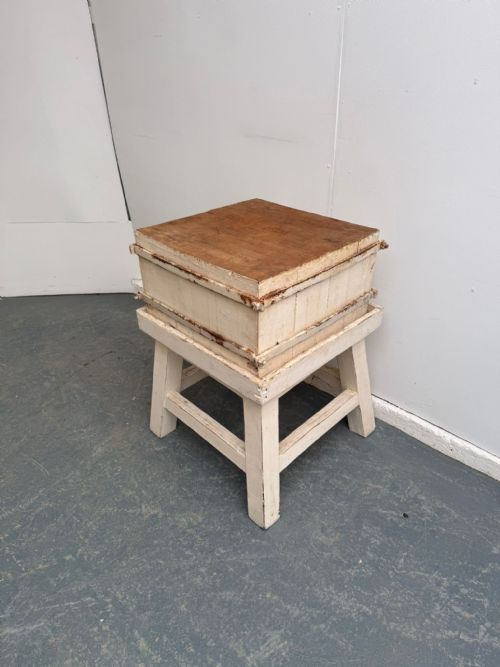


Antique Meat Block
These heavy-duty chopping tables and butchers blocks bring genuine utilitarian history straight into a domestic kitchen.
Antique Meat Block
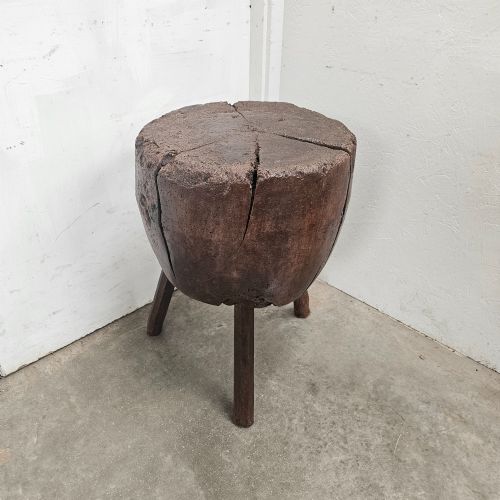
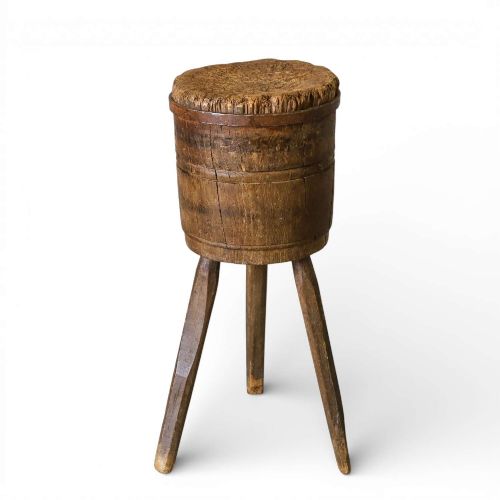
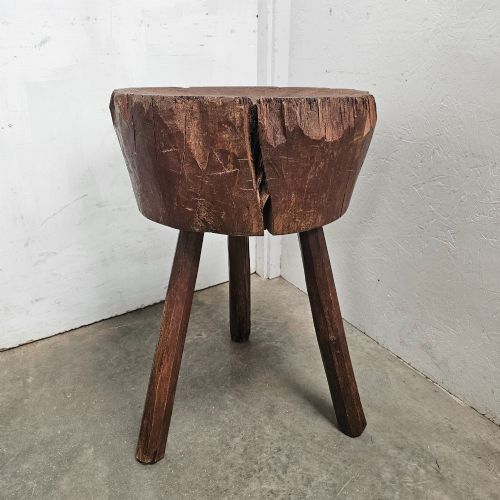
An antique meat block provides a solid working surface derived from commercial culinary spaces, built to endure decades of heavy chopping. When you search for an antique meat block, you encounter substantial freestanding kitchen islands and tabletop chopping blocks designed for professional food preparation.
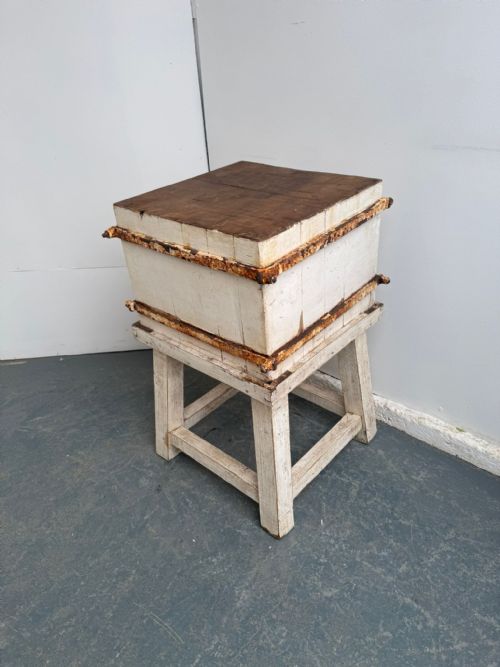
The examples gathered here span from the nineteenth century through the interwar decades, taking forms such as round tripod blocks and rectangular counters on stands. French provincial styles sit alongside Hungarian painted variants, showing the diverse regional shapes these hard-working commercial tables took across Europe.
Makers such as Trussant and Cie and Hennes France demonstrate the commercial pedigree behind these survivors. Buyers seek out these objects to anchor a kitchen with authentic industrial and rustic character.
How they were made
Dense hardwoods form the thick working surfaces, utilising beech, oak, elm, and general hardwood blocks joined together to withstand continuous impacts from cleavers and knives. These heavy tops sit atop sturdy timber frames, sometimes bolstered by metal elements or softwoods in the underlying structure.
Industrial hardware, including iron and bronzed mounts, provides structural integrity to the heavier bases and stands. Paint finishes appear on specific regional examples, adding colour and surface texture to the exterior while leaving the primary chopping surfaces exposed.
The listings on this page span the Victorian era up to the 1930s, featuring beech, oak, elm, and painted softwood.
What varies in quality
The thickness and grain tightness of the primary chopping surface dictate the structural calibre of the piece, with dense end-grain constructions representing superior utility. Original stands and mounts, whether iron or timber, hold more integrity when unaltered by later replacements.
Regional provenance and maker attribution elevate certain pieces, distinguishing standard utility counters from signed workshop productions. The depth of patination on the timber reflects decades of actual use, separating authentic working surfaces from decorative reproductions.
Trussant and Cie·Hennes France
The Antique Meat Block Glossary
- Beech
- A dense, pale hardwood frequently utilised for heavy chopping surfaces due to its resistance to splitting under heavy impact.
- Charcuterie
- A French culinary tradition focusing on prepared meats, which influenced the design of specialised work surfaces and game blocks.
- Tripod
- A three-legged base construction found on circular blocks, providing stable footing on uneven stone floors.
- Primitive
- A descriptive term for vernacular furniture made by local craftsmen for practical utility rather than high-style adherence.
Antique Meat Block: Frequently Asked Questions
How do I clean an antique meat block?
Maintain the timber by scraping away debris and applying food-safe mineral oils to keep the dense hardwood from drying out.
Avoid soaking the wood in water or using harsh detergents that strip the historical patina accumulated over the decades.
Can I use an antique meat block for daily food prep?
The thick wooden surfaces remain entirely functional for chopping, slicing, and general kitchen preparation just as they were originally intended.
Ensure the surface is properly sanitized and oiled before handling food items directly on the vintage timber.
How do I date an antique meat block?
Examine the construction methods, tool marks on the timber, and any accompanying maker stamps or metal foundry plaques.
French provincial and Victorian examples often display distinct leg turnings and iron mount styles specific to their nineteenth or early twentieth-century origins.
Are these blocks too heavy for a modern kitchen?
These pieces possess substantial weight due to the dense hardwoods and solid iron stands utilised in their commercial construction.
Plan the placement carefully beforehand, as moving a freestanding block requires multiple people and sturdy flooring.