
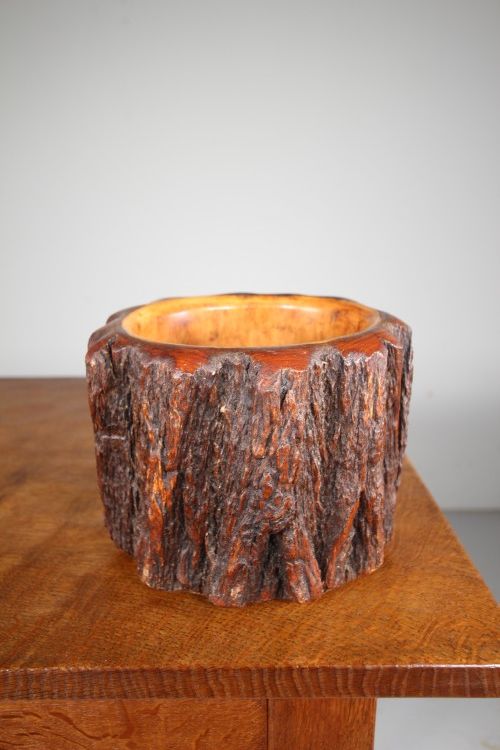


Rustic Tree Trunk
These rustic tree trunk items bring raw, organic timber and clay into domestic and garden spaces with utilitarian grace.
Rustic Tree Trunk
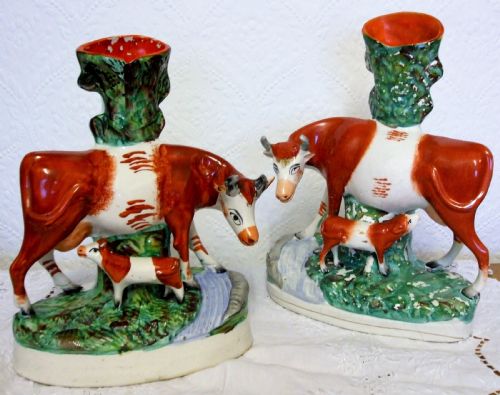
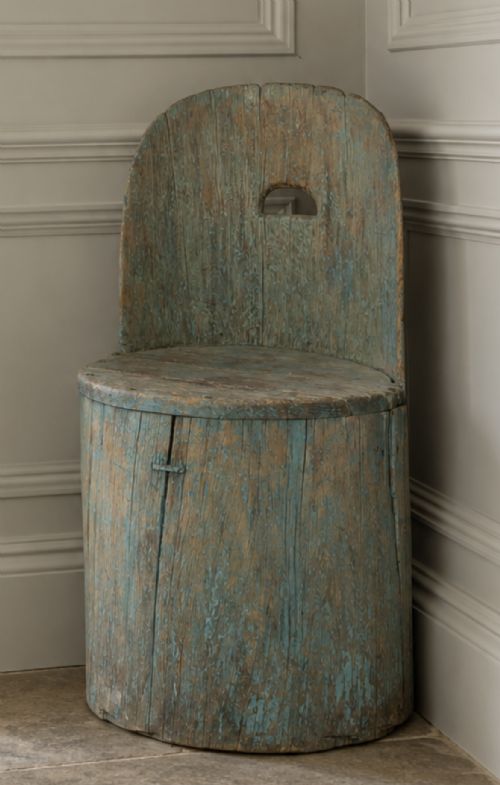
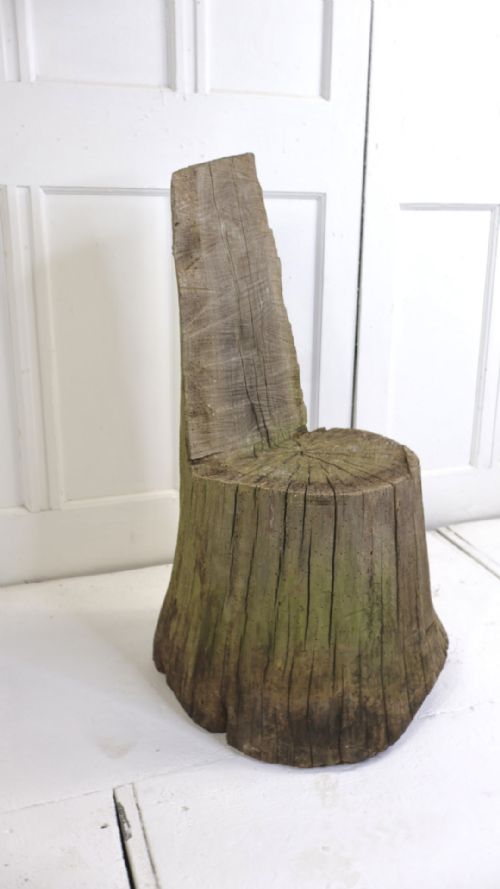
A rustic tree trunk object offers a direct encounter with unrefined timber and naturalistic pottery forms. When you search for rustic tree trunk pieces, you find items that range from utilitarian chopping blocks and dug out seating to decorative planters and garden seats.
The selection here draws primarily upon nineteenth century examples, alongside Edwardian and early twentieth century pieces. You encounter English, French, and Scandinavian vernacular items, including dug out chairs, game blocks, and salt glazed planters.
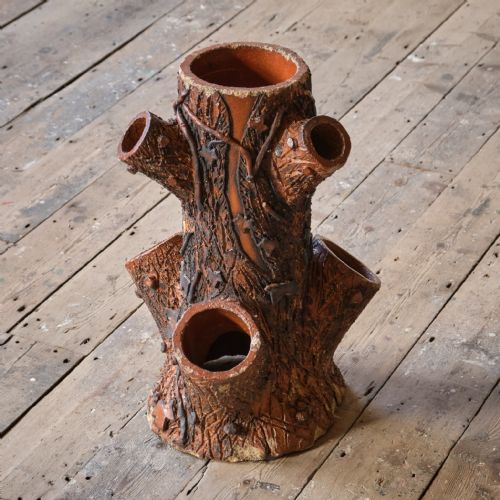
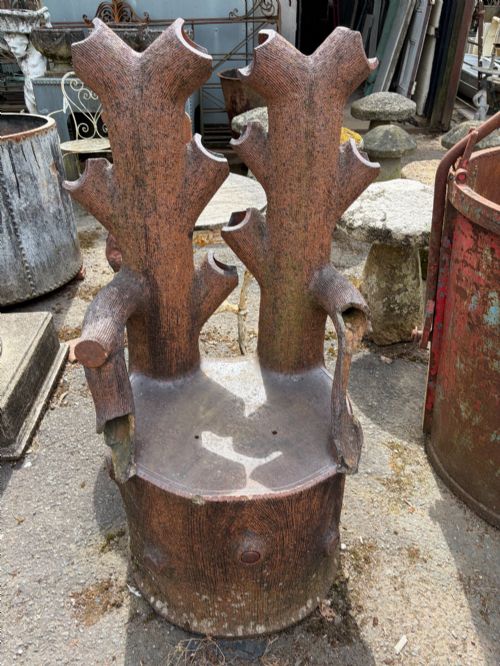
Domestic work and garden ornamentation meet in these forms. Hardwood chopping blocks, sycamore planters, and faux bois garden seats show how makers shaped raw timber and clay to resemble living wood.
How they were made
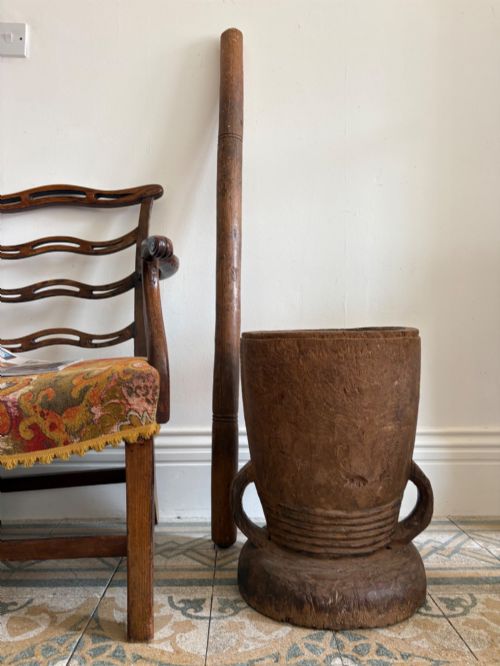
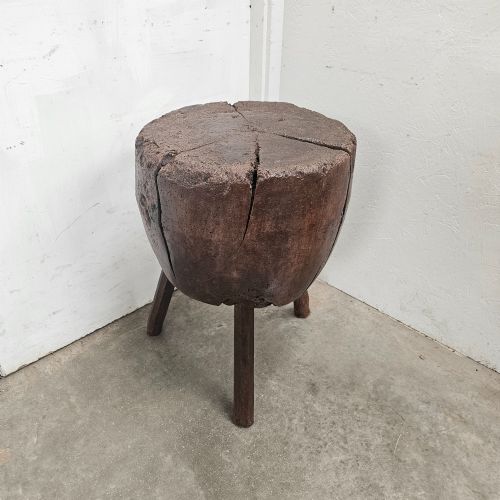
Makers utilised oak, beech, sycamore, fruitwood, and pine, working whole trunks and heavy limbs with hand tools. Dug out chairs and game blocks required hollowing and shaping dense timber while retaining the natural contours of the wood.
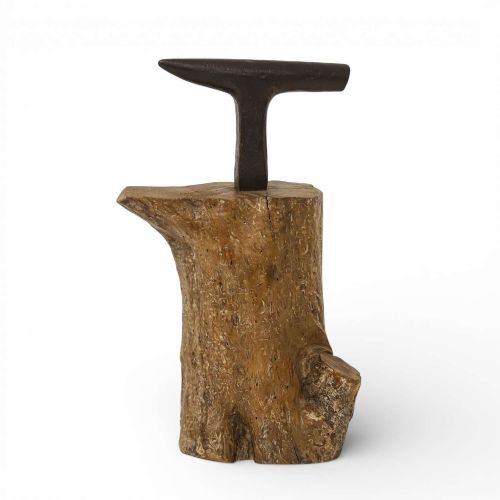
Potters shaped earthenware and terracotta to mimic the textures of bark and timber, applying salt glaze or naturalistic finishes. Artisans also combined materials, mounting iron implements onto substantial wooden bases.
Carvers rendered naturalistic details by hand, creating faux bois garden pieces and carved timber bowls. The construction prioritises structural integrity and utility, leaving the organic grain and knots visible.
A farrier once needed an anvil mounted securely on a fruitwood trunk, leaving us a delightfully heavy sculptural vernacular survivor.
What varies in quality
The distinction between ordinary utility and superior quality rests in the character of the material and the ambition of the carving. Sculptural vernacular pieces show a more deliberate engagement with the natural form of the timber.
Surface preservation defines the visual appeal of these objects. Pieces that retain their original dry patination, untouched tool marks, and authentic weathering carry a stronger presence than those with heavy modern intervention.
The Rustic Tree Trunk Glossary
- Faux bois
- Imitation of wood executed in another material such as stone, concrete, or pottery. In nineteenth century garden wares, ceramists moulded clay to replicate gnarled tree trunks and bark.
- Dug out
- An object fashioned by hollowing out a single solid section of a tree trunk. This technique creates robust chairs, seats, and containers without joinery.
- Game block
- A heavy timber chopping block or cutting surface used in food preparation. French and British examples often show deep surface cuts from daily kitchen or estate use.
- Treen
- Small domestic wooden objects made by turning or carving. These items range from bowls to small vessels shaped from tree stems and roots.
- Jardinier
- An ornamental pot or stand for holding plants or flowers. Nineteenth century earthenware examples often adopt naturalistic plant or tree trunk forms.
Rustic Tree Trunk: Frequently Asked Questions
What is a faux bois planter?
A faux bois planter is a ceramic or stone vessel modelled to look like natural wood or tree bark. These pieces were popular in the nineteenth century for garden displays.
Potters used specialised moulds and glazes to recreate the texture of growth rings, knots, and rough bark on earthenware bodies.
How do I care for rustic wood?
Keep wooden items away from direct heat sources and dramatic humidity fluctuations to prevent splitting. Maintain the dry patination with minimal dusting and occasional gentle waxing if appropriate.
For outdoor pieces like garden seats or planters, shelter them during harsh winter frosts to protect the timber and glaze from degradation.
Where were dug out chairs used?
Dug out chairs served as robust seating in rural domestic interiors, farmhouses, and cottages across Scandinavia and Britain. Their solid one piece construction offered durability against rough floors and heavy daily use.
They function well today as sculptural accent seats in hallways or living spaces where organic texture is desired.
How do I date a game block?
Dating a game block relies on examining the timber species, tool marks left by hand axes or saws, and the depth of wear from use. Nineteenth century examples typically show heavy hand adging and dense hardwood construction.
Makers often selected tough woods like oak, beech, or fruitwood that could withstand generations of butchery and food preparation.