

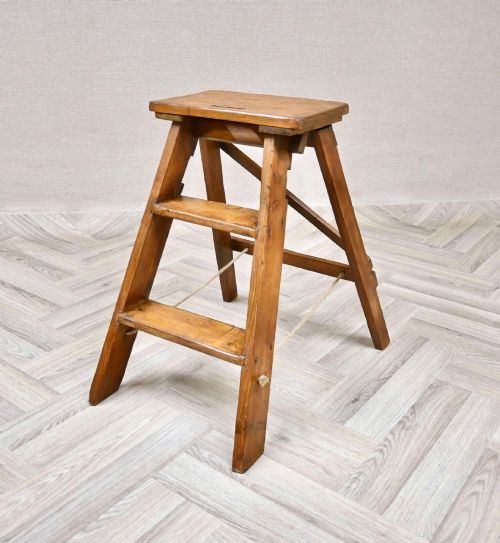
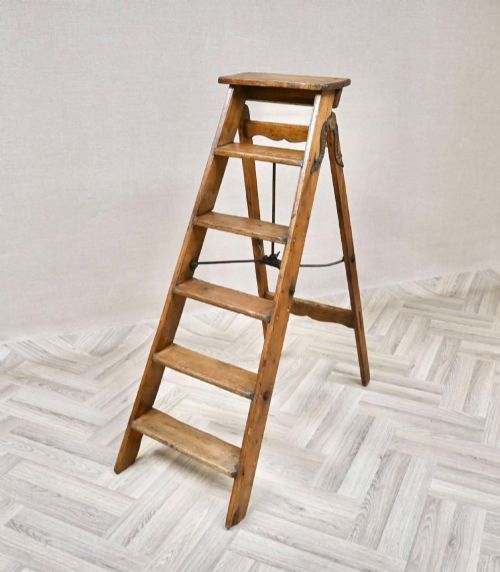
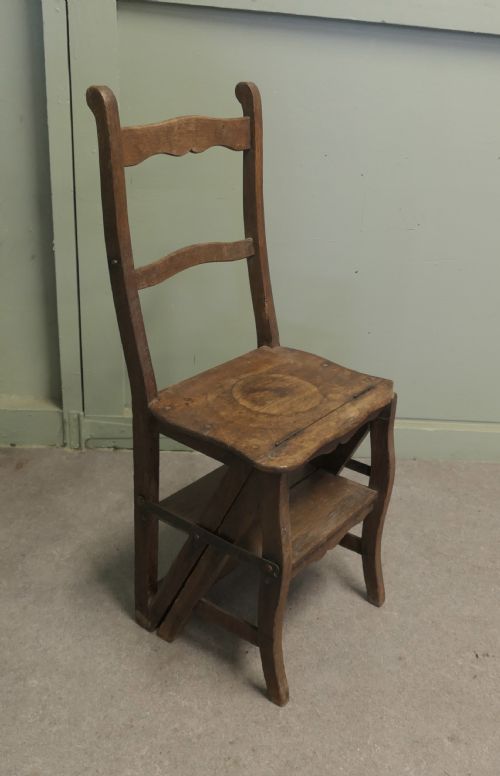


Rustic Timber Ladder
A rustic timber ladder offers sturdy utility and honest charm, bringing genuine working character to country interiors.
Rustic Timber Ladder
When you search for a rustic timber ladder, you are looking at practical climbing implements and step devices shaped from solid woods like pine, ash, and oak. These utilitarian pieces range from tall loft ladders to low shop steps and step stools.
The versions you are most likely to meet on this page hail from the nineteenth century, the Edwardian era, and the nineteen-thirties. They carry straightforward country vernacular, French country, and rustic utilitarian styles that reflect their original working lives.
How they were made
These ladders and steps are constructed from natural timbers including pine, ash, oak, and general hardwood, sometimes finished with stained wood. Carpenters and rural craftsmen selected these sturdy materials to endure daily climbing and heavy domestic or shop use.
Many examples utilise simple pegged or nailed joints suited to functional workshop and household items. The manufacturing focuses entirely on structural reliability rather than decorative flourish.
Rustic Timber Ladder Retail Price Guide 2026
Typical asking prices for rustic timber ladder among the pieces listed under this phrase on Sellingantiques today, from the lower quarter to the upper quarter. They describe what is for sale here now, not the wider market.
Listings on this site feature pine, oak, ash, and general hardwood timbers across nineteenth century, Edwardian, and nineteen-thirties periods.
What varies in quality
Quality in these pieces rests in the integrity of the timber and the tightness of the original joints. Pieces fashioned from dense ash or oak generally demonstrate greater resilience than softer pine variants.
The grade of a piece also depends on the preservation of its surface character, where honest patination from decades of use distinguishes superior survivors from plain replacements.
The Rustic Timber Ladder Glossary
- Vernacular
- Everyday objects made by local craftsmen for practical use rather than high design. This term describes items shaped by regional traditions and available materials.
- Pine
- A softwood commonly utilised for nineteenth century domestic furniture and utility items. It takes on a warm patina through handling and age.
- Ash
- A tough, elastic hardwood favoured for ladder rungs and structural framing where strength is paramount. Its straight grain resists splitting under heavy loads.
- Metamorphic
- Describing furniture that transforms from one object into another, such as a chair that folds out into library steps. This clever dual purpose was popular in nineteenth century homes.
Rustic Timber Ladder: Frequently Asked Questions
How were old timber ladders used?
These ladders served practical daily roles in homes, shops, and lofts for reaching high shelves, cleaning, and maintenance tasks. Many doubled as display stands or temporary shelving when retired from climbing duties.
Heavier shop ladders remained fixed in commercial premises, whilst domestic steps folded away or doubled as seating in ingenious metamorphic forms.
How do I live with a wooden ladder?
A rustic ladder works well leaned against a living room or bathroom wall to hold textiles, blankets, or magazines. Shorter step versions serve nicely as bedside tables or plant stands.
Keep them away from direct heat sources to prevent the timber from drying out and splitting over time.
What woods were used for these steps?
Makers relied on durable native timbers like pine, oak, ash, and general hardwoods available in local regions. Ash provided the necessary flexibility for rungs, whilst pine and oak formed sturdy side rails and treads.
Some pieces feature stained wood finishes applied to unify the colour of repaired sections.
How do I tell nineteenth century ladders apart?
Nineteenth century examples show hand-planed surfaces, pegged joinery, and heavy timber construction distinct from later mass-produced items. Tool marks and natural wear patterns reveal the age and manual labour involved in their creation.
Edwardian and later nineteen-thirties pieces often display more standardised fixings and lighter scantlings suited to domestic chores.