

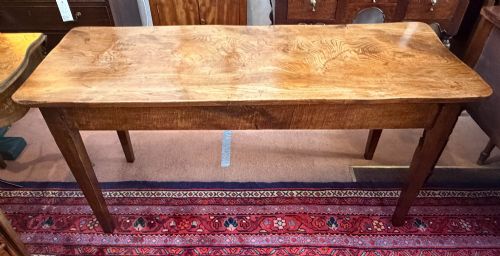
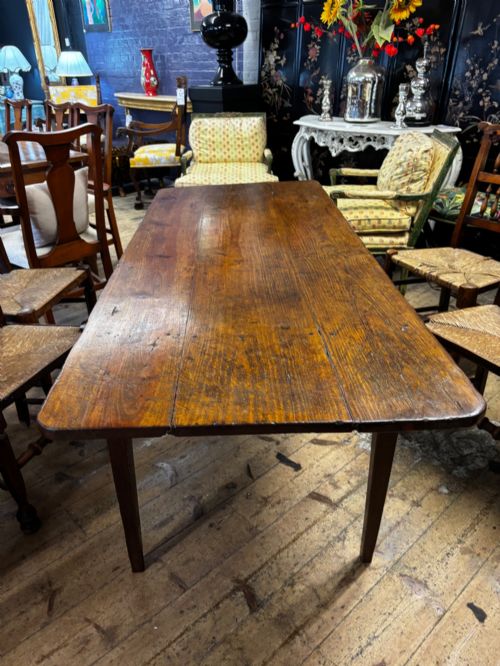
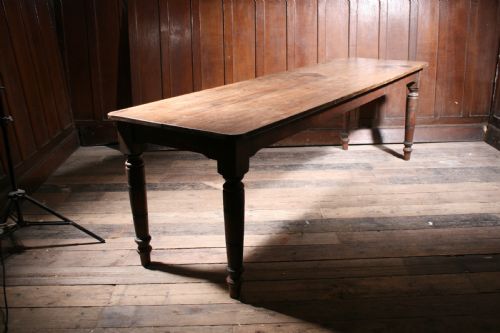
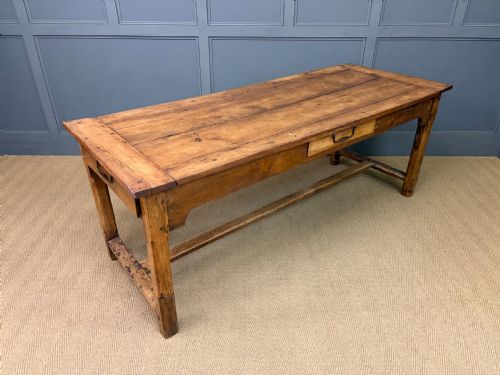
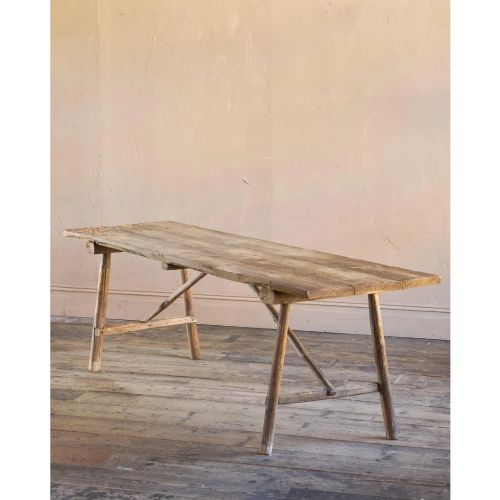

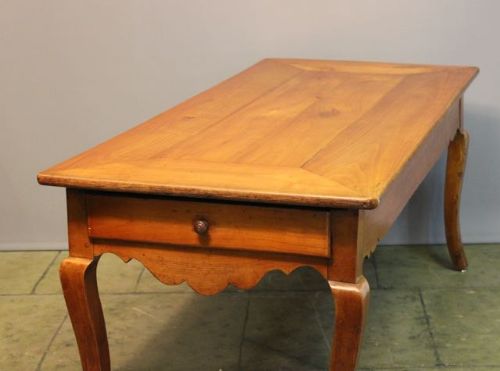


Rustic Timber Harvest Table
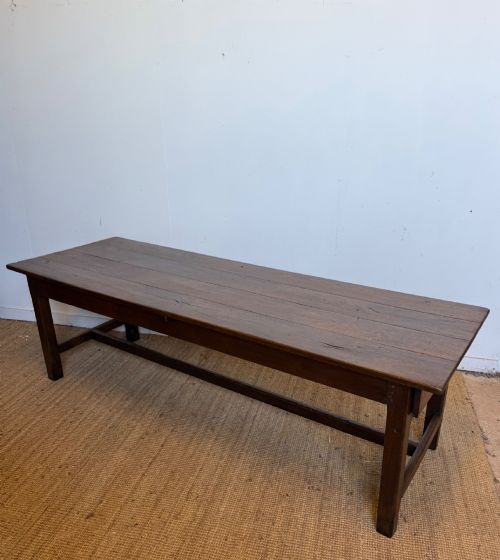
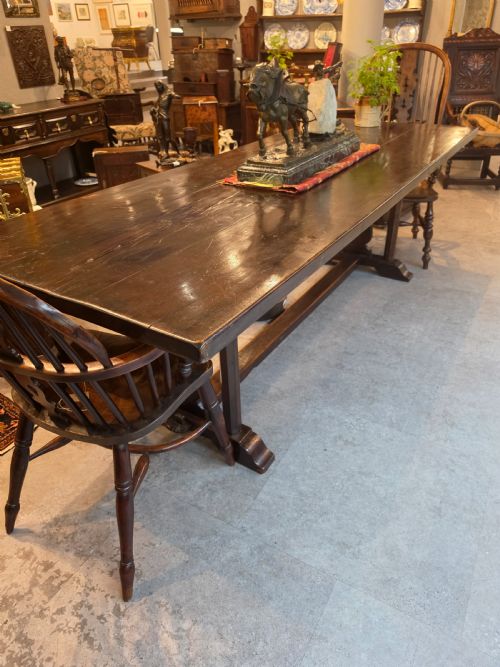
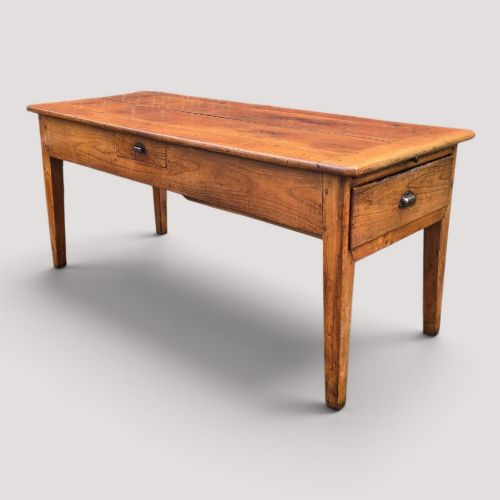
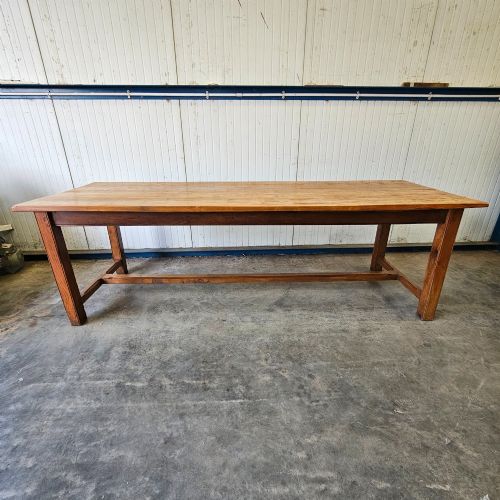
A rustic timber harvest table anchors a room with simple strength, offering large surfaces built for daily communal dining.
Rustic Timber Harvest Table
A rustic timber harvest table provides a sturdy dining surface rooted in traditional country life, often found in formats from the eighteenth century to the early twentieth century. These pieces serve large households and gatherings, appearing across styles such as French provincial, primitive country, and Georgian country house.
The versions most common here take the form of farmhouse tables, refectory tables, and kitchen tables. They span periods from the eighteen hundreds to nineteen hundred, with nineteenth-century examples appearing most frequently on this page.
Makers designed these dining tables for heavy domestic use, employing robust construction methods suited to farmhouses and country kitchens. They frequently feature rectangular wooden tops supported by straightforward timber legs or square section supports.
How They Were Made
Carpenters constructed these dining tables using solid woods including oak, pine, fruitwood, walnut, elm, and ash. Many examples combine materials, such as fruitwood and pine, pairing durable timber tops with sturdy frames.
Rustic Timber Harvest Table Retail Price Guide 2026
Typical asking prices for rustic timber harvest table among the pieces listed under this phrase on Sellingantiques today, from the lower quarter to the upper quarter. They describe what is for sale here now, not the wider market.
Listings feature dining tables spanning the eighteenth century to nineteen hundred, constructed from oak, pine, fruitwood, ash, walnut, and elm.
What Varies in Quality
Quality rests in the selection of timber and the integrity of the original construction. Denser hardwoods like oak and walnut command attention for their durability, while scrubbed pine surfaces show the honest wear of past kitchens.
Proportion and regional style distinguish finer provincial examples from basic utilitarian furniture. The handling of edges, supports, and surface finishes determines whether a table retains its authentic character.
The Rustic Timber Harvest Table Glossary
- Refectory table
- A long narrow dining table traditionally used in monasteries and large country houses. These pieces provide extended seating capacity.
- Fruitwood
- Timber sourced from fruit-bearing trees such as cherry or pear, prized for its warm tone and fine grain. Cabinetmakers utilised it extensively in French provincial furniture.
- Scrubbed pine
- Pine timber cleaned repeatedly with water and coarse brushes to remove old finishes. This process leaves a pale, matte surface often seen on nineteenth-century kitchen tables.
- D-End table
- A dining table with semicircular ends that can stand alone or combine with a centre section. This configuration appeared frequently during the nineteenth century.
- Primitive country
- A design style characterised by unpretentious construction and minimal ornamentation. These objects rely entirely on utility and honest materials.
Rustic Timber Harvest Table: Frequently Asked Questions
What is a harvest table?
A harvest table is a long, sturdy dining table traditionally designed to seat large groups for seasonal meals. These tables originate from country houses and farmhouses.
They emphasise practical utility and generous proportions, making them well-suited for modern dining spaces.
How do I date a timber table?
Dating involves examining the timber species, construction techniques, and joinery methods visible in the frame. Eighteenth-century pieces often display hand-sawn marks and pegged joints.
Nineteenth-century examples frequently incorporate standardised fixings and varied regional hardwoods like fruitwood, oak, or ash.
Where were these tables used?
These tables served as the central workspace and dining hub in country kitchens, farmhouses, and large estates. Families gathered around them for daily meals and food preparation.
Their robust timber construction withstood heavy, continuous domestic labour over generations.
How do I clean a wood table?
Maintenance requires gentle dusting with a soft cloth and avoiding harsh chemical cleaning agents. Preserving the natural timber finish maintains the historical character of the piece.
Applying occasional appropriate wax helps protect older fruitwood, pine, and oak surfaces from drying out.
Are these tables good for daily use?
Solid timber tables offer exceptional durability for everyday dining and kitchen activities. Their robust construction handles heavy daily wear without losing stability.
Existing marks and patination on antique timber mean everyday use adds to their established history.