
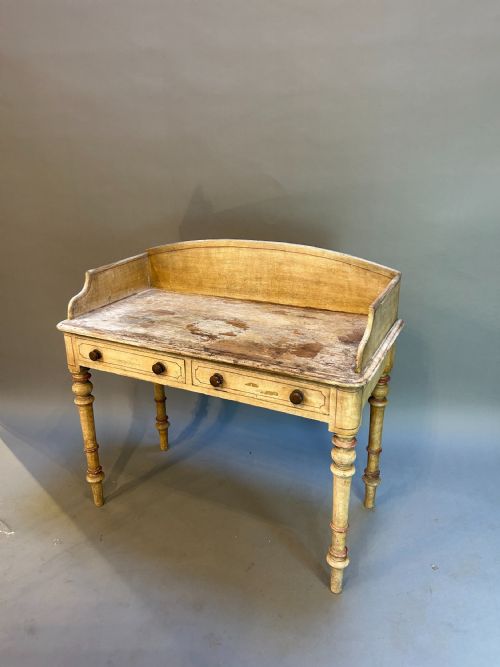
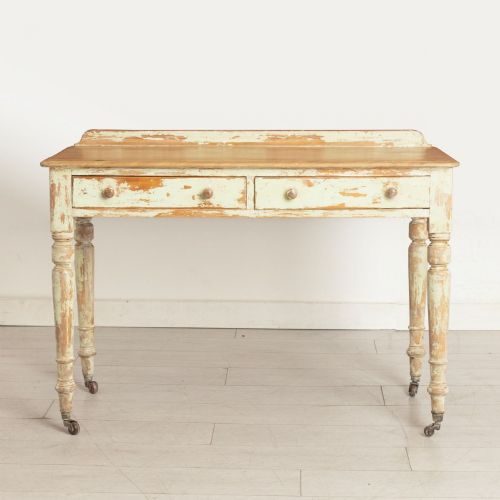
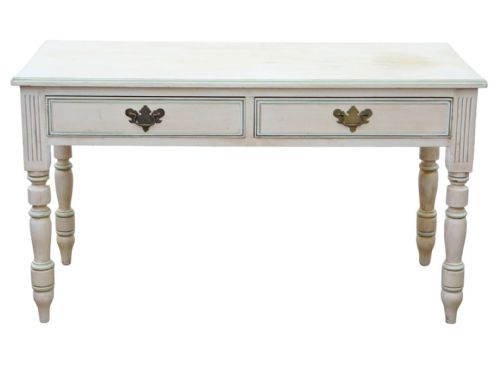


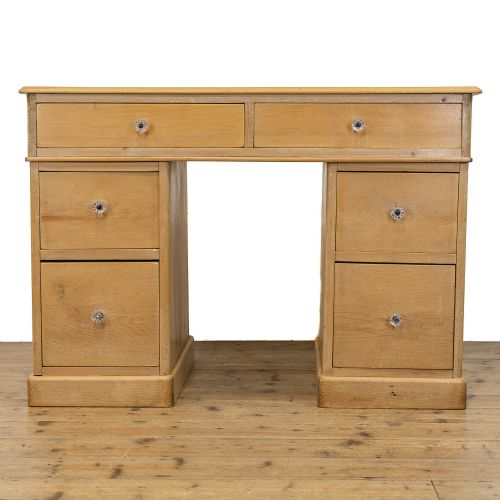
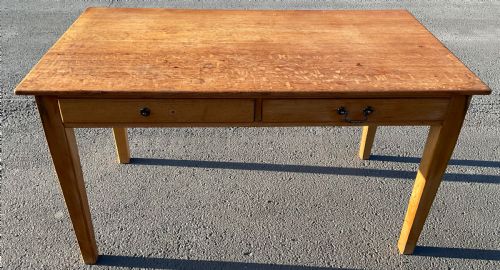

Rustic Study Table
These rustic study table examples are practical working desks built from honest timbers, designed to anchor a room with straightforward utility and character.
Rustic Study Table
A rustic study table brings together practical writing furniture and country craftsmanship, spanning forms from simple school desks to larger office furniture. These pieces serve as functional writing desks while adding straightforward character to a room.
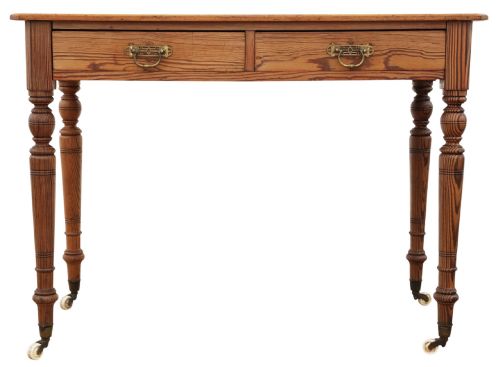
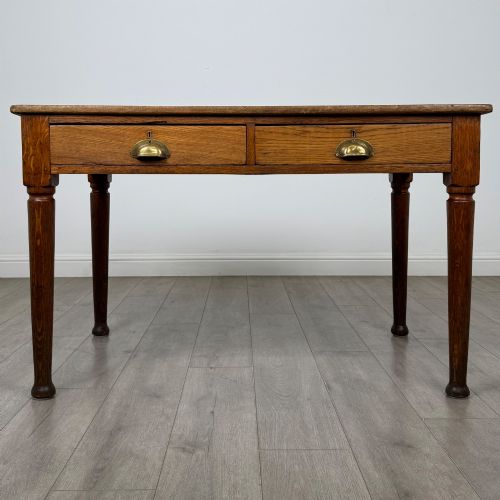
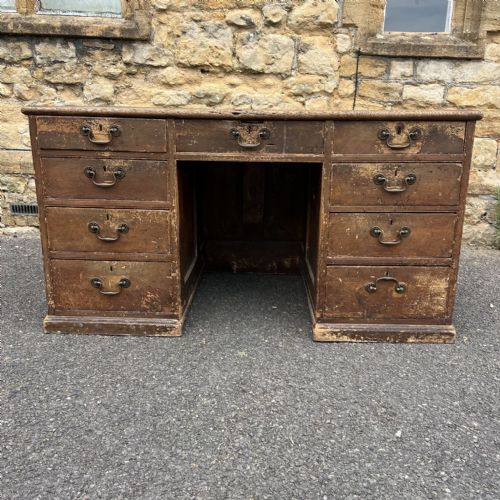
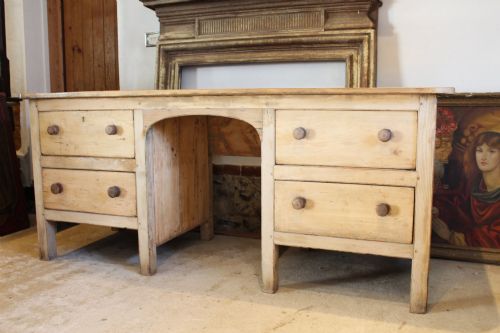
The versions most commonly met on this page date from the nineteenth and early twentieth centuries, reflecting Victorian, Edwardian, and country workshop traditions. They frequently appear in formats like writing tables, kneehole desks, and estate desks.
Makers produced these tables to handle daily clerical or domestic tasks rather than formal display, which explains their robust construction. Surviving examples show the straightforward utility expected from period country furniture.
Materials and Construction
Workshops constructed these tables predominantly from solid woods such as pine, pitch pine, oak, sycamore, and birch. Cabinetmakers selected these domestic timbers for their strength and availability.
Surviving pieces frequently show the marks of hand construction, utilising traditional joinery methods suited to utilitarian furniture. Surfaces often retain traces of early paint finishes or plain wax, recording decades of working use.
Listings feature pieces spanning the nineteenth and early twentieth centuries, constructed primarily from pine, oak, pitch pine, and birch.
Assessing Quality and Proportion
Quality in these working tables rests largely on the choice of timber and the integrity of the original construction. Dense pitch pine and well-figured oak denote superior examples from the range.
The balance of proportions and the retention of original drawers or brass fittings distinguish better workshops from purely utilitarian school or estate pieces. Surviving surface treatments that have aged naturally add significant appeal to a desk.
The Rustic Study Table Glossary
- Pitch Pine
- A durable resinous softwood frequently utilised for nineteenth century furniture. It yields a distinctive grain pattern and considerable weight.
- Kneehole Desk
- A form of writing table featuring a central recess for the sitter's legs, flanked by banks of drawers. This layout became popular during the Victorian period for organised study.
- Arts and Crafts
- A design movement emphasising hand workmanship and honest materials. Pieces from this tradition avoid excessive ornamentation in favour of structural clarity.
- Estate Desk
- A utilitarian table built for administrative tasks on a landed property. These are typically robust and unpretentious in their overall design.
Rustic Study Table: Frequently Asked Questions
What is a rustic study table?
A rustic study table is a practical writing desk constructed from honest timbers like pine, oak, or birch. These pieces were built for everyday clerical or domestic tasks in country houses, schools, and estate offices.
They combine straightforward utility with period craftsmanship, often featuring simple drawers and robust wooden frames designed to withstand heavy daily use.
How do I date an old desk?
Dating these tables involves examining the timber types, construction methods, and hardware choices. Nineteenth century pieces often show hand-cut joints and distinct patination on the wood surfaces.
Later examples from the Edwardian period or the nineteen-twenties tend to feature standardised joinery while retaining traditional country forms. Comparing the wood grain and any remaining paint layers helps clarify the age.
Where were these tables used?
These desks served in various working environments, from country house studies and estate offices to schoolrooms and farmhouse kitchens. Their sturdy construction made them ideal for writing, accounts, and daily administration.
Because they were working furniture, many accumulated the minor dents and surface marks that record their long histories of practical service.
How should I care for a wood desk?
Maintaining a period wood table requires simple dusting with a dry cloth and occasional application of traditional beeswax to nourish the timber. Avoid placing these pieces in direct sunlight or near heat sources to prevent the wood from drying out.
Allowing the surface to retain its natural character preserves the historical integrity of the piece.