

Rustic Settle Bench
A rustic settle bench offers high-backed draught exclusion and solid timber seating rooted in centuries of vernacular tradition.
Rustic Settle Bench
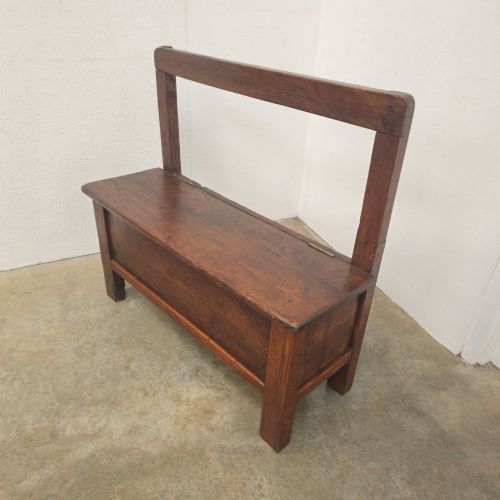
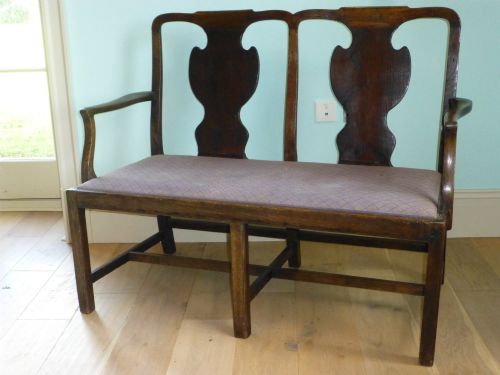
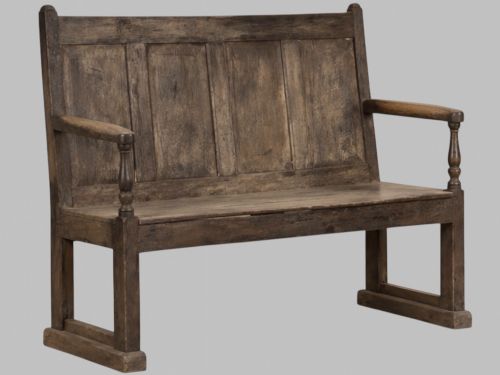
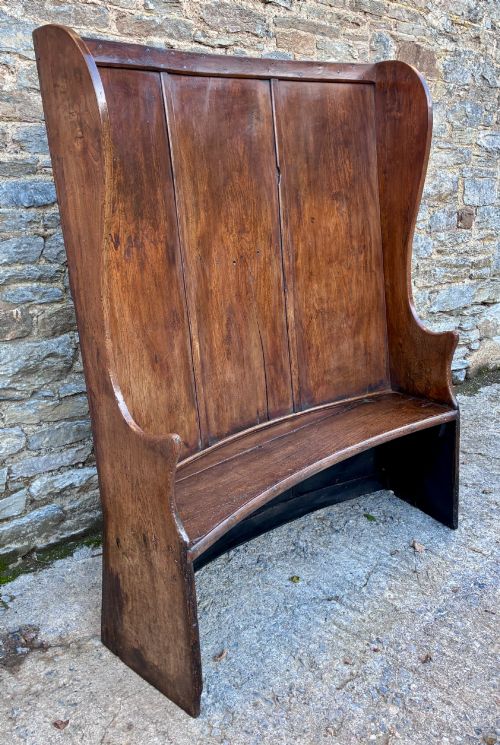
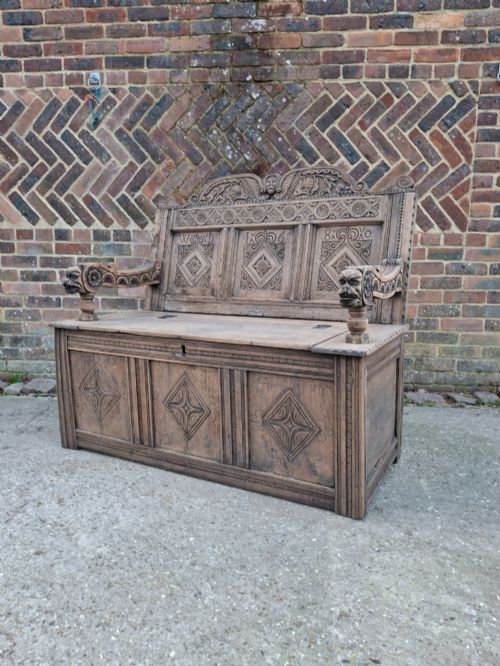
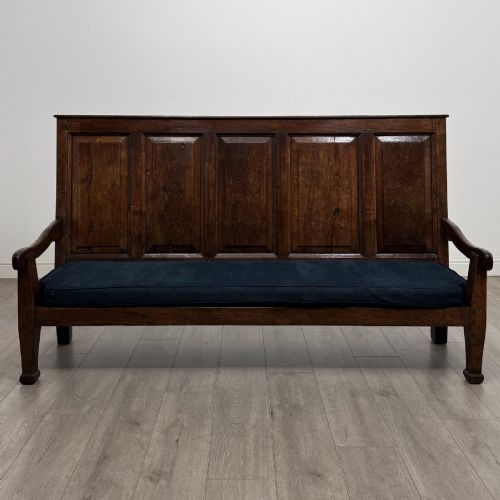
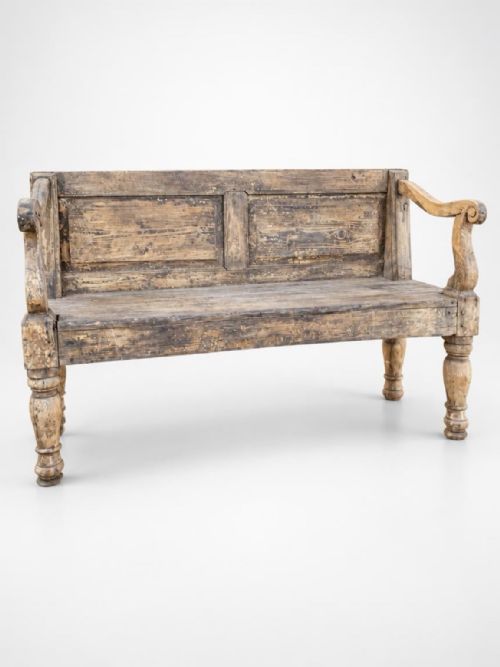
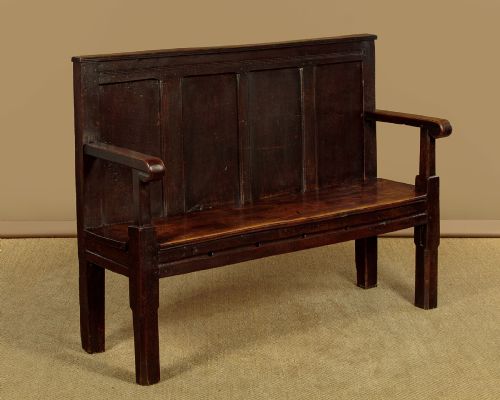
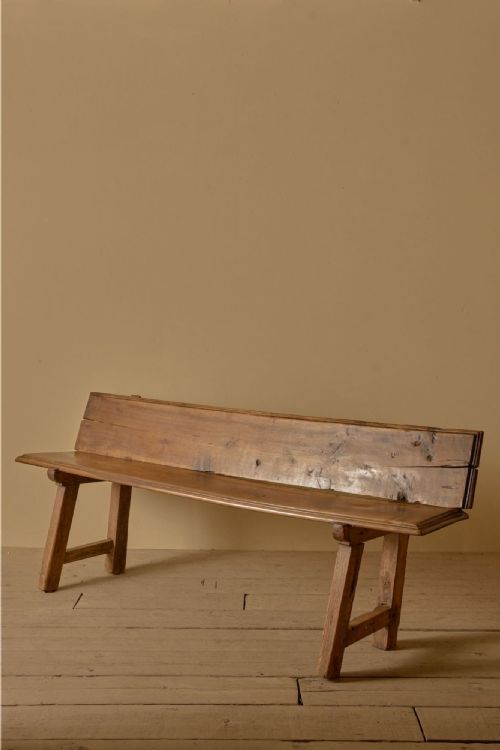
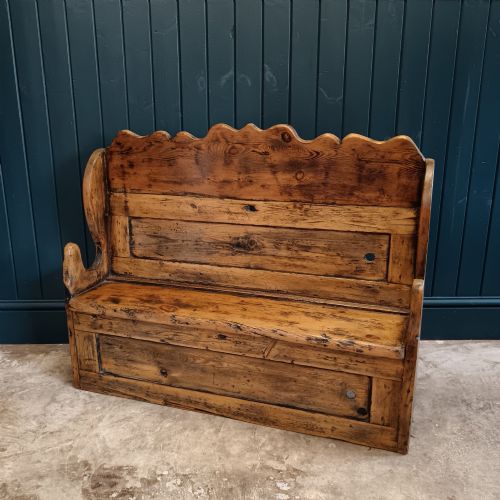
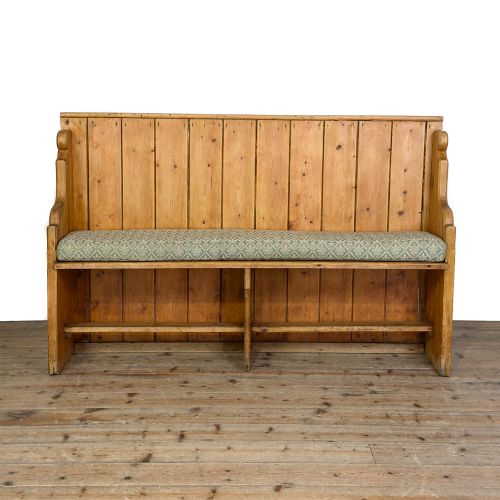
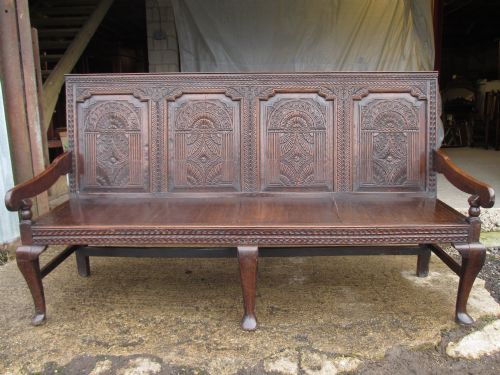
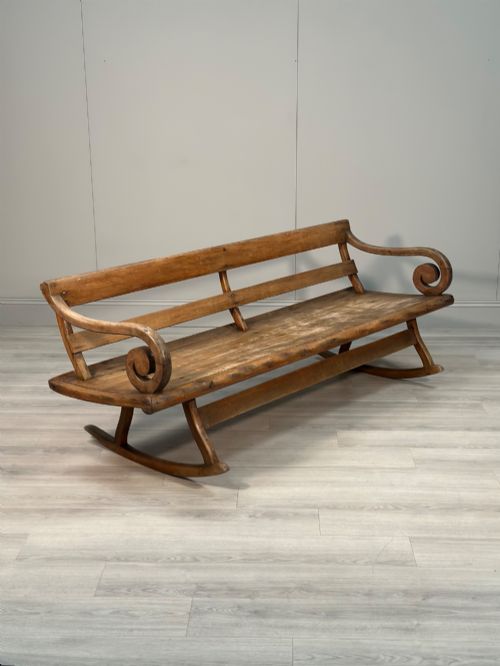
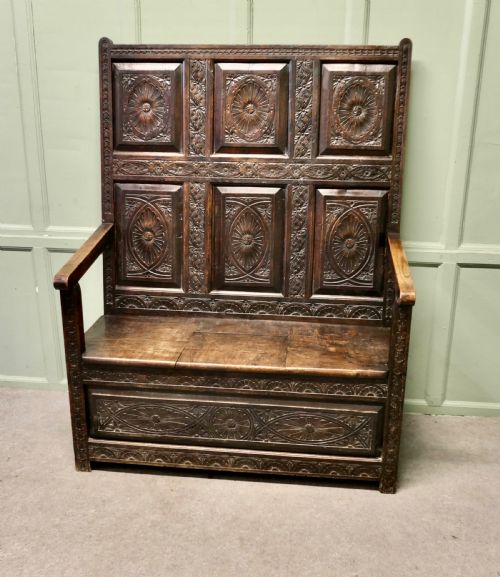
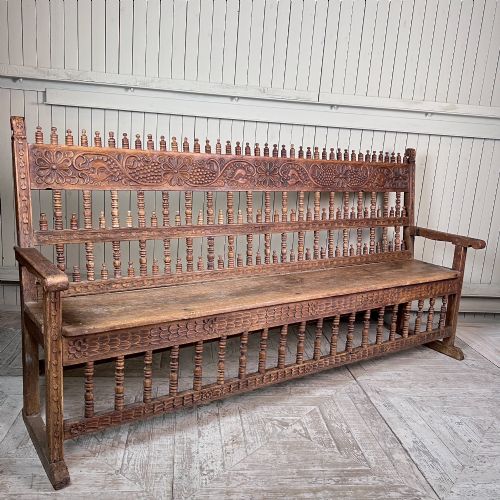
A rustic settle bench functions as an enclosed wooden seat designed to keep hearth firesides warm and free from draughts. These pieces span centuries from the sixteenth century onwards, encompassing forms like church pews, box settles with storage beneath, and high-backed hall seats. The pieces appearing here originate from diverse traditions, including English country workshops, Spanish colonial outposts, and Hungarian folk art communities.
The most common versions met on this page are nineteenth-century pine examples, often originating from Hungary or English country workshops, alongside eighteenth-century oak and walnut pieces. These seats manifest as simple benches, spindled constructs, and box settles that double as storage chests. Their forms reflect domestic and institutional utility, from chapel pews to fireside seats in country pubs.
Materials and construction methods
Makers utilised solid timbers such as oak, pine, elm, and walnut, selecting woods based on local availability and structural demand. Panels were frequently joined using traditional methods like mortise and tenon joints, accommodating natural wood movement over decades of use.
Surfaces received various treatments ranging from clear wax finishes that built up honey brown patinas to oil-based paints in polychrome, grey, blue, black, and cream. Iron hardware, rush seating, and carved detailing appear selectively, depending on the regional style and period of manufacture.
Rustic Settle Bench Retail Price Guide 2026
Typical asking prices for rustic settle bench among the pieces listed under this phrase on Sellingantiques today, from the lower quarter to the upper quarter. They describe what is for sale here now, not the wider market.
Listings span multiple centuries, incorporating sixteenth-century Renaissance forms, eighteenth-century oak and walnut pieces, and numerous nineteenth-century pine examples.
Evaluating quality and authenticity
Quality rests in the integrity of the timber and the honesty of the construction, where original panel work and unaltered structural joints outweigh cosmetic perfection. Pieces retaining their early wax or original painted surfaces hold greater integrity than those stripped or heavily restored in later eras.
The balance of proportions and the subtlety of regional carving distinguish standard utility furniture from finer vernacular examples. Structural wear should show natural integration with the age of the wood rather than jarring replacement of primary components.
The Rustic Settle Bench Glossary
- Settle
- A wooden bench with a high back, solid arms, and frequently a box seat base designed to deflect cold draughts. These pieces traditionally stood near the hearth in domestic kitchens and public inns.
- Box settle
- A specific form of bench featuring a hinged seat that lifts to reveal storage space underneath. This dual-purpose design served to store blankets, boots, or household goods.
- Vernacular
- Architecture and furniture created by local craftsmen using traditional methods and regional materials without academic architectural pretension. These objects reflect local customs and practical needs rather than high-style metropolitan fashions.
- Patina
- The surface sheen and mellowing of colour developed by wood over long periods through handling, light exposure, and waxing. It serves as a visual indicator of age and genuine use.
- Polychrome
- Decorated or painted in several different colours. This finish is frequently encountered on folk art furniture from continental Europe.
Rustic Settle Bench: Frequently Asked Questions
What is a rustic settle bench used for?
A rustic settle bench provides substantial wooden seating combined with a high solid back designed to block cold air currents in traditional rooms.
Many examples incorporate a box seat base, offering concealed storage space for blankets, boots, or daily household items while maintaining a sturdy hallway or fireside presence.
How do I care for a waxed pine settle?
Maintain waxed pine surfaces by dusting regularly with a soft cloth and applying a traditional beeswax paste when the timber begins to look dry.
Keep these wooden pieces away from direct heat sources and strong sunlight to prevent the timber from splitting or the historic wax finish from degrading.
How can I tell an eighteenth-century settle apart from a nineteenth-century one?
Eighteenth-century settles typically display heavier oak or walnut construction with hand-carved panels, pegged joints, and deep, patinated surfaces shaped by centuries of use.
Nineteenth-century versions more commonly utilise pine, feature simpler structural lines or painted folk art finishes, and occasionally incorporate softer woods or turned spindle backs.
Where did Hungarian painted settles come from?
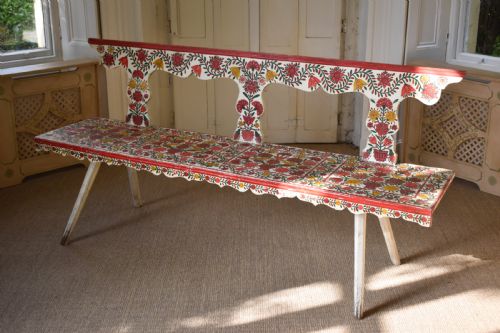
Hungarian painted settles originate from rural farming communities where domestic furniture was traditionally constructed from local pine and finished with vibrant protective paints.
These pieces often feature distinctive colours such as blue, grey, black, or cream, reflecting regional folk art traditions and domestic interiors of the nineteenth century.