
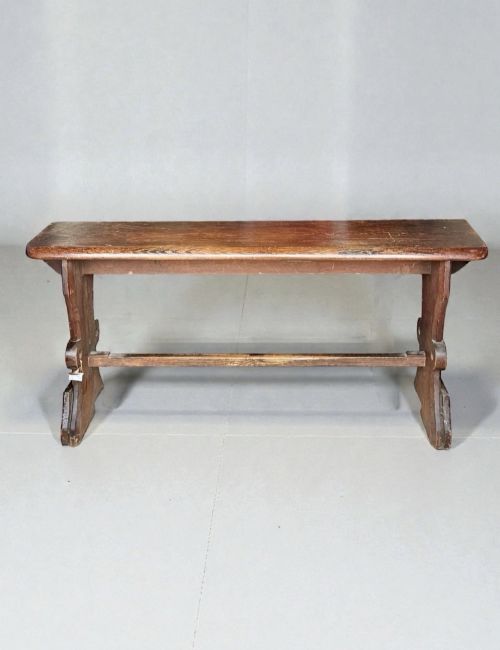


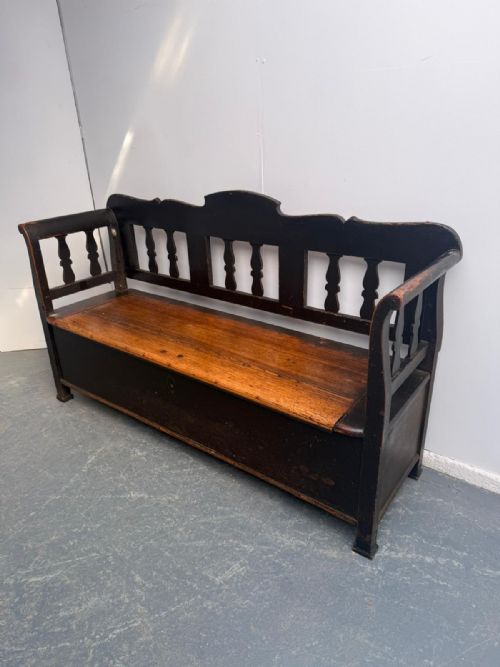
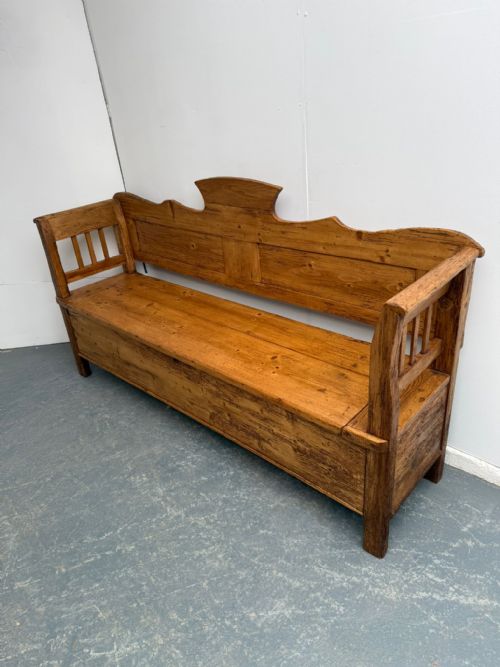

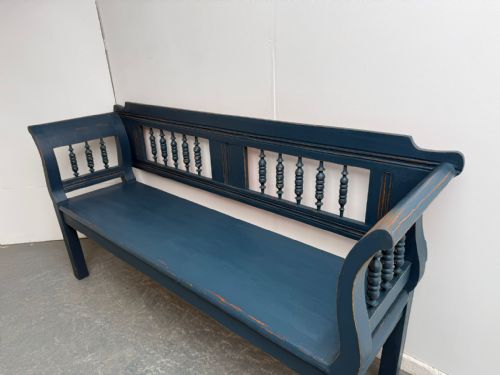
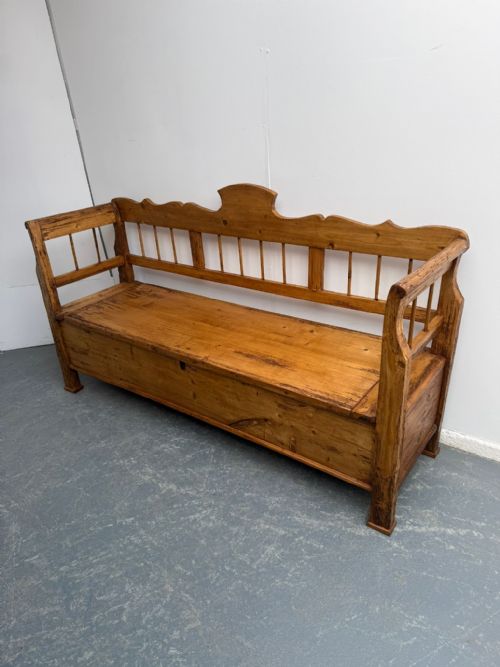
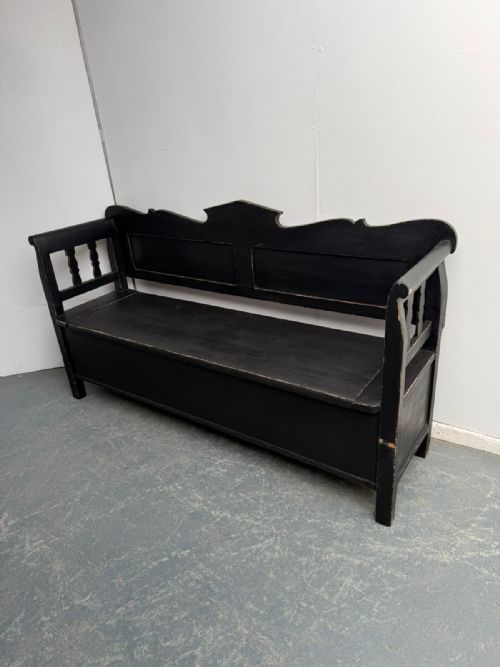

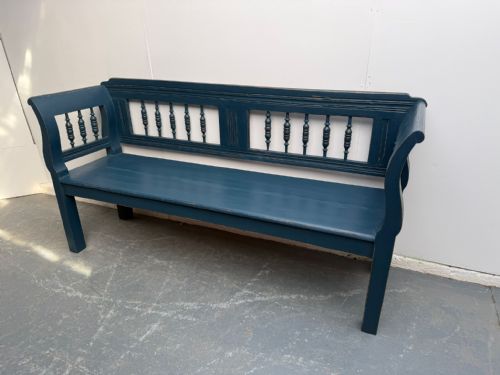

Rustic Pine Hall Seat
A rustic pine hall seat brings honest utility and vernacular character into a hallway, offering practical seating paired with regional craftsmanship.
Rustic Pine Hall Seat
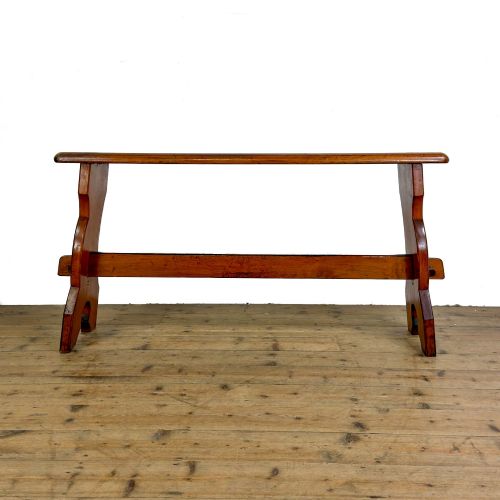
When you search for a rustic pine hall seat, you encounter robust domestic furniture shaped by local traditions across Britain, Europe, and Scandinavia. The selection spans straightforward benches and long tavern seats to enclosed box settles designed to block draughts in older corridors.
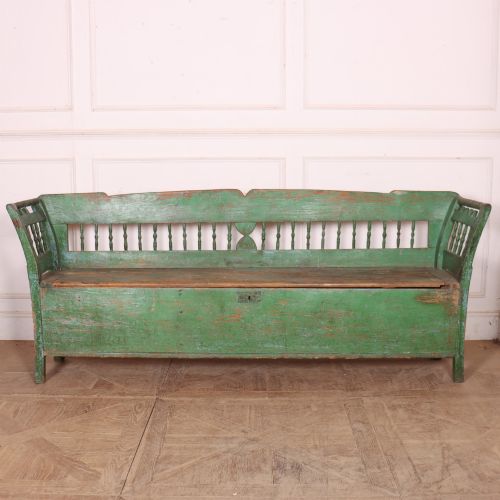
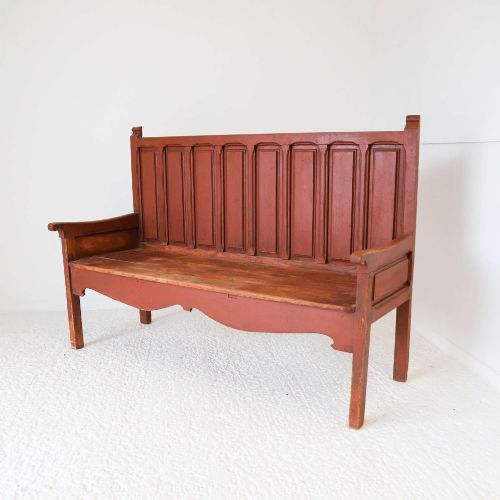
Most examples hail from the nineteenth century and the Victorian era, alongside significant numbers of Georgian and eighteenth-century pieces. Regional forms include high-backed Spanish settles, painted Hungarian box settles, and austere Scandinavian benches.
Makers ranged from village joiners to anonymous workshop artisans who prioritized durability over academic ornament. These pieces served communal functions in farmhouses, churches, schools, and taverns before entering domestic halls.
Materials and construction methods
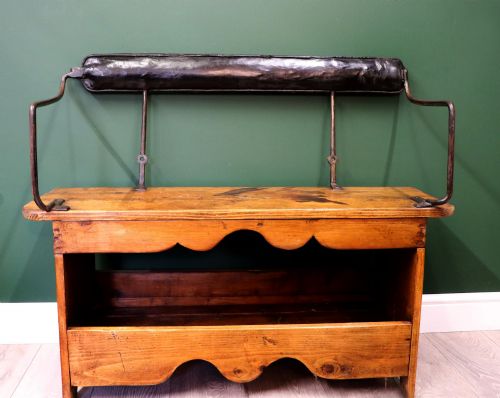
Construction relies primarily on solid pine and pitch pine, selected for structural resilience and availability. Workshops frequently reinforced joints with iron hardware, while surfaces received protective coatings of wax, scumble, or lead-based paint.
Makers utilised traditional joinery techniques including pegged mortise and tenon joints, panelled construction, and dovetailed storage boxes. Many surfaces display layers of historic paint in tones of grey, blue, black, cream, and green, often applied over earlier finishes.
Regional variants represented include Hungarian folk art, Austrian country, Spanish vernacular, and Scandinavian painted styles.
Factors defining the hierarchy of quality
Quality rests in the integrity of the timber, the honesty of the construction, and the survival of original surface treatments. Untouched painted finishes or deep patinated wax surfaces distinguish superior examples from heavily stripped or later altered pieces.
Proportion and scale also dictate worth, as well-balanced proportions and unusual forms such as barrel backs or integrated storage compartments elevate a piece. Evidence of genuine utilitarian wear and regional quirks reflect authentic vernacular pedigree.
The Rustic Pine Hall Seat Glossary
- Settle
- A wooden bench with a high back, solid arms, and often a storage box beneath the seat. It was originally designed to keep out cold draughts in unheated rooms.
- Scumble
- A decorative painting technique involving a translucent glaze dragged or mottled over a base coat to imitate finer grained woods. It creates mottled textures typical of nineteenth-century country furniture.
- Box settle
- A variant featuring a hinged seat lid opening to reveal a deep receptacle for blankets or household goods. This dual-purpose form maximised storage in modest dwellings.
- Barrel back
- A semi-circular enclosed seating design curving forward to shelter the occupant. This form provides exceptional thermal insulation in large, draughty halls.
- Pitch pine
- A resinous pine variety offering high durability and distinct grain patterns. It was frequently utilised for heavy-use institutional and domestic seating.
Rustic Pine Hall Seat: Frequently Asked Questions
Where should I place a hall seat?
These pieces suit narrow entryways, boot rooms, and large corridors where they provide both a sturdy place to sit and practical storage. Their substantial backs help define open-plan spaces or anchor large wall expanses.
Ensure adequate clearance for hinged box seats or high backs so the furniture functions smoothly in circulation areas.
How do I care for waxed pine surfaces?
Maintain waxed pine by applying a traditional beeswax paste sparingly and buffing it with a soft cloth to preserve the sheen. Avoid placing the wood near direct heat sources or in damp environments to prevent splitting.
Gentle dusting keeps the grain clear without stripping away the historic patina accumulated over decades of use.
Are painted finishes original?
Many pieces retain historic paint layers, sometimes showing multiple epochs of decoration applied by past owners. Close inspection under natural light reveals wear patterns and craquelure that help distinguish early or original coats from modern applications.
Preserving these surviving surfaces maintains the character and historical integrity of vernacular furniture.
How do I identify a regional style?
Regional traits emerge through specific construction quirks, decorative painting palettes, and local joinery habits. For instance, Hungarian pieces frequently exhibit distinct painted floral or monochrome finishes on box settles, while Spanish examples often use heavy framing and folk art carving.
Comparing panel thickness, moulding profiles, and timber types clarifies the likely geographic origin of anonymous workshop pieces.