

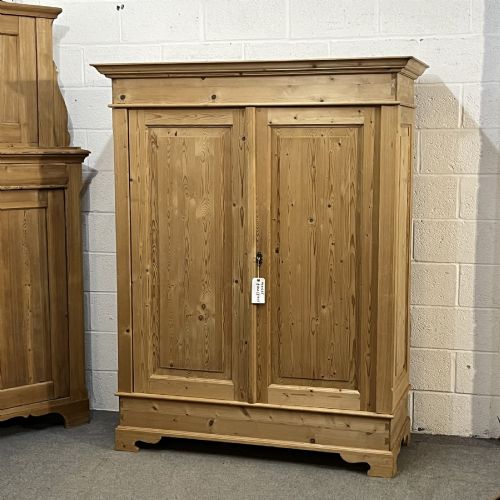
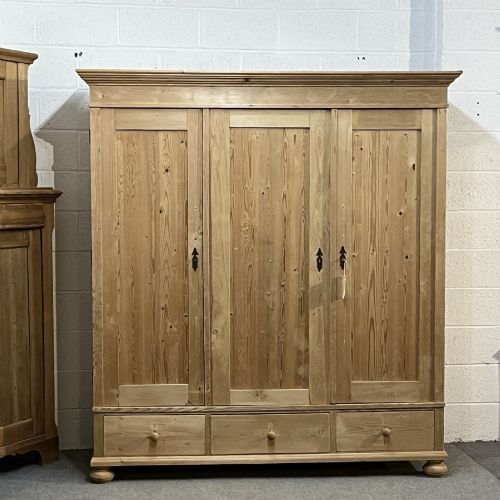
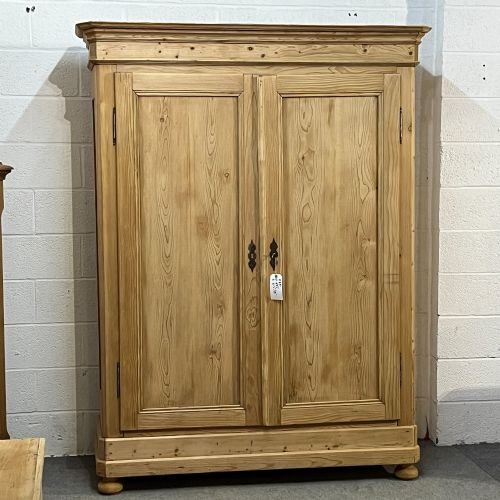
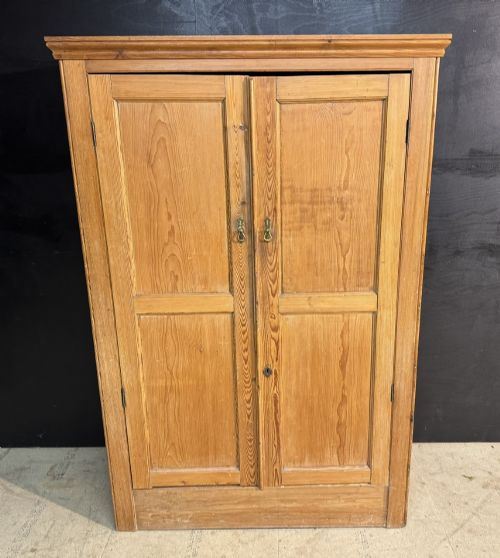
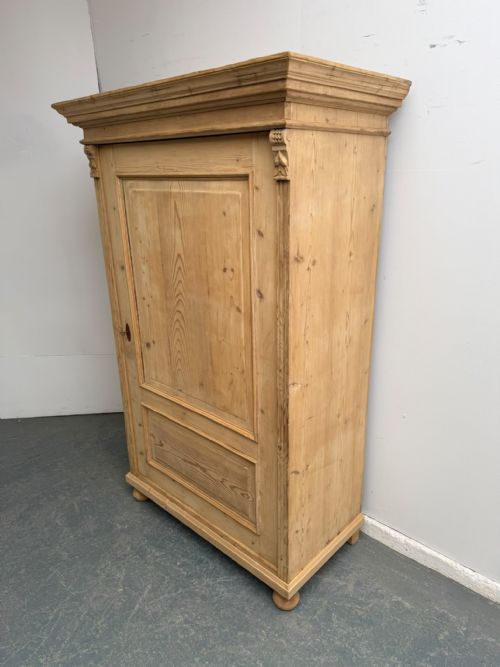
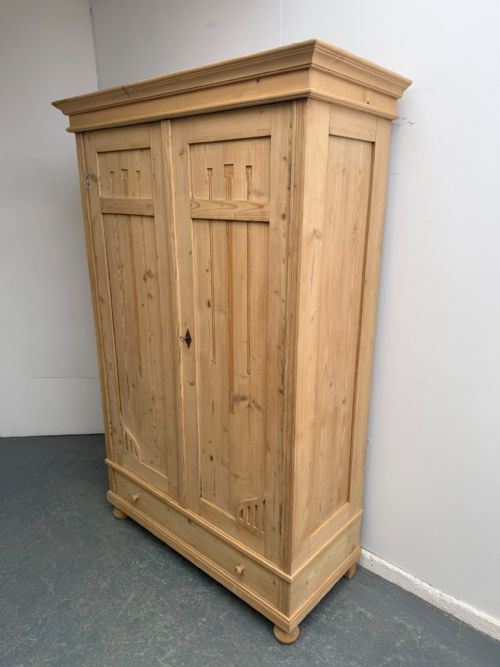
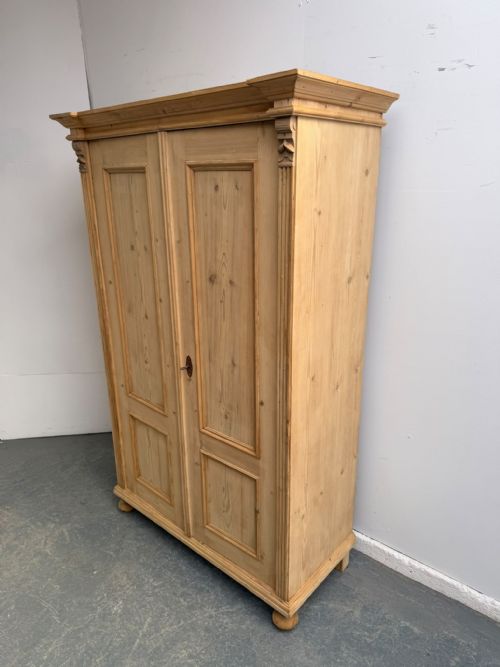

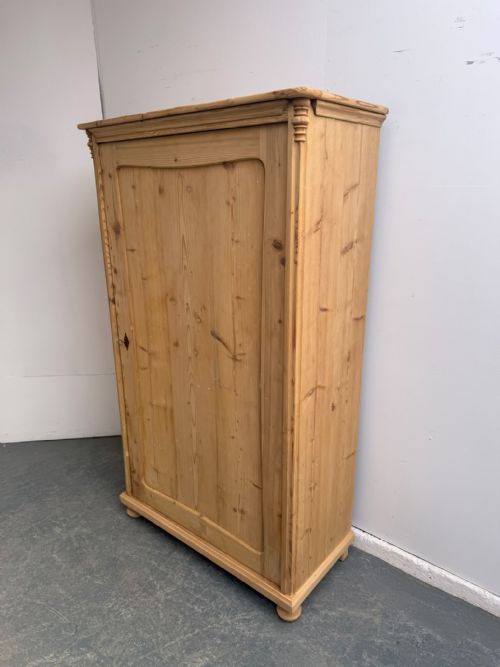

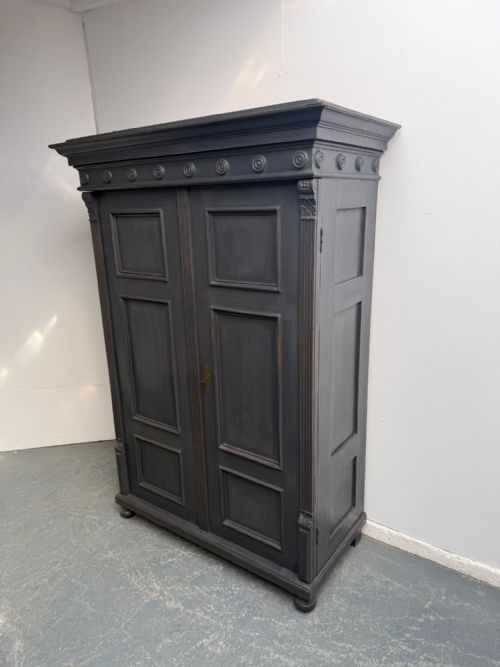
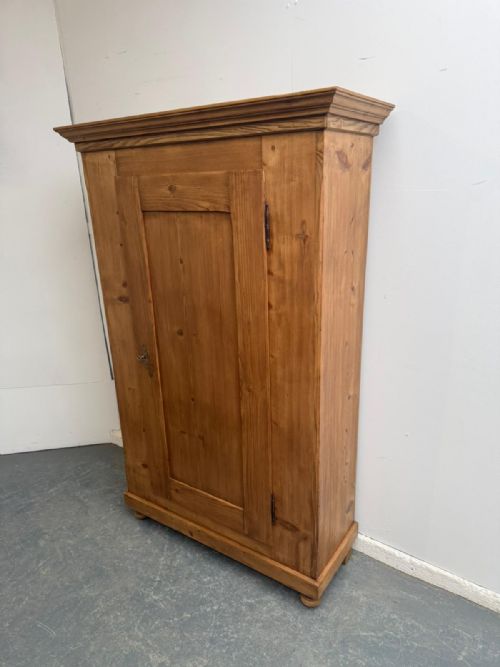
Rustic Pine Freestanding Wardrobe
A rustic pine freestanding wardrobe brings sturdy practicality and natural warmth to a room, offering generous storage through honest domestic timber.
Rustic Pine Freestanding Wardrobe
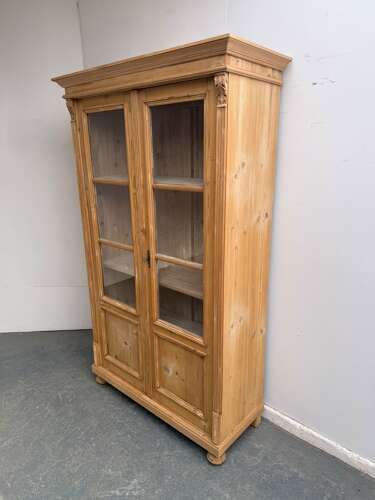
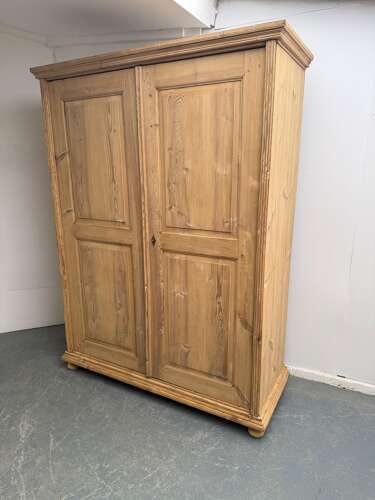
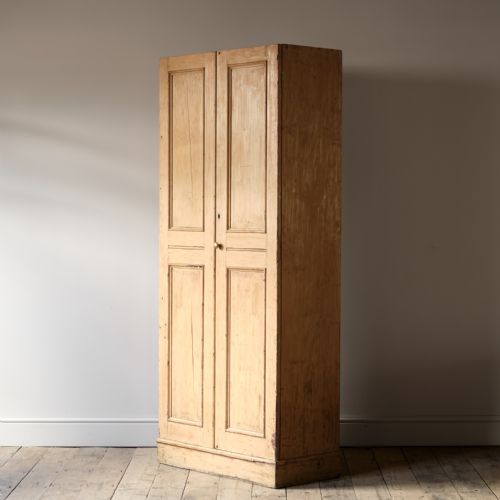
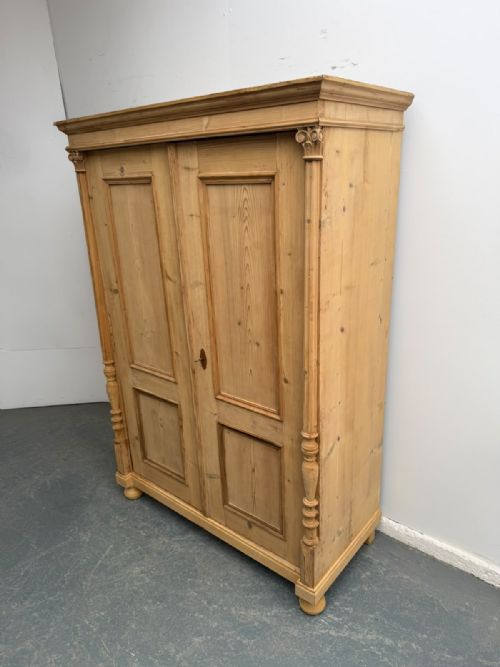
A rustic pine freestanding wardrobe represents the utilitarian cabinetry produced across Britain and Europe during the Victorian, Georgian, and early twentieth-century periods. These pieces serve primarily as functional bedroom or hallway storage, encompassing single, double, and multi-door formats designed to stand independently against a wall.
The versions most commonly encountered on this page date from the nineteenth century and early 1900s, reflecting simple country workshops rather than metropolitan cabinet-makers. Alongside traditional wardrobes, the selections include related storage forms such as housekeepers cupboards, larder cupboards, and linen cupboards built from the same sturdy timber.
Regional variations span English, French, Hungarian, and Swedish origins, each displaying distinct architectural proportions and surface treatments. Whether left in a natural waxed finish or retaining traces of original paint, these items provide robust storage capacity while displaying the distinctive knots and grain patterns characteristic of mature pine.
Materials and construction methods
Carpenters built these wardrobes using solid pine timber, selected for its accessibility and workability in domestic workshops. Iron, brass, and metal hardware such as hinges, handles, and locking mechanisms provide structural reinforcement and functional operation.
Surface finishes vary between traditional wax polishing, which highlights the warm golden tones of the wood, and original layers of paint. Many examples feature knockdown construction, allowing the large carcasses to be dismantled into sections for transport and installation in domestic spaces.
Rustic Pine Freestanding Wardrobe Retail Price Guide 2026
Typical asking prices for rustic pine freestanding wardrobe among the pieces listed under this phrase on Sellingantiques today, from the lower quarter to the upper quarter. They describe what is for sale here now, not the wider market.
Materials documented across the inventory include solid pine timber paired with iron, brass, and glass elements, finished in natural wax or historic paint.
Distinctions in construction and preservation
Quality in these wardrobes is determined by the integrity of the timber joints, the stability of the frame, and the survival of original components. Superior examples retain their original backboards, working locks, and functional internal shelving or hanging space without excessive warping.
The treatment of the wood surface significantly influences character, with original paint finishes or well-maintained period wax preserving the historical authenticity of the piece. Lesser examples may exhibit heavy alterations, compromised structural bases, or lost hardware that diminishes their original domestic utility.
The Rustic Pine Freestanding Wardrobe Glossary
- Knockdown
- A piece of furniture designed to be easily disassembled into modular sections using internal bolts or wedges. This clever construction method allowed bulky wardrobes to be moved up narrow staircases and between rooms.
- Fielded
- A panel with bevelled or recessed edges that lightens the visual weight of a large wooden door. This traditional joinery technique also accommodates the natural expansion and contraction of solid timber.
- Housekeepers cupboard
- A large storage cabinet traditionally used to store household linens, dry goods, and domestic supplies. These functional pieces typically feature multiple doors and internal shelving configurations.
- Original finish
- The authentic surface coating applied to the timber during its period of manufacture, such as early paint or historic wax. Preserved finishes maintain the true historical appearance of the furniture.
- Wardrobe
- A tall standing cupboard equipped for hanging garments and storing apparel. Early country examples frequently combined hanging space with fixed internal shelving or lower drawers.
Rustic Pine Freestanding Wardrobe: Frequently Asked Questions
How do I care for a waxed pine wardrobe?
Maintain the wood by applying a natural beeswax polish periodically to nourish the dry timber and protect against everyday moisture. Avoid placing the wardrobe in direct sunlight or close to heat sources to prevent the pine from splitting.
Dust the surfaces regularly with a soft, dry cloth. Take care not to use silicone-based sprays, which can build up and damage the historic wax finish over time.
Are these wardrobes easy to assemble?
Many period pine wardrobes utilise a knockdown structure held together by internal wooden pegs or metal bolts. This design was originally intended for straightforward transport between rooms and properties.
Keep basic tools handy during assembly and enlist a second person to help align the heavy solid wood panels safely. Check that the frame sits square on the floor so the doors hang and latch correctly.
Can I paint a waxed pine wardrobe?
Applying paint to a waxed pine surface requires thorough preparation to ensure proper adhesion. You must remove old wax layers entirely with appropriate solvents and apply a suitable primer before painting.
Many period pieces already show historic layers of paint applied by past owners over the decades. Consider whether altering a waxed finish aligns with your preference for the natural grain of the timber.
How do I distinguish Georgian from Victorian pine furniture?
Georgian pine furniture generally displays simpler, cleaner architectural lines with a focus on restrained proportions and understated mouldings. The construction often employs hand-cut joinery specific to the eighteenth and early nineteenth centuries.
Victorian pieces frequently introduce heavier cornices, more prominent panel details, and occasionally machine-sawn elements as industrial techniques advanced. Examining the internal timber and construction marks helps clarify the likely manufacturing period.