
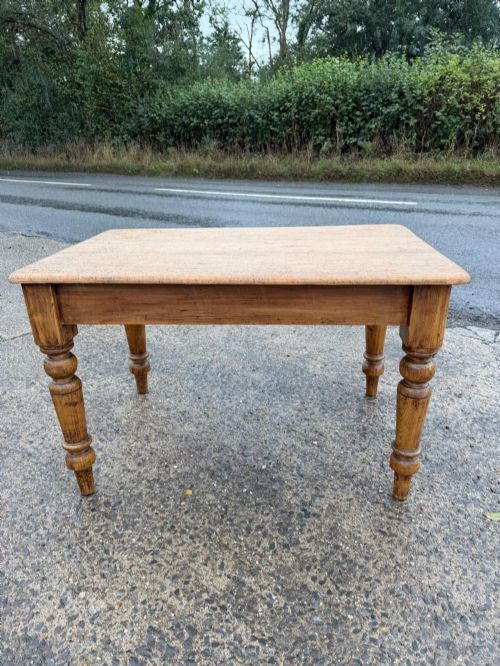
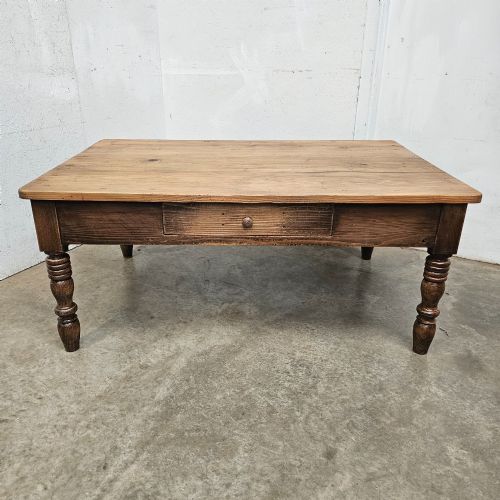
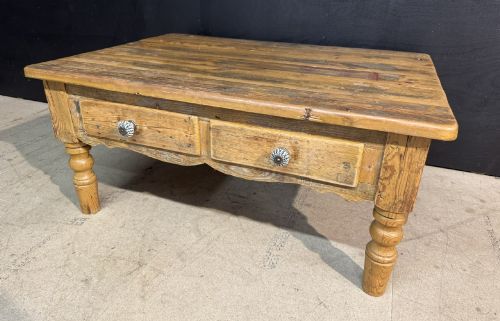
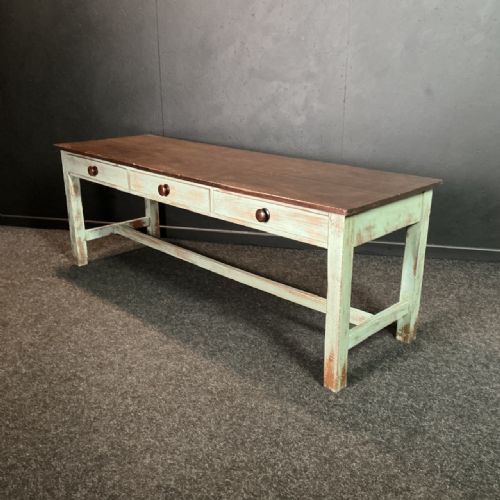
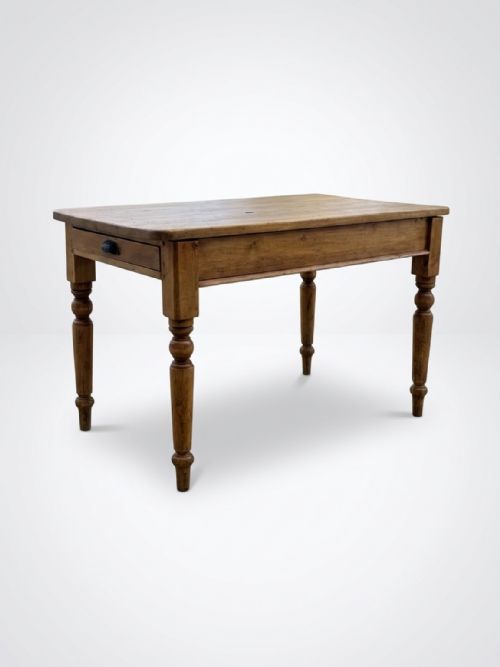
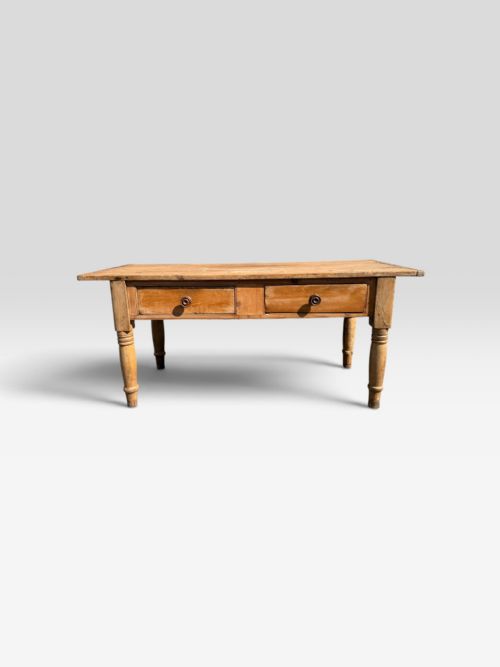
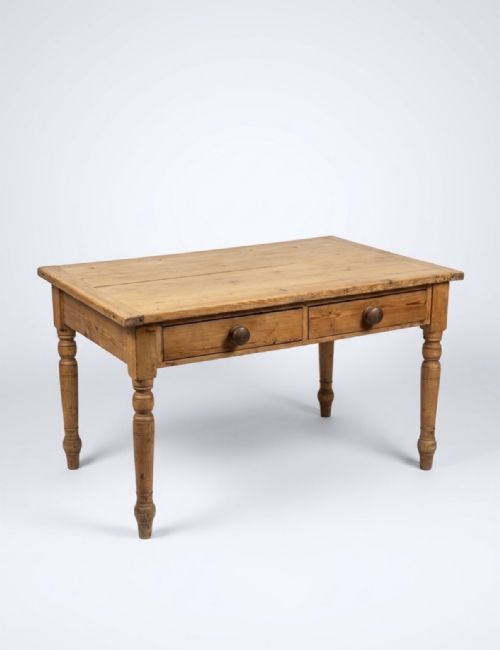
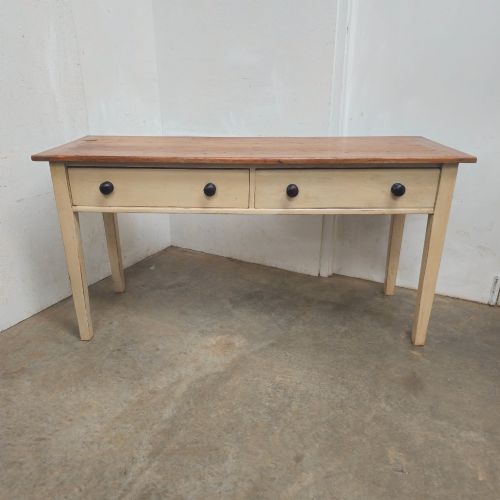
Rustic Pine Drawer Table
A rustic pine drawer table brings robust utility and honest grain to domestic spaces through simple, hardworking utility.

Rustic Pine Drawer Table
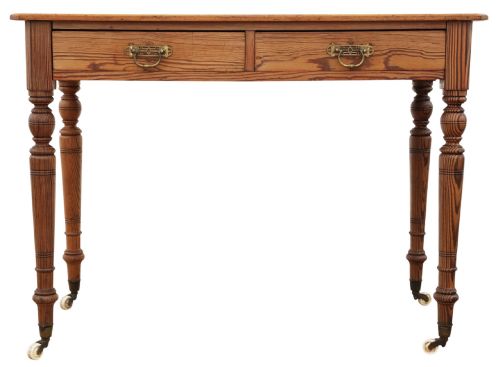
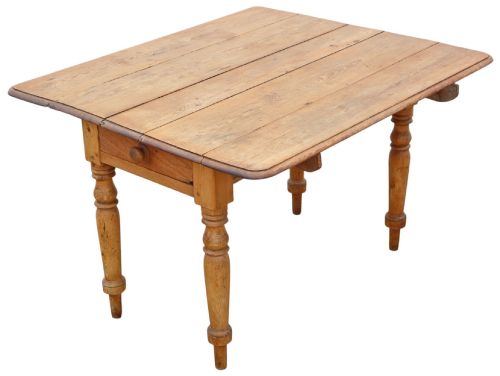
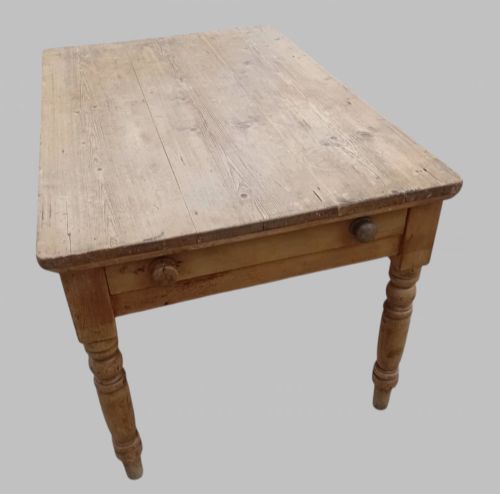
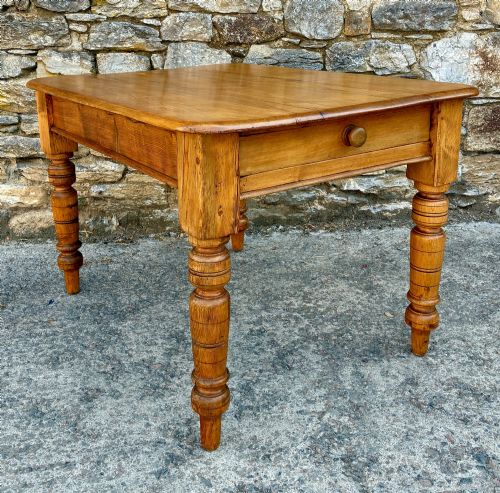
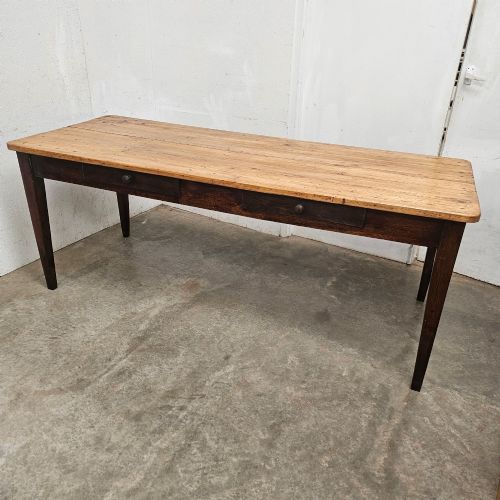
A rustic pine drawer table combines domestic utility with utilitarian storage, forming a central workspace in period kitchens, sculleries, and country houses. These pieces range from compact folding drop-leaf kitchen tables to substantial farmhouse dining tables fitted with single or multiple frieze drawers.
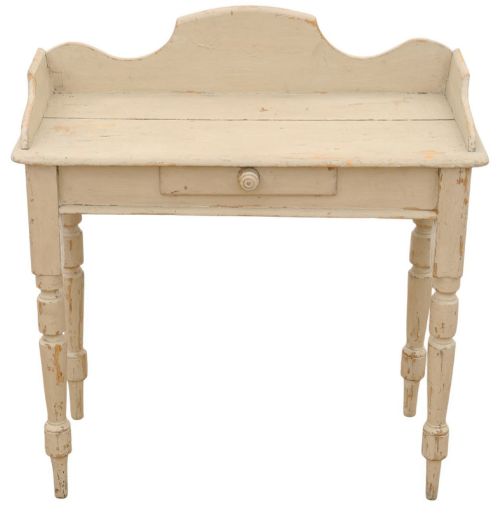
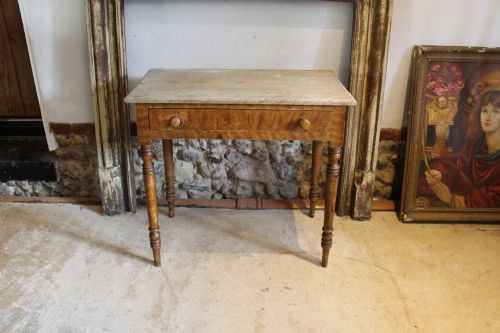
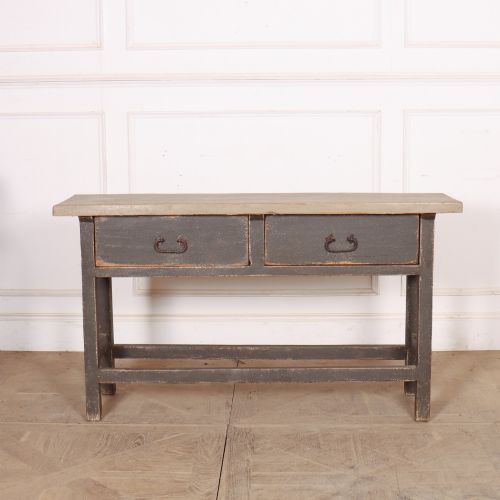
Most examples seen here belong to the nineteenth century, including Victorian country pieces and French provincial formats. They appear as side tables, prep tables, and writing desks, often retaining original paint or scrubbed wooden surfaces.
How they were made
Construction relies heavily on pine and pitch pine, sometimes paired with oak or sycamore for hard-wearing tops and structural framing. Metal fittings like iron and brass appear on drawer pulls and hinges.
Surfaces frequently show layers of historical paint, scumble finishes, or waxed bare timber resulting from decades of scrubbing and daily kitchen use.
Several tables retain old dairy prep marks and stubborn layers of scumble paint from busy nineteenth-century sculleries.
What varies in quality
Quality rests on timber selection and structural integrity, distinguishing heavy pitch pine farm tables from lighter occasional pieces. The presence of original paint finishes or untouched scrubbed tops elevates certain examples.
Proportion and scale dictate the tier of the piece, from modest domestic side tables to expansive estate prep tables with multiple drawers.
The Rustic Pine Drawer Table Glossary
- Pitch pine
- A dense, resinous softwood with prominent grain patterns, valued for durability in heavy-use farmhouse tables.
- Scumble paint
- A translucent decorative glaze dragged or brushed over a base coat to imitate finer wood grains.
- Frieze
- The horizontal architectural band directly beneath the tabletop, where single or multiple drawers are housed.
- Scrub top
- A bare wooden tabletop repeatedly scoured with water and sand to maintain hygiene in dairy and scullery environments.
- Potboard
- An open slatted lower shelf fitted between the legs of a server or dresser base for storing pots and pans.
Rustic Pine Drawer Table: Frequently Asked Questions
What is a rustic pine drawer table?
A rustic pine drawer table is a utilitarian piece of antique furniture designed for practical work, food preparation, or writing in country homes and kitchens. These tables usually feature one or more drawers built into the frieze beneath the top.
They reflect everyday domestic life from the nineteenth century onward. The combination of sturdy pine construction and functional storage makes them enduringly useful in modern settings.
How were these tables used originally?
Originally, these tables served as hard-working surfaces for kneading bread, preparing dairy produce, folding laundry, or sorting household accounts. The drawers kept utensils, linens, and writing implements close to hand.
In larger country houses or farmhouses, they stood in sculleries, kitchens, and dairies where durability mattered more than delicate ornament. Their daily use created the distinctive patinated surfaces collectors value today.
How do I live with a pine drawer table?
Living with a antique pine table involves embracing its honest wear, dents, and historical marks as part of its character. Use placemats or coasters to protect scrubbed or waxed timber surfaces from moisture and heat.
These versatile tables fit well in modern kitchens, dining rooms, or home offices as desks and sideboards. Their neutral wood tones and painted finishes complement both contemporary and traditional interiors.
How do I tell Victorian pine tables apart?
Distinguishing Victorian pine tables involves examining construction methods, timber density, and surface treatments. Standard domestic pieces often feature simple turned legs and deal timber, whereas larger farmhouse examples utilise heavier pitch pine.
Original paint finishes, scumble glazes, or distinct regional joinery help separate standard utilitarian items from finer country house furniture. Examining the drawer construction, such as hand-cut dovetails, provides clues to the exact period.