





Rustic Persian Floor Rug
A rustic persian floor rug brings genuine tribal warmth to a room through dense wool pile and centuries-old geometric weaving traditions.
Rustic Persian Floor Rug
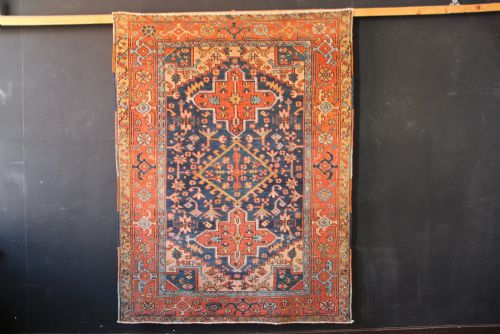
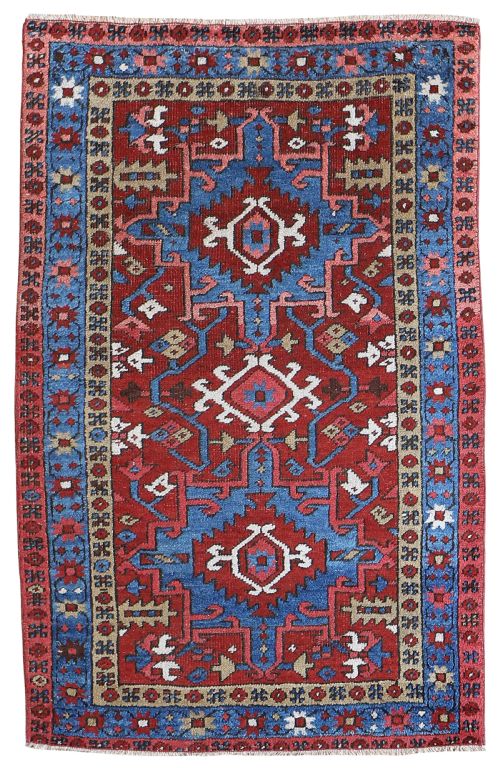
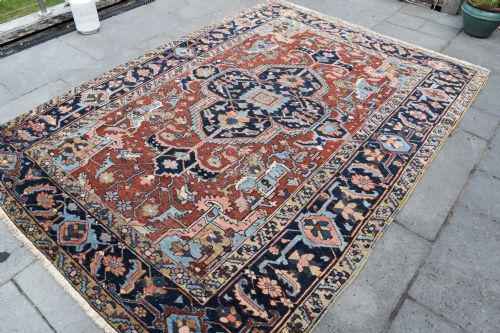
When you search for a rustic persian floor rug, you are looking at hand-knotted floor coverings originating from various regions and nomadic tribes across Persia. The selection on this page leans heavily towards traditional Heriz carpets alongside scarce Bakshaish, Shiraz, Khorasan Baluch, and Quchan Kurdish pieces. These textiles range from room-size carpets down to square and small format rugs.
The dominant aesthetic centres on geometric medallions, tribal motifs, and earthy palettes generated by natural dyeing techniques. Pieces from the early twentieth century sit alongside nineteenth-century examples, displaying the characteristic wear of genuine floor use. Buyers encounter both finely balanced village productions and much looser, rustic tribal designs.
Originating from specific workshops and tribal groups, these carpets serve as durable floor coverings built for practical household longevity. Each piece carries the distinct regional characteristics of its makers, whether from the mountains of Heriz or the workshops of Khorasan. They transform bare floorboards into focal points defined by historical character.
Materials and construction methods
The foundation of these rugs relies on hand-spun wool and cotton, providing a sturdy base for the dense pile knotted by hand. Certain tribal pieces incorporate camel wool into the pile or foundation, yielding a characteristic handle and natural coloration. These organic materials withstand decades of foot traffic while maintaining structural integrity.
Weavers utilised traditional upright looms to tie individual knots onto the warp and weft threads, securing each row with heavy wool insertion. Natural dyes derived from plants and minerals provided the rich reds, blues, and earth tones seen across the inventory. This meticulous manual labour results in a textile that settles flat and softens gracefully over time.
Rustic Persian Floor Rug Retail Price Guide 2026
Typical asking prices for rustic persian floor rug among the pieces listed under this phrase on Sellingantiques today, from the lower quarter to the upper quarter. They describe what is for sale here now, not the wider market.
Several rugs retain the stray stray hairs of nomadic camels woven directly into the wool, reminding you of the desert wind.
Distinguishing quality in tribal and village weaving
Quality in these carpets rests upon the tightness of the knotting, the resilience of the wool, and the harmony of the colour palette. Higher grade examples maintain structural consistency across the field, whereas simpler tribal pieces show charming irregularities in symmetry and line. The handling of the natural dyes dictates whether the colours age with depth or fade harshly.
The condition of the pile and the originality of the outer selvedges and ends dictate the commercial standing of each rug. Master weavers in Heriz or Bakshaish achieved striking graphic clarity within their medallions, distinguishing them from more basic village work. A successful piece balances structural survival with the preservation of its original tribal character.
The Rustic Persian Floor Rug Glossary
- Heriz
- A region in northwest Persia known for producing sturdy geometric carpets with large central medallions and bold corner spandrels. These pieces often feature robust cotton foundations.
- Bakshaish
- An early style predating many standard Heriz rugs, characterised by spaced, abstract geometric designs and muted earth tones. They represent some of the most collectible nineteenth-century village weaving.
- Baluch
- A term for rugs woven by nomadic groups inhabiting the borderlands of Persia and Balochistan, frequently incorporating dark wool and camel hair. Their designs often feature repeating prayer or tree motifs.
- Khorasan
- A vast eastern province in Persia producing finely knotted decorative carpets with sophisticated floral or tribal influences. Khorasan wool is traditionally noted for its high lanolin content and soft lustre.
- Pile
- The vertical or diagonal yarn standing up from the foundation of the rug, forming the soft surface. The height and density of this wool layer determine both comfort and durability underfoot.
Rustic Persian Floor Rug: Frequently Asked Questions
How do I clean a wool floor rug?
Regular gentle vacuuming without a rotating brush roll keeps dust from settling deep into the wool pile. Professional washing by specialists in antique textiles is recommended every few years to protect the natural fibres.
Spot cleaning requires cold water and mild soap, avoiding harsh chemical detergents that strip natural lanolin from the wool. Prompt attention to spills prevents staining without risking the integrity of the antique foundation.
Can I place these rugs in high traffic areas?
Traditional village and tribal rugs were built for daily utility on hard floors, meaning sturdy wool pile withstands normal domestic movement. Placing a breathable rug underlay underneath prevents slipping and reduces friction between the floorboards and the cotton foundation.
Careful placement away from direct, continuous sunlight preserves the natural dyes used in these early Persian carpets. Rotating the rug periodically ensures even wear across the surface over the years.
What is the difference between Heriz and Bakshaish?
Bakshaish carpets generally date earlier, often to the mid-nineteenth century, and display more open, abstract geometric patterns with rustic charm. Their colour palettes tend toward muted terracottas, soft blues, and creamy whites.
Heriz rugs from later periods typically show more structured, bold geometric medallions with precise symmetry and stronger red or navy fields. Both share robust construction but cater to slightly different visual tastes.
How do I identify a tribal rug?
Tribal rugs display spontaneous, asymmetrical geometric motifs reflecting the local folklore and daily environment of nomadic weavers. They often utilise un-dyed camel wool and feature simpler structures compared to urban workshop carpets.
The absence of rigid cartoon guides results in charming irregularities across the borders and field. These pieces feel more tactile and organic in their execution.