
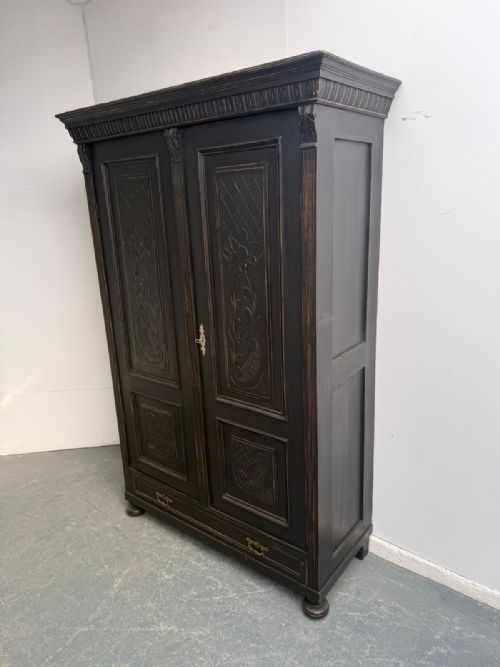
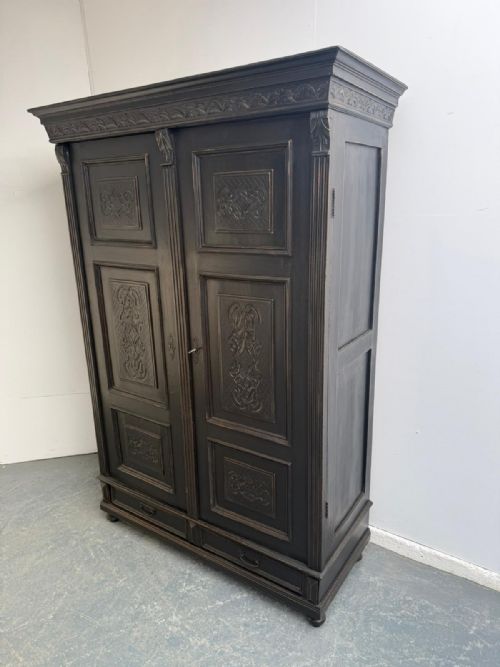


Rustic Oak Wardrobe
A rustic oak wardrobe provides robust storage, bringing enduring grain and provincial character directly into a bedroom.
Rustic Oak Wardrobe
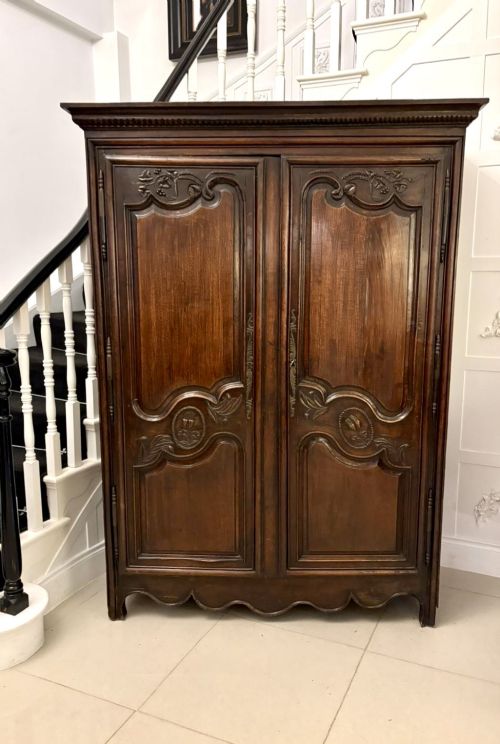
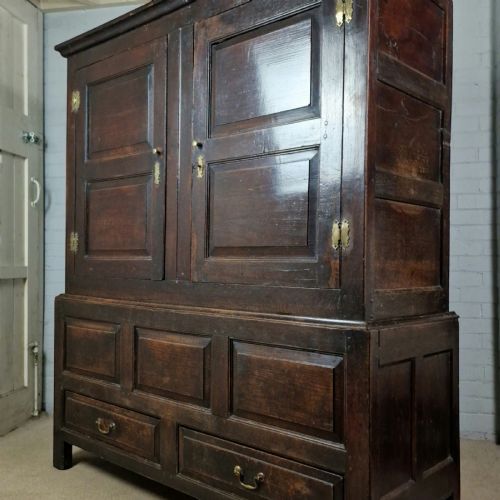
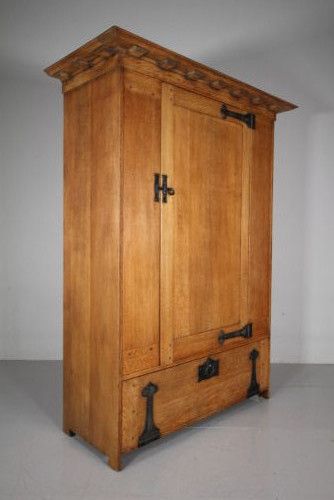
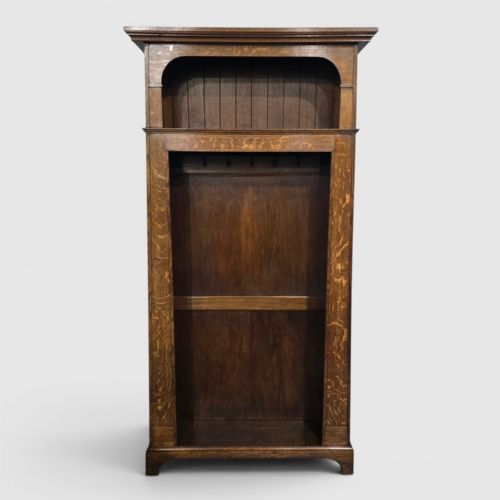
A rustic oak wardrobe is a substantial storage piece rooted in vernacular and country traditions, spanning periods from the 17th century through the Georgian era to the early 20th century. Buyers searching for a rustic oak wardrobe encounter pieces functioning as armoires, livery cupboards, press cupboards, and hanging hall robes.
The selections on this page draw heavily from English vernacular styles, Welsh traditions, and continental country workshops, notably French Provincial and Hungarian folk art. These pieces range from towering 18th-century armoires to smaller hanging cupboards and occasional tabletop cabinets.
Most examples rely on solid oak construction, though certain Hungarian and Welsh iterations incorporate pine alongside oak, sometimes carrying black painted finishes. The forms vary from flat pack designs and harness cupboards to panelled corner units and standing press cupboards.
Assessing Quality
Quality in these wardrobes rests upon the integrity of the timber selection and the retention of original structural elements like panelled doors and iron hardware. Pieces showing undisturbed surface patination and honest signs of age outrank those with excessive modern alterations or replaced timber.
Proportion and execution define the better examples, whether found in the clean lines of a Georgian hanging cupboard or the deep carvings of a French provincial armoire. The harmony between the original brass or iron fittings and the heavy oak carcase dictates the visual success of the piece.
Listings span from the 17th century through the Georgian period up to 1920, utilising solid oak, brass, iron, and painted pine.
Heals
The Rustic Oak Wardrobe Glossary
- Armoire
- A large wardrobe or cupboard, typically with doors enclosing hanging space or shelves. French versions often feature deep cornices and generous double doors.
- Livery Cupboard
- An early form of storage cupboard originally used for provisions or clothing in great houses. These often display pegged joinery and panelled frontages.
- Vernacular
- Architecture and furniture made by local craftsmen using traditional regional methods and local materials. Welsh and French provincial pieces are prime examples.
- Press Cupboard
- A two-part storage piece designed for linens and garments, combining lower drawers with upper cupboard doors. They frequently date from the 18th century.
- Harness Cupboard
- A specialised storage piece originally built for tack and equestrian gear. Their shallow depth and sturdy timber construction suit modern hallway use.
Rustic Oak Wardrobe: Frequently Asked Questions
How do I fit a tall armoire into a modern bedroom?
Measure your ceiling height and entry points carefully before choosing a wardrobe, keeping in mind that older continental pieces often dismantle into sections.
Position the wardrobe away from direct heat sources to prevent the solid oak panels from drying out or splitting over time.
What is the difference between a livery cupboard and an armoire?
A livery cupboard generally dates from the 17th or 18th century and focuses on shelved storage or shallow hanging space with heavy panelled doors.
An armoire provides much deeper internal volume primarily intended for full-length garments and cloaks.
Can I use a hall robe for daily clothing storage?
Hall robes and hanging cupboards offer adequate depth for coats and everyday garments, though internal layouts may require the addition of a modern rail.
Check the internal hanging depth of the specific piece to ensure your coat hangers fit comfortably inside the closed doors.
How do I care for painted pine and oak furniture?
Dust the surfaces regularly with a dry cloth and avoid commercial polishes that can build up a greasy residue on painted or waxed timber.
Maintain a stable room humidity to protect both the painted finishes and the underlying oak structure from seasonal movement.