
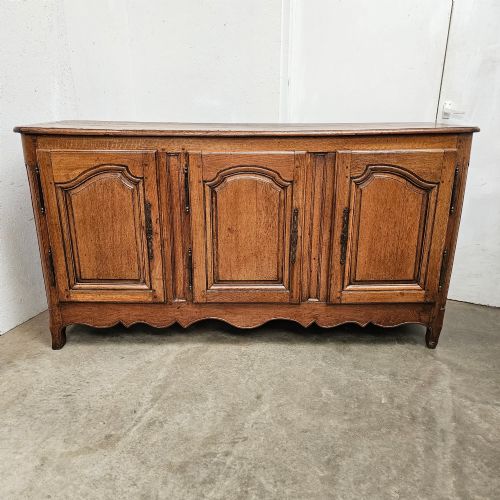
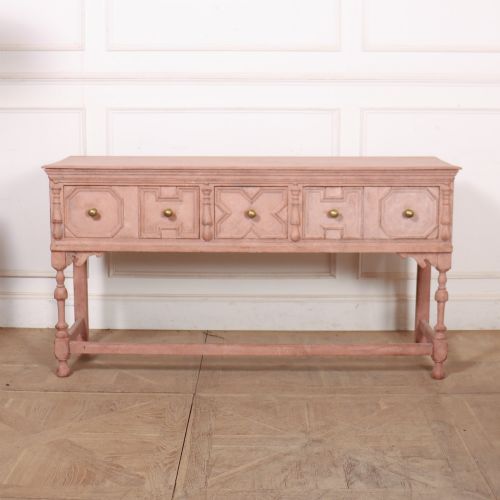
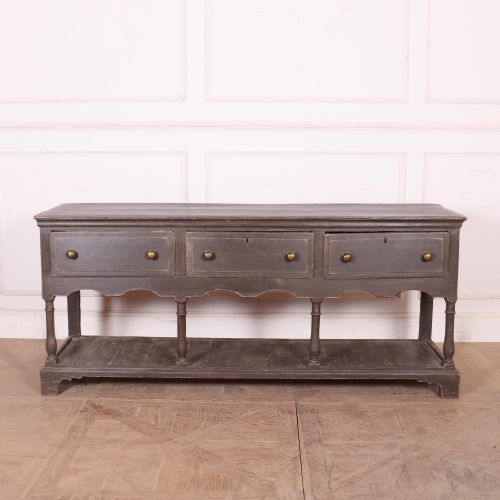
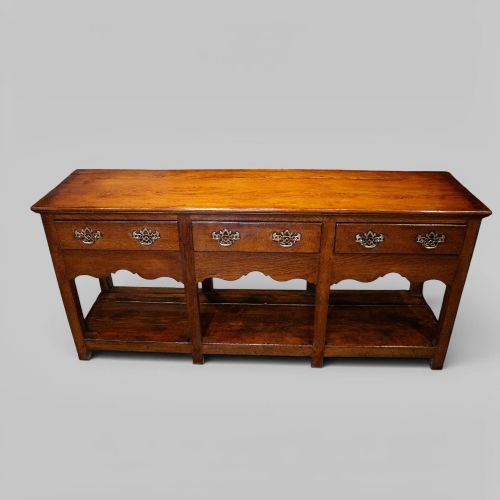
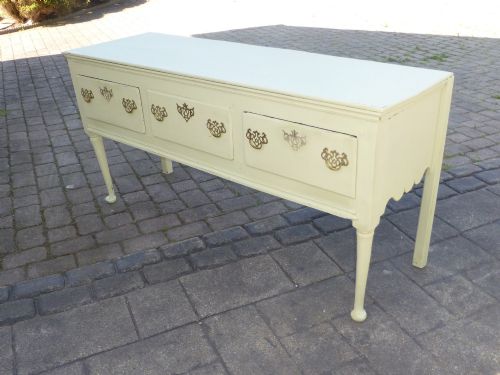


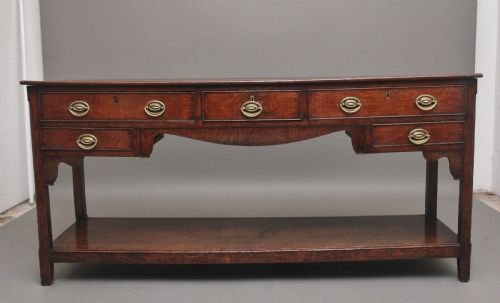


Rustic Oak Low Dresser
A rustic oak low dresser brings grounded utility and honest timber grain into a room, offering deep surface space and historic character.
Rustic Oak Low Dresser
A rustic oak low dresser serves as a substantial storage piece with a low profile, combining drawers, open potboards, or cupboards within a single heavy frame. These forms derive from centuries of practical farmhouse storage where durability mattered above all else.
The versions most commonly met here span the eighteenth and nineteenth centuries, including English, Welsh, and French provincial examples. Pieces range from painted dresser bases to open potboard designs and elm-topped side tables.
Makers shaped these utilitarian items using robust native timbers, adapting regional styles from Georgian country manners to Arts and Crafts interpretations. The resulting furniture balances everyday utility with distinct period presence.
How they were made
Joiners constructed these low dressers primarily using solid oak, frequently augmented with elm, fruitwood, and pine for secondary elements. Surfaces often display hand-planed finishes, pegged mortise and tenon joints, and occasional painted treatments.
Hardware consists of forged iron handles, brass drop pulls, and working hinges that secure panelled doors and drawer banks. Timbers were sourced locally, resulting in varied grain patterns and natural seasoning cracks that accumulate over generations.
Expect historic housemaids to have left their mark via minor drawer ink-stains and centuries of enthusiastic scrubbing on the potboards.
What varies in quality
The distinction between ordinary and superior pieces rests on timber selection, structural integrity, and the preservation of original surfaces. Better examples retain untouched patination on the oak, crisp mouldings, and unreplaced hardware.
Proportion and regional detailing also determine standing, with well-balanced potboard bases and fretted aprons commanding greater interest. Alterations to feet, replacement tops, or stripped paint layers shift a piece away from its original state.
The Rustic Oak Low Dresser Glossary
- Potboard
- An open lower shelf beneath a dresser base designed for storing heavy earthenware and platters. It sits just above the floor on sturdy stiles.
- Enfilade
- A long sideboard or low cabinet featuring multiple doors in a row, common in French provincial dining rooms. It provides expansive surface and interior space.
- Fretted apron
- A decorative wooden skirt cut with a pierced pattern, often fitted beneath the drawer line of tables and dresser bases. It adds lightness to a heavy frame.
- Provincial
- Furniture made in regional workshops outside metropolitan centres, prioritising local timbers and utilitarian forms over academic London styles.
- Patina
- The surface sheen and colour developed by wood through decades of handling, polishing, and exposure to light.
Rustic Oak Low Dresser: Frequently Asked Questions
How do I date an oak dresser?
Dating relies on observing construction methods, timber choice, and hardware styles. Hand-pegged joints, board thickness, and regional design traits help narrow the period.
Earlier eighteenth-century pieces often show irregular hand-planing and pegged frames, while nineteenth-century examples display more uniform machine-sawn elements.
Where were low dressers used?
These pieces originated in farmhouse kitchens and large domestic sculleries as working surfaces for food preparation and storage. They held dry goods, linens, and everyday utensils.
In contemporary homes, they function well as sideboards in dining rooms or media consoles in living spaces due to their low height.
Are painted finishes original?
Many provincial pieces received coats of paint or wash during their working lives to protect the timber or refresh the room's decor. Some finishes date to the eighteenth or nineteenth centuries.
Examining the layers under magnification helps determine whether a painted surface is historic or a later decorative addition.
What is fruitwood used for?
Fruitwood species such as pear or apple occasionally appear alongside oak and elm in regional furniture construction. Makers utilised available local woods for drawer linings or secondary panels.
These timbers age to warm, honeyed tones that contrast subtly with the harder oak structural frames.