

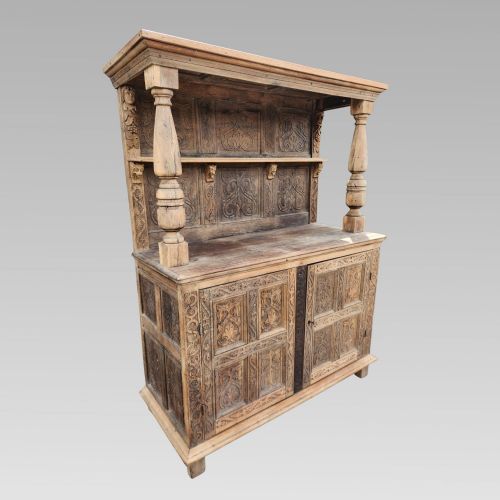


Rustic Oak Kitchen Sideboard
A rustic oak kitchen sideboard grounds a room with heavy timber, utilitarian storage, and centuries of vernacular use.

Rustic Oak Kitchen Sideboard
A rustic oak kitchen sideboard encompasses sturdy storage furniture designed for food preparation, serving, and domestic organisation in country houses, cottages, and farmhouses. When you search for a rustic oak kitchen sideboard, you encounter heavy timber storage units originating from domestic and provincial workshops.
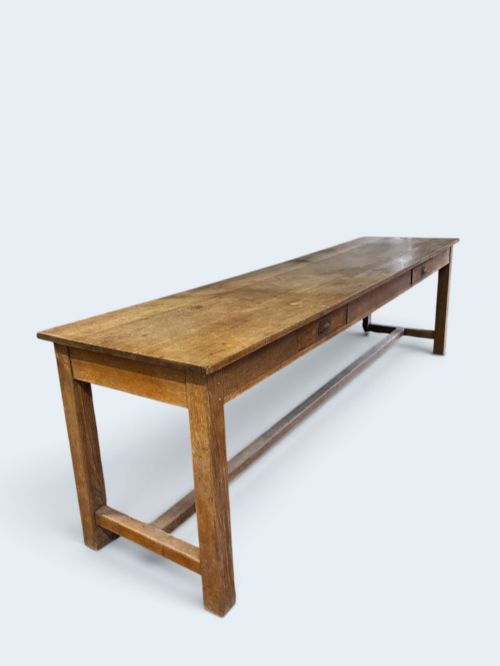
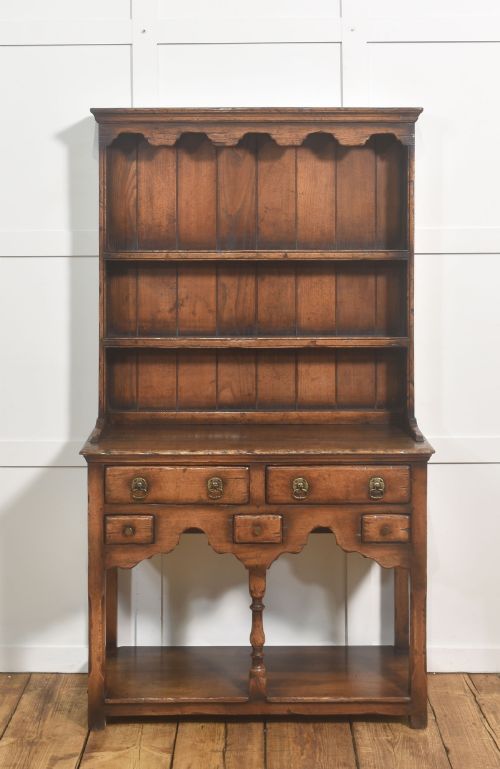
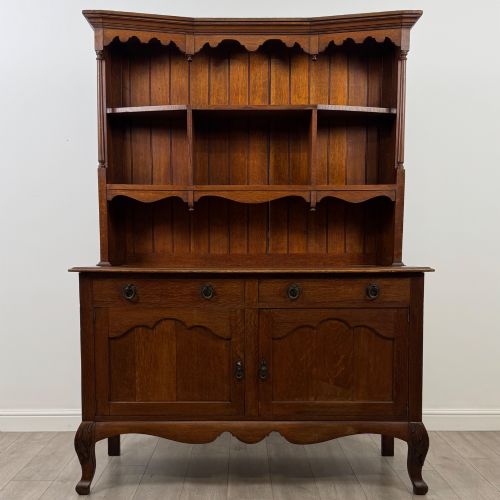
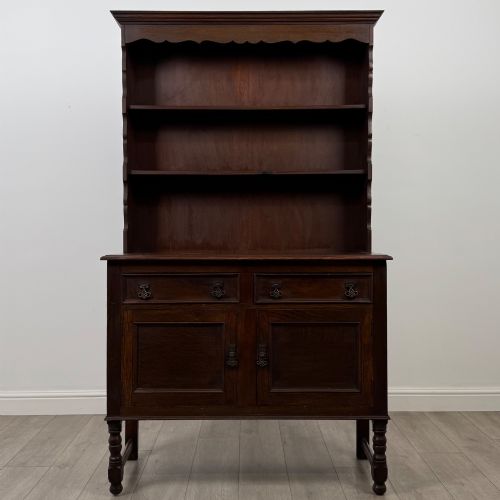
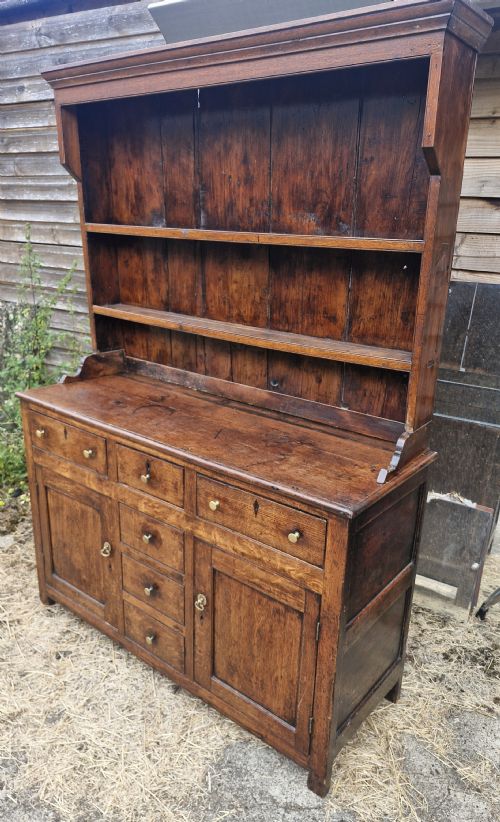
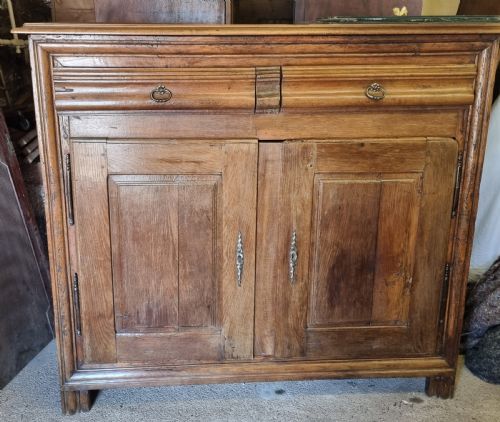
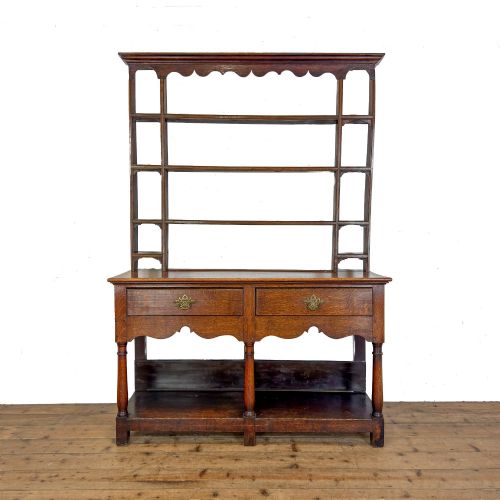
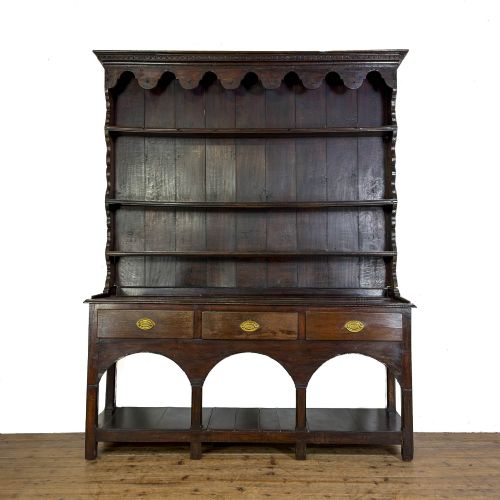
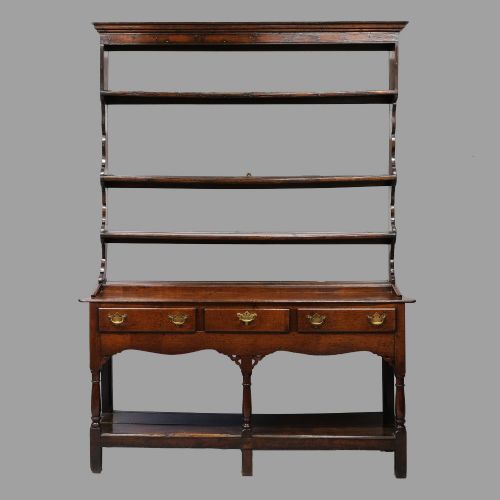
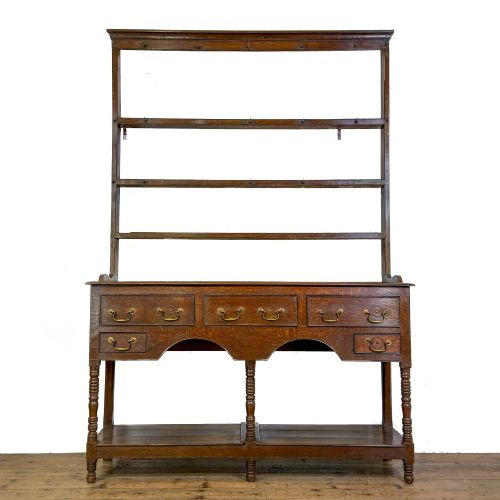
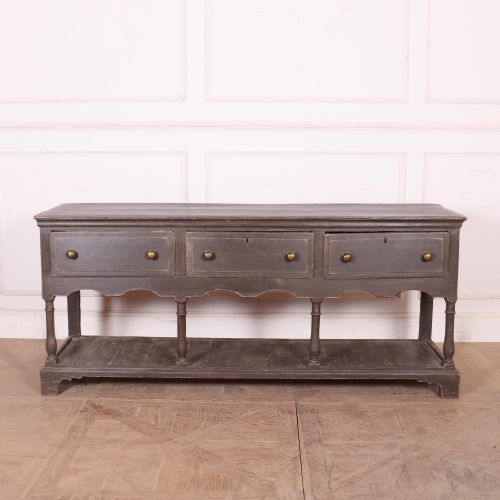
The pieces you are most likely to meet on this page include Welsh dressers with plate racks, potboard dresser bases, and serving tables dating from the eighteenth century through to the early twentieth century. These items combine drawers, cupboards, and open shelving configured for daily kitchen utility.
Regional variations span English country vernacular, French provincial workshops, and Welsh cottage traditions. The forms range from low potboard bases to towering dresser combinations featuring open-backed plate racks.
Materials and construction
Construction relies primarily on solid oak, frequently supplemented with fruitwood, pine, and elm for secondary timbers or internal elements. Cabinet makers utilised traditional pegged mortise and tenon joints to withstand heavy domestic use.
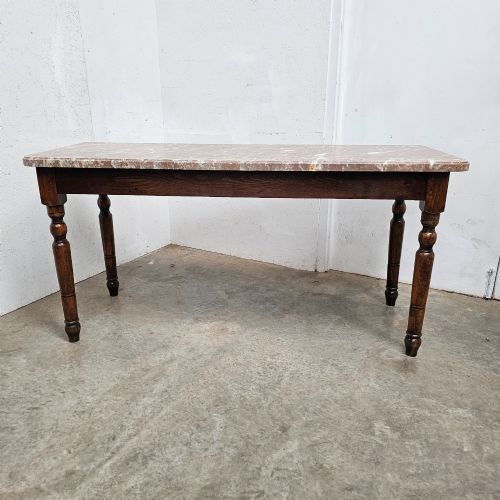
Hardware consists of forged iron hinges and brass pulls, while selected items incorporate marble tops, paint finishes, or bone details. Surfaces display the tool marks of hand-planing and timber seasoning native to provincial workshops.
Listings feature oak alongside elm, pine, and fruitwood across Georgian, Victorian, and Edwardian periods.
Judging quality
Quality rests upon the integrity of the timber selection, the crispness of hand-carved mouldings, and the survival of original patination. Pieces retaining their early brass hardware and unblemished potboards sit firmly at the top of the range.
Proportion and structural honesty separate superior provincial examples from lesser utilitarian builds. The balance between base cabinets and upper plate racks defines the aesthetic success of the piece.
The Rustic Oak Kitchen Sideboard Glossary
- Potboard
- An open slatted lower shelf beneath a dresser base traditionally used for cooling pots and drying dairy equipment.
- Welsh dresser
- A storage unit featuring a lower section of drawers and cupboards surmounted by an open plate rack for displaying ceramic tableware.
- Plate rack
- An upper wooden shelving structure attached to a dresser designed to display plates upright against a grooved backboard.
- Provincial
- A term describing furniture made in regional areas outside metropolitan centres, often reflecting local vernacular design preferences.
- Vernacular
- Everyday utilitarian furniture built by local craftsmen to fulfil specific domestic or agricultural functions without academic stylistic pretension.
Rustic Oak Kitchen Sideboard: Frequently Asked Questions
What is a potboard dresser?
A potboard dresser is a low-base storage unit featuring an open lower shelf positioned near the floor, historically used in country kitchens for storing heavy cookware.
These pieces provide a solid surface for food preparation above while keeping everyday utensils and pots accessible below.
How do I date an oak dresser?
Dating relies on examining construction techniques, such as hand-cut dovetails, pegged joints, and the configuration of drawers and mouldings.
Earlier eighteenth-century pieces often display boards with distinct width variations and hand-planed surfaces, whereas twentieth-century examples show more uniform machine milling.
Where were these sideboards used?
These pieces originated in farmhouse kitchens, cottages, and country houses where they functioned as the central hub for food preparation and storage.
Today, they integrate into modern kitchens, hallways, and dining rooms as practical storage units with historical character.
What wood was used?
Solid oak forms the primary material for these sideboards, selected for its durability, strength, and resistance to heavy kitchen work.
Secondary timbers such as fruitwood, pine, and elm frequently appear in drawer linings, backboards, and internal framing.