



Rustic Oak Kitchen Cupboard
A rustic oak kitchen cupboard brings dependable utility and regional character into a home, offering sturdy storage rooted in centuries of vernacular craftsmanship.
Rustic Oak Kitchen Cupboard
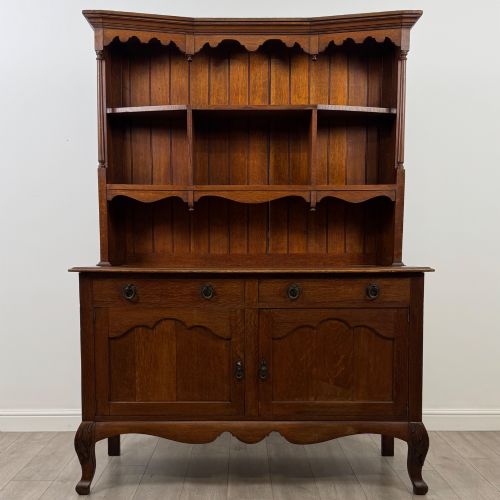
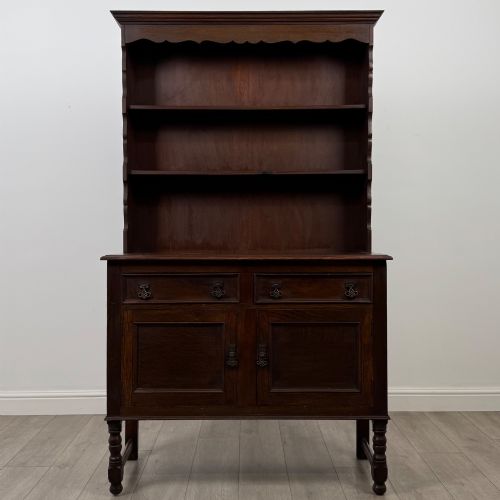
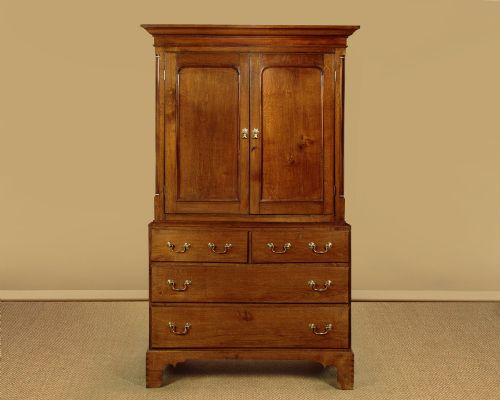
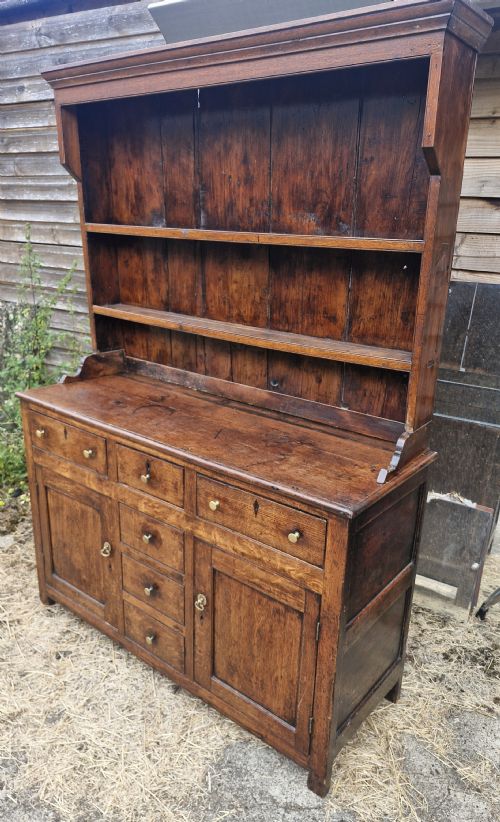
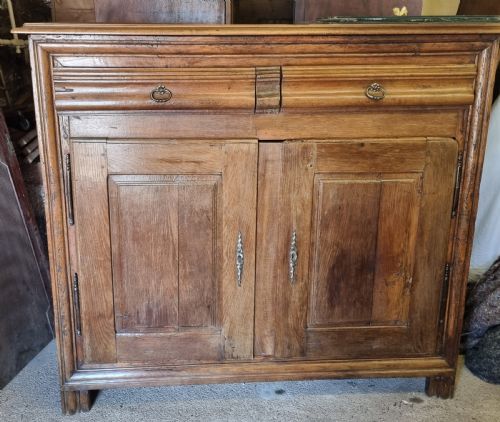
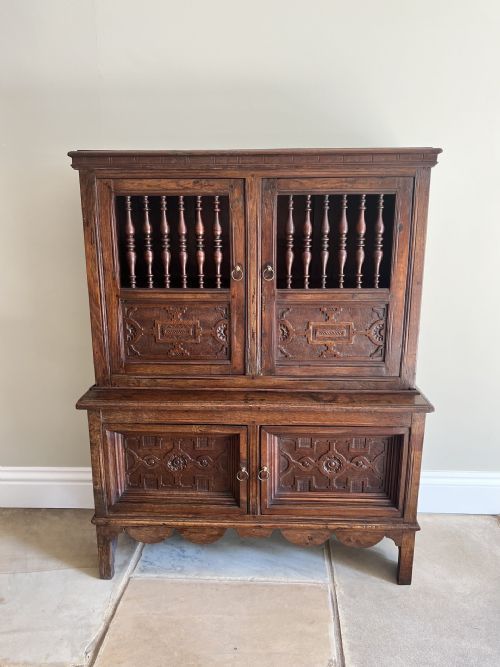
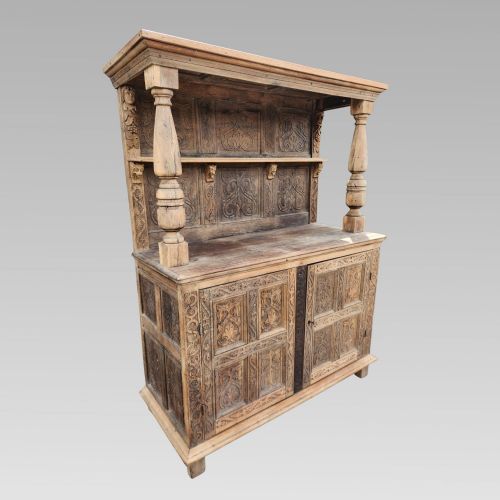
When you search for a rustic oak kitchen cupboard, you encounter a selection of vernacular furniture primarily spanning the eighteenth and nineteenth centuries. These pieces originate from regional workshops in England, Wales, and provincial France, taking forms such as dressers, food cupboards, larder cabinets, and pot board bases. Most examples combine a lower storage base enclosed by doors or drawers with upper plate racks or open shelving designed for daily household use.
The versions most commonly met on this page are Welsh dressers and country oak cupboards from the Georgian and Victorian eras. These items reflect the domestic routines of past rural households, constructed to hold tableware, dry goods, and provisions. Their proportions range from small cottage cupboards to large two-part dressers with breakfront drawers and plate racks.
How they were made
Makers constructed these cupboards using solid native timber, predominantly oak complemented occasionally by fruitwood, pine, and walnut. Boards were hand-sawn and joined using traditional pegging and mortise and tenon techniques suited to heavy daily domestic service.
Iron and brass hardware such as hinges, latches, and drawer pulls were forged or cast by hand, securing doors and drawers that often retain their original operational fittings. Surfaces were finished simply through waxing or oiling, allowing the natural grain of the oak to weather and darken over centuries.
Some French provincial bread safes feature carved spindle ventilation slats designed specifically to let loaves breathe while keeping mice at bay.
What varies in quality
The distinction between standard domestic items and finer pieces rests in the selection of timber and the restraint of regional detailing. Superior examples exhibit tightly grained oak boards selected for uniform colour, alongside proportioned cornices, panelled doors, and well-integrated plate racks.
Construction integrity also defines the tier of a piece, separating workshops that employed careful joinery from those producing basic utilitarian furniture. Original backboards, undisturbed hardware, and minimal structural alterations distinguish the more intact survivals from heavily restored examples.
The Rustic Oak Kitchen Cupboard Glossary
- Pot board
- An open lower shelf fitted beneath a dresser base, traditionally used for storing pots and pans. It sits just above the floor on extended stiles.
- Plate rack
- An upper framework attached to a dresser or wall, featuring grooved plate rails and vertical slats to display ceramic plates upright. It forms a distinct visual counterpart to the lower storage cabinet.
- Vernacular furniture
- Domestic objects built by local craftspeople using regional traditions and readily available materials rather than following metropolitan academic styles. These pieces prioritise utility and local aesthetic preferences.
- Breakfront
- A piece of furniture whose central section projects forward from the flanking outer sections. This arrangement creates visual depth and alters internal storage compartment widths.
- Panetiere
- A small ventilated wooden cupboard or wall-mounted safe originating in France, traditionally used for storing bread and protecting it from pests.
Rustic Oak Kitchen Cupboard: Frequently Asked Questions
What is a rustic oak kitchen cupboard used for?
These cupboards were originally built for storing provisions, crockery, and utilitarian kitchen items in rural homes. Today, they serve practical storage and display functions in domestic kitchens and dining rooms.
Their sturdy shelves and drawers easily accommodate modern tableware, dry goods, or decorative collections while introducing traditional warmth to a room.
How do I date an antique oak cupboard?
Dating relies on examining construction methods, timber characteristics, hardware, and regional style markers. Hand-sawn boards, pegged joinery, and forged iron hinges typically point to eighteenth-century or earlier origins.
Later Victorian and Edwardian pieces often incorporate machine-sawn timber, standardised fixings, and more uniform factory-produced mouldings.
Are these cupboards suitable for daily use?
Solid oak construction and time-tested joinery make these pieces exceptionally durable for contemporary living. Their deep shelves and drawers provide robust capacity that often surpasses modern flat-pack furniture.
Routine maintenance involves simple waxing to nourish the timber and protecting surfaces from excessive moisture and heat.
What is the difference between a dresser and a larder cupboard?
A dresser typically combines a lower storage cabinet with an open upper rack designed for displaying plates. In contrast, a larder cupboard is a fully enclosed tall cabinet intended to keep perishable foods cool and protected.
Larder cupboards often feature panelled doors or ventilated sections for air circulation, whereas dressers focus on open shelving utility.
Where were these regional cupboards made?
These pieces originated in rural workshops across England, Wales, and France, reflecting local vernacular traditions. Welsh and English country makers utilised native oak, while French provincial makers worked with regional fruitwoods and walnut.
Each region developed distinct proportions, cornices, and door panel configurations that distinguish their geographic origins.