




Rustic Oak Island
A rustic oak island brings honest utility and aged character into a modern kitchen, serving as the central workspace for daily prep.
Rustic Oak Island
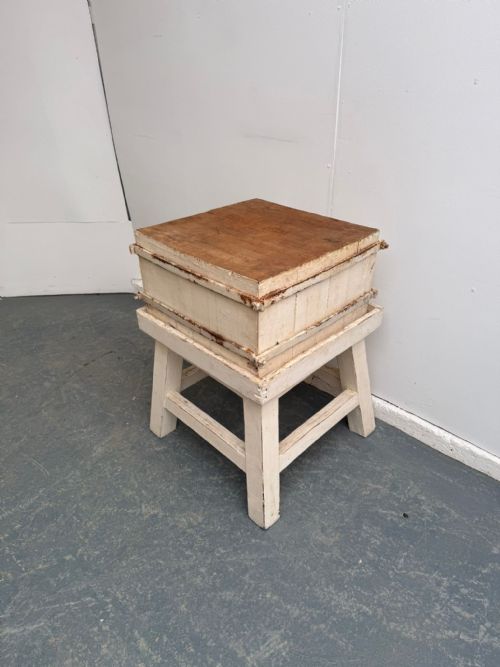
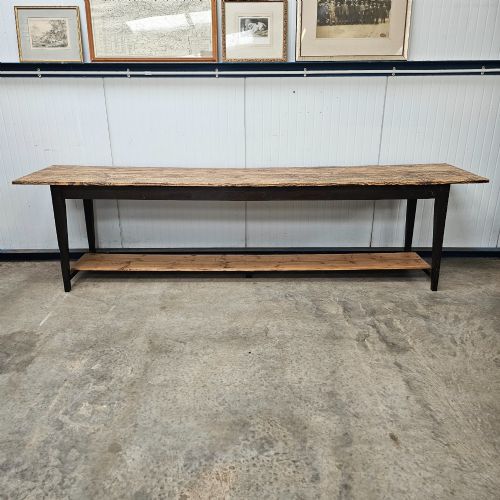
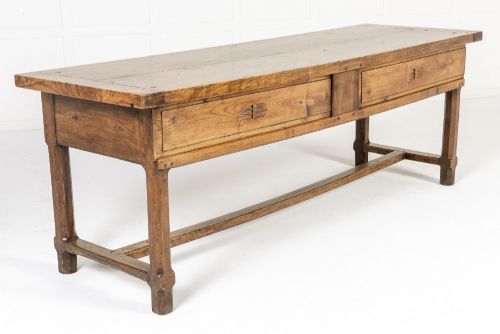
A rustic oak island encompasses sturdy work tables, butchers blocks, and workbenches repurposed from domestic, commercial, and agricultural settings. These pieces originate predominantly from the nineteenth century, alongside early twentieth-century examples shaped by French provincial, rustic farmhouse, and Scottish vernacular traditions.
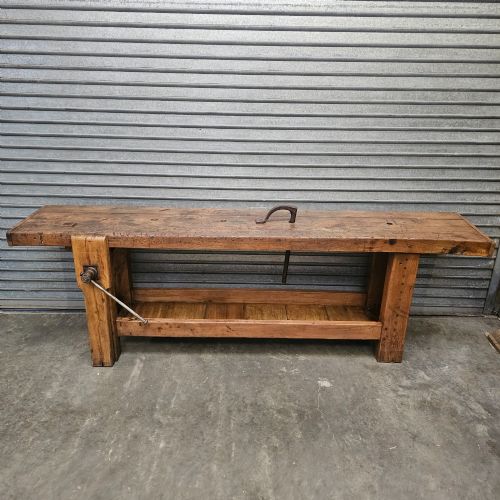
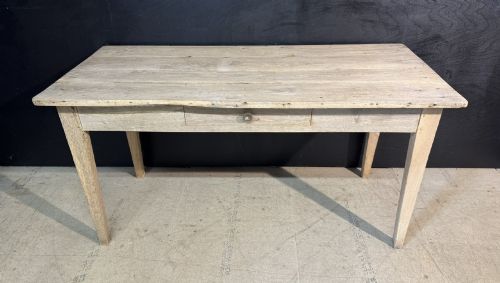
Buyers will most frequently encounter substantial oak work tables, drapers tables, and artisan workbenches equipped with original vices or drawers. These forms combine solid timber tops with robust bases, offering generous proportions suited to contemporary culinary spaces.
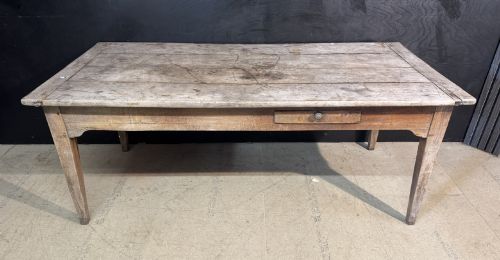
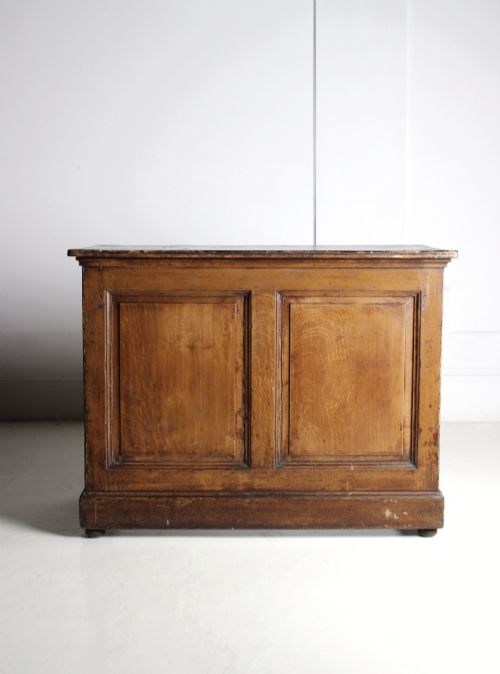
The selection ranges from bleached oak serving tables to monumental harvest tables and shop counters. Each piece reflects the functional demands of its original workshop or kitchen, featuring the scars and patination of decades of hard work.
What varies in quality
Quality rests in the integrity of the timber and the depth of the patination earned through genuine utility. Pieces that retain their original vices, deep drawers, and uncompromised structural frames stand apart from heavily altered examples.
Proportion and scale dictate the upper tier of the range, particularly monumental drapers tables and substantial workbenches with balanced timber thicknesses. The relationship between the oak top and its supporting base determines the overall visual weight and stability.
Rustic Oak Island Retail Price Guide 2026
Typical asking prices for rustic oak island among the pieces listed under this phrase on Sellingantiques today, from the lower quarter to the upper quarter. They describe what is for sale here now, not the wider market.
Several pieces still retain the exact wood-shaving dust and indentations left by nineteenth-century artisans wielding hand planes.
Trussant & Cie
The Rustic Oak Island Glossary
- Butchers block
- A thick-topped wooden block designed for heavy meat preparation and chopping. These heavy surfaces often display deep end-grain scoring from decades of use.
- Drapers table
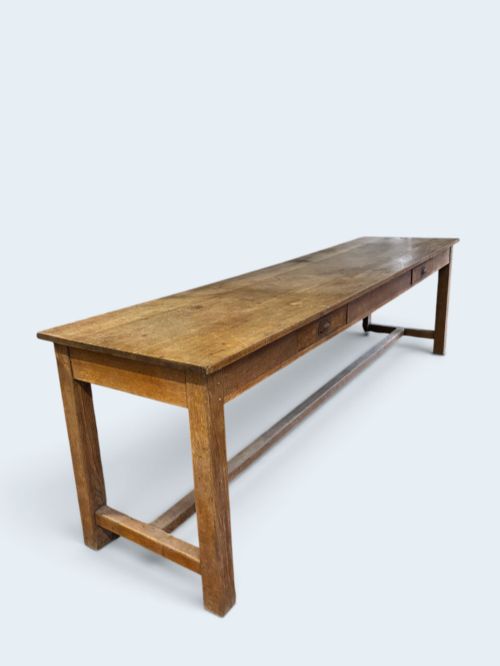
- A long, narrow utility table historically used in textile shops for measuring and folding cloth. Their generous length makes them ideal for modern kitchen islands.
- Workbench
- A sturdy wooden table utilised by artisans and carpenters, frequently fitted with wooden or iron vices. They provide exceptional stability and industrial character.
- Harvest table
- A long dining or work table traditionally used during seasonal agricultural gatherings. They are characterised by narrow proportions and long expanses of timber.
- Patina
- The surface sheen and colour developed by wood and metal over years of handling, polishing, and exposure. A good patina cannot be replicated artificially.
Rustic Oak Island: Frequently Asked Questions
Can I use an antique workbench as a kitchen island?
These workbenches provide exceptional workspace heights and robust surfaces that handle kitchen tasks easily. Their integrated drawers and vices offer practical storage and utility.
Ensure the clearance underneath accommodates your seating requirements before placing one in a domestic kitchen.
How do I clean and care for an old oak top?
Wipe surfaces down with a damp cloth and mild soap, avoiding harsh chemical cleaners that strip the historic finish. Regular application of natural oils helps nourish the dry timber.
Keep the wood away from excessive direct heat sources to prevent splitting or warping in the grain.
What is the difference between a drapers table and a harvest table?
Drapers tables originate from retail shop environments and usually feature multiple lower tiers for storing folded textiles. Harvest tables stem from agricultural settings and prioritize long, unbroken expanses for communal dining.
Both offer narrow proportions that fit well into galley-style or central kitchen layouts.
How do I identify a nineteenth-century French work table?
Nineteenth-century French pieces often display generous oak planking, subtle tool marks from hand-working, and pegged mortise and tenon joinery. The timber frequently exhibits a lighter, bleached tone or deep warm patination.
Examining the underside reveals hand-swn framing and traditional construction methods distinct from later mass production.