



Rustic Livestock Art
Rustic livestock art captures the enduring appeal of farmyard scenes, cattle, and sheep, offering a direct connection to pastoral history for your walls.
Rustic Livestock Art
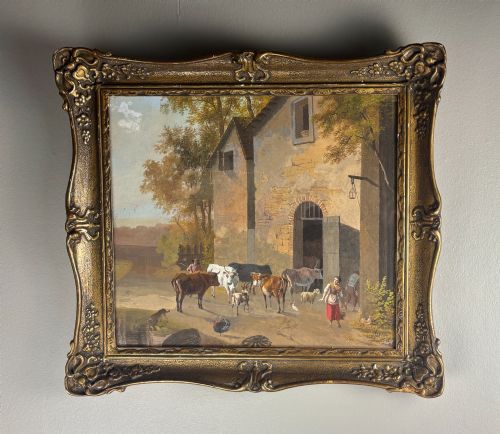
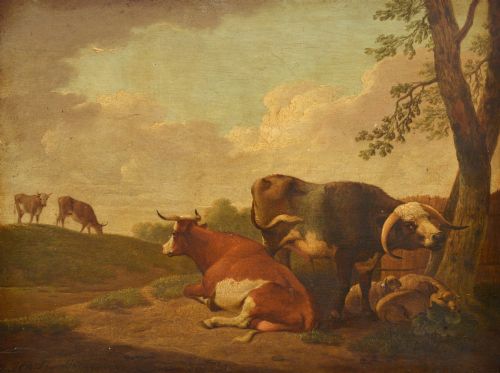
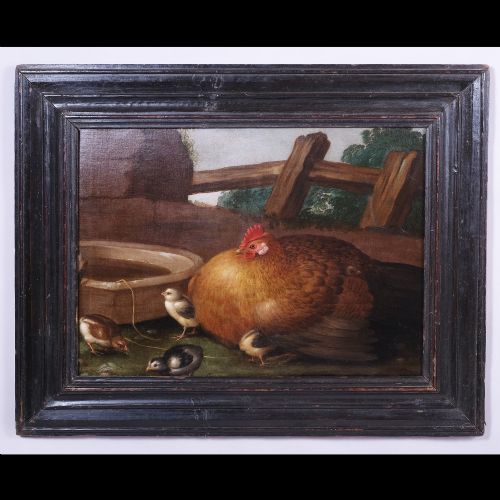
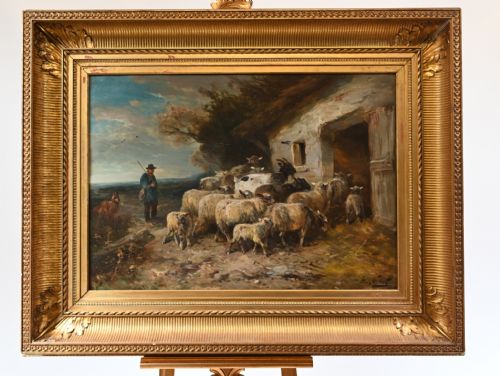
Rustic livestock art encompasses oil paintings, watercolours, prints, and sand pictures depicting farmyard scenes, cattle, sheep, and shepherds in rural landscapes. These works span several periods, drawing heavily from eighteenth-century European traditions, nineteenth-century realism, and Victorian pastoral styles.
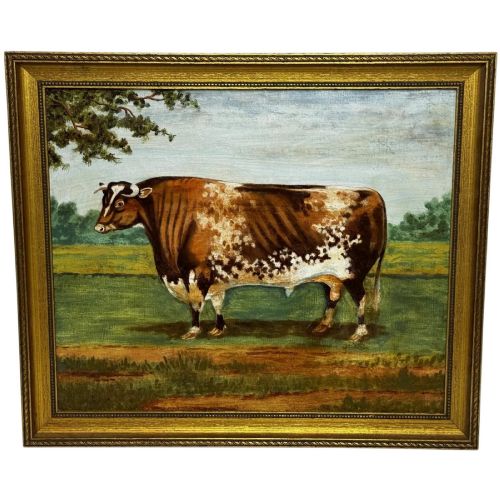
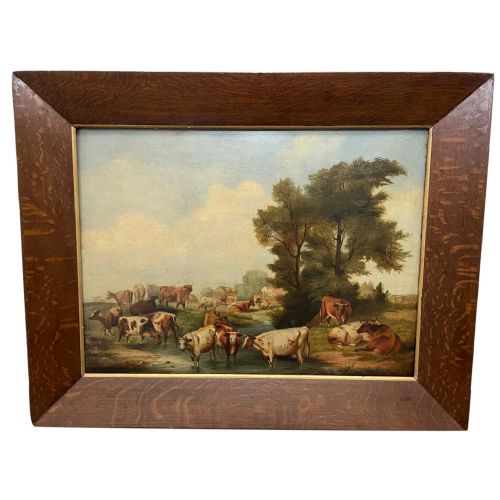
The most common pieces on this page are oil on canvas paintings and framed watercolours from the nineteenth century. Buyers frequently encounter depictions of shorthorn bulls, flocks of sheep resting in fields, and cattle gathered at watering holes, framed in wood or giltwood.
How they were made
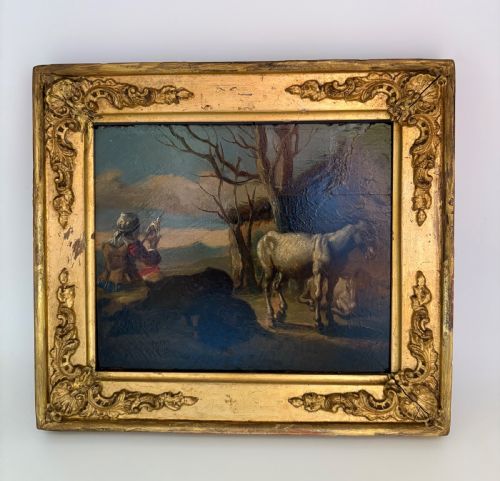
The primary medium for these works is oil paint applied to canvas, wood panels, or oak panels, supplemented by watercolours on paper and traditional sand pictures. Canvas works capture fine textures and tonal depth, while panel paintings offer a rigid, durable support used by earlier European schools.
Framing forms an integral part of the presentation, utilising traditional materials such as carved wood, burr wood, and giltwood. These frames complement the pastoral subject matter and protect the edges of the canvas or paper over centuries.
Several sheep have secured prominent starring roles in nineteenth-century folk art without needing any formal artistic training.
What varies in quality
Quality in rustic livestock art rests upon the anatomical accuracy of the animals, the handling of light within the landscape, and the cohesion of the composition. Skilled artists render the musculature of cattle and the wool texture of sheep with keen observation.
The integration of the livestock into their surroundings distinguishes finer works from simpler decorative pieces. Superior paintings demonstrate atmospheric depth in the sky and foliage, whereas lesser examples rely on formulaic arrangements of farmyard elements.
The Rustic Livestock Art Glossary
- Oil on canvas
- Pigments bound in a drying oil applied to a stretched fabric support. This technique allows for rich colour blending and textured brushwork.
- Oak panel
- A rigid wooden support used frequently in earlier European painting. It provides a stable surface that endures for centuries.
- Giltwood
- Wood that has been covered with a thin layer of gold leaf. It is commonly found on traditional frames surrounding fine art pieces.
- Pastoral
- A genre of art depicting rural life, shepherds, and farm animals in idealized landscapes. It evokes a peaceful, agrarian existence.
- Sand picture
- An artwork created by fixing coloured sands to a backing material to form a picture. This technique requires meticulous placement of grains to build tone and form.
Rustic Livestock Art: Frequently Asked Questions
What periods do these pieces date from?
The works span from the seventeenth century through to the mid-twentieth century. The majority originate in the eighteenth and nineteenth centuries.
Collectors will find items representing specific eras such as the Georgian, Victorian, and Edwardian periods, each reflecting the artistic tastes of their time.
How should I hang an oil painting?
Oil paintings on canvas or panel require stable environmental conditions away from direct sunlight and dampness. Proper picture wire and wall fixings suited to the weight of the frame are essential.
Allow the piece to sit flat against the wall, using traditional brass picture hooks secured into wall studs for safety.
What is the difference between an oil and a watercolour?
Oils use pigment suspended in drying oil on canvas or wood, offering rich textures and deep colours. Watercolours use water-soluble pigments on paper, creating a more delicate and translucent finish.
Watercolours require protective glass framing to prevent moisture damage, while oil paintings remain open to the air.
Are these works signed by artists?
Some pieces bear signatures or attributions to named painters, while others belong to particular schools of art or follow known masters. Unsigned works are frequently attributed to British or European schools based on style.
Documentation on the back of frames or panels often provides clues regarding the artist or the period of creation.