



Rustic Kitchen Workbench
A rustic kitchen workbench is a practical utility piece built for daily food preparation and hard labour, bringing warmth and enduring function to the heart of the home.
Rustic Kitchen Workbench
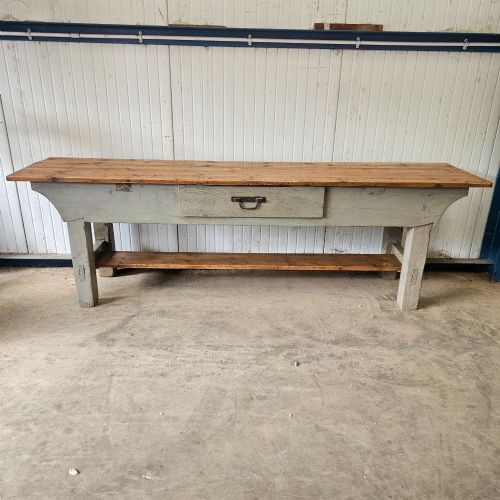
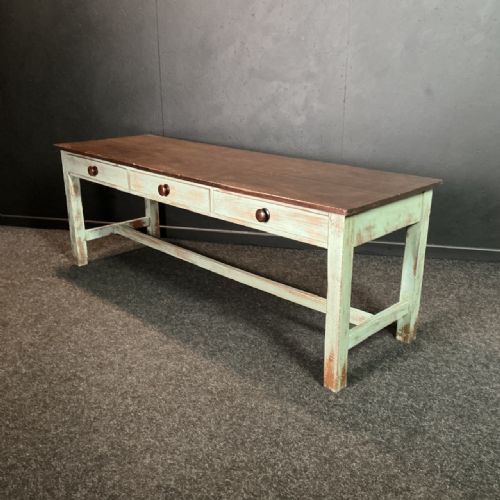
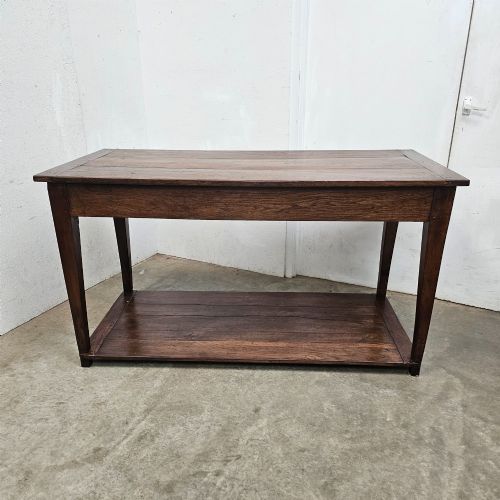
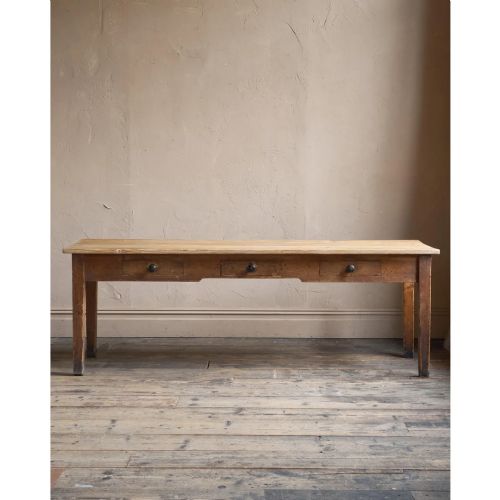
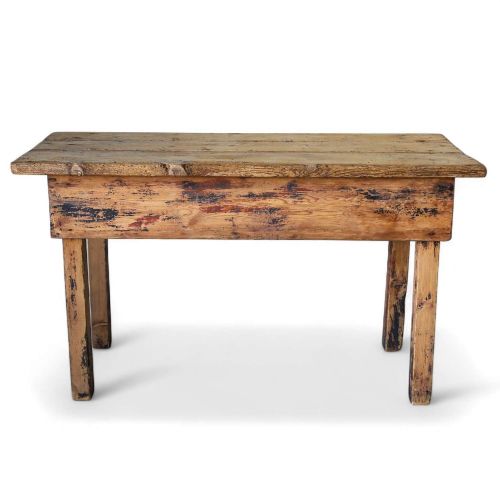
A rustic kitchen workbench is primarily a sturdy surface designed for domestic tasks, food preparation, or workshop use. These items emerge from various periods spanning the nineteenth century through the early twentieth century, reflecting practical domestic and commercial needs.
The selections available here include heavy pine scullery tables, French artisans' benches fitted with vices, oak tavern tables, and long harvest tables. Such forms originate from England, Wales, Scotland, France, and Scandinavia, aligning with styles like Victorian Country, Rustic Farmhouse, and French Provincial.
Buyers are most likely to encounter nineteenth century and early twentieth century pine work tables, often featuring thick tops, drawers, or lower tiers. These pieces span multiple regional traditions, from Welsh farmhouse tables to Scandinavian painted surfaces.
What varies in quality
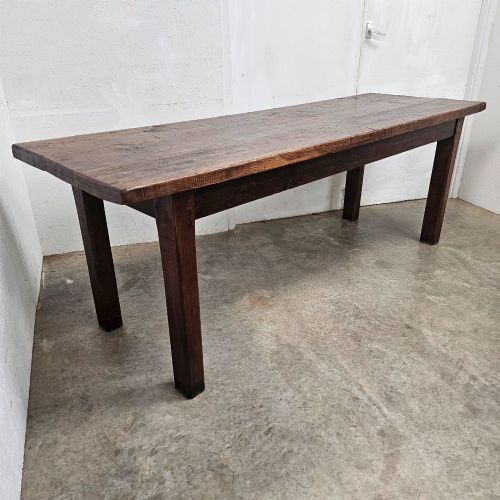
The division between simpler utilitarian boards and finer examples rests in the choice of dense hardwoods like oak, sycamore, and ash compared to standard pine. Thickness of the top planking and the presence of integrated vices or functional drawers alter the utility and character of each piece.
Proportions also dictate the calibre of the table, with substantial length, such as large harvest or country house formats, marking out pieces built for communal or institutional spaces. Original painted finishes and regional timber combinations further distinguish individual tables.
Rustic Kitchen Workbench Retail Price Guide 2026
Typical asking prices for rustic kitchen workbench among the pieces listed under this phrase on Sellingantiques today, from the lower quarter to the upper quarter. They describe what is for sale here now, not the wider market.
Regional forms span English, Welsh, Scottish, French, and Scandinavian traditions, including painted wood finishes and cast iron elements.
The Rustic Kitchen Workbench Glossary
- Scullery table
- A heavy utility table used for washing, food preparation, and messy kitchen tasks. These pieces typically feature robust timber tops designed to endure daily scrubbing.
- Trestle table
- A table consisting of two or more supports connected by a horizontal beam holding a broad top. This construction allows for maximum legroom along the length of the furniture.
- Harvest table
- An elongated dining or work table traditionally used during seasonal gatherings. They provide substantial surface area and often incorporate long pine or oak boards.
- Drapers table
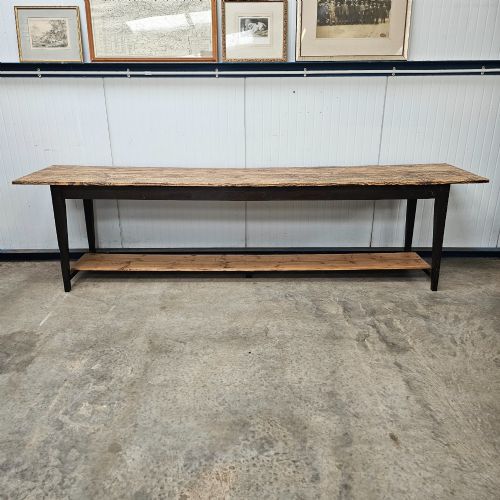
- A long counter table originally utilised in fabric shops for measuring and cutting cloth. They frequently include lower shelving for storage.
- Artisans workbench
- A heavy work surface incorporating a wooden vice and tool wells for manual trades. These benches display authentic wear from trade use.
Rustic Kitchen Workbench: Frequently Asked Questions
Where were rustic kitchen workbenches originally used?
These tables served in farmhouses, sculleries, and workshops across Britain, France, and Scandinavia. They functioned as primary surfaces for food preparation and manual trades.
Over time, utility furniture transitioned from domestic workspaces into main living areas and modern kitchens for everyday dining and food work.
How do I care for a scrubbed timber top?
Scrubbed wooden tops benefit from regular cleaning with mild soap and water, avoiding harsh chemical treatments. Keeping the timber clean preserves the natural grain.
Applying occasional light oil or wax helps protect the surface from excessive staining while maintaining the dry finish typical of antique work tables.
Are these workbenches suitable for daily kitchen use?
Solid construction using pine, oak, and beech makes these tables exceptionally sturdy for modern kitchen environments. Their original purpose demanded high durability under heavy loads.
Owners can utilise the thick tops for seating, dining, or ongoing food preparation without compromising the structural integrity of the piece.
How can I tell the period of a workbench?
Dating relies on timber selection, tool marks, construction joints, and regional formatting seen across nineteenth and early twentieth century examples. Hand-planed boards and forged iron fittings indicate earlier manufacturing methods.
Comparing structural details such as drawer framing and leg turnings helps differentiate between mid-nineteenth century designs and later twentieth century iterations.