
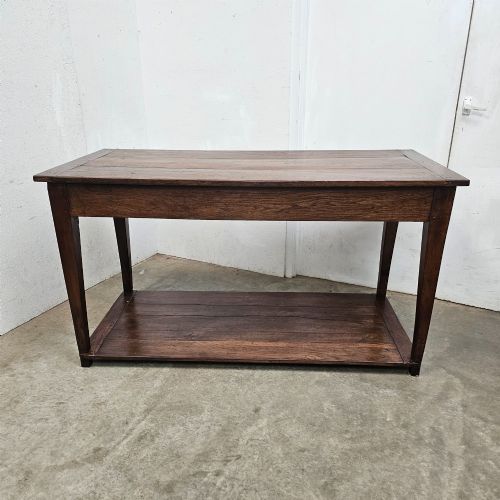
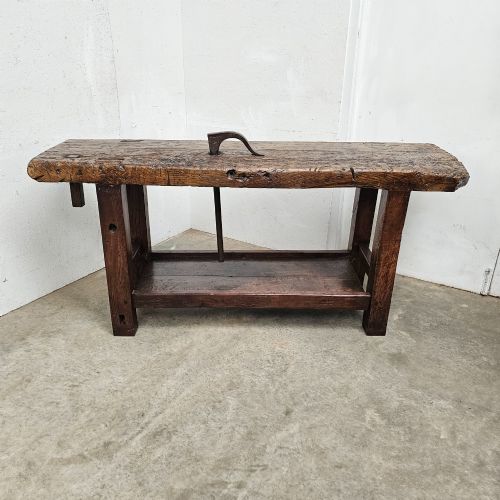
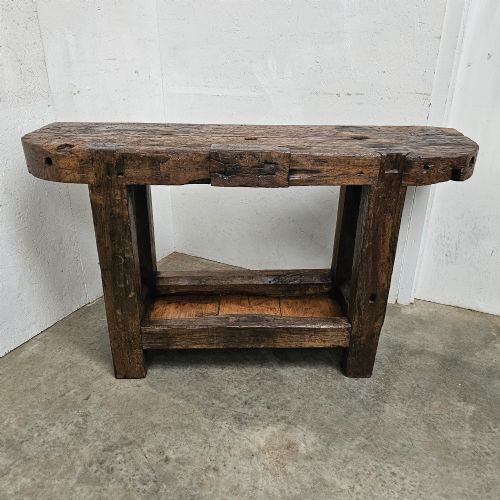


Rustic French Workbench
A rustic french workbench brings centuries of practical history into a modern room, offering heavy timber surfaces built for actual labour.
Rustic French Workbench
A rustic french workbench is a utilitarian surface designed for traditional trades, featuring substantial timber construction from periods such as the nineteenth century. These pieces encompass specific forms including artisan benches with clamping bars and vises, alongside related tables.
The version most commonly met on this page is the nineteenth century French craftsmans bench, often constructed from heavy oak, pine, or elm. Many examples retain working vices and operational clamping mechanisms from their days in provincial workshops.
Beyond strict workbenches, the selection includes related forms like drapers tables, cobblers benches, and trestle tables in scrubbed sycamore, poplar, and beech. These share the same honest utility and provincial origins as the core bench category.
Materials and construction methods
Makers utilised dense native hardwoods such as oak, elm, sycamore, and beech for the thick tops and structural frames, ensuring the stability required for heavy manual labour. Softer timbers like pine and poplar appear frequently in secondary components or related trestle tables.
Construction relied on robust joinery and functional hardware, incorporating forged iron braces, vises, and wooden clamping bars designed to withstand constant workshop pressure without shifting.
Listings feature nineteenth century pieces spanning multiple decades, utilising durable materials like oak, elm, pine, and forged iron across various regional workshop forms.
Assessing quality in provincial work benches
Quality rests in the integrity of the primary timbers and the proportional balance of the base, distinguishing honest working examples from later fabrications. A superior bench displays deep patination earned through decades of genuine trade use rather than artificial distressing.
The presence of original mechanical elements, such as functional wooden vices and heavy clamping bars, elevates an example. The harmony between scrubbed surfaces and sound structural framing determines the overall calibre of the piece.
The Rustic French Workbench Glossary
- Clamping bar
- A sliding wooden beam integrated into the bench top to secure materials during sawing or planing. This device allowed artisans to immobilise large timbers.
- Vise
- A mechanical clamping apparatus attached to the side or end of a workbench. It typically uses a wooden or iron screw mechanism to hold work steady.
- Trestle table
- A table featuring a horizontal beam supported by two trestle feet, frequently found in French provincial settings. These frames offer robust support without obstructing legroom.
- Scrubbed finish
- A surface treatment resulting from vigorous cleaning with water and sand over many years, removing paint or varnish to reveal clean bare wood. This process highlights the natural grain of elm and sycamore.
- Cobblers bench
- A low specialised seat incorporating small compartments for tools and leatherworking materials. These compact forms reflect domestic artisan trades.
Rustic French Workbench: Frequently Asked Questions
How were workbenches used originally?
French artisans utilised these heavy timber benches for daily carpentry, carving, and craft tasks requiring absolute stability. The integrated vises and clamping bars held wood securely while tools worked the surface.
Over decades of use, the tops accumulated tool marks, ink stains, and wax residue that record the physical labour carried out in provincial workshops.
Can I use an antique bench for dining?
Many people place these substantial tables in kitchens or dining rooms where their generous proportions accommodate seating easily. The deep wooden tops provide durable surfaces for daily meals and gatherings.
Knee clearance varies significantly depending on the original undercarriage design and the presence of heavy wooden vises or stretchers beneath the top.
How do I clean a scrubbed timber top?
Maintenance requires only a dry cloth or a slightly damp sponge to remove dust without stripping the natural patina built up over generations. Avoid harsh chemical cleaners that can alter the pale tone of scrubbed oak or sycamore.
Applying a clear beeswax occasionally helps nourish dry pine and poplar surfaces while protecting against everyday moisture marks.
What indicates a nineteenth century piece?
Nineteenth century examples display hand-cut joinery, forged iron hardware, and dense native hardwoods like elm and beech that reflect traditional forestry practices. Tool marks left by hand planes across the timber surface confirm early manufacture.
Wear patterns concentrated around the primary work areas demonstrate genuine age rather than modern replication.