


Rustic French Sideboard Console
A rustic french sideboard console brings honest utility and time-worn timber into a room, offering practical surface space with deep historical character.
Rustic French Sideboard Console
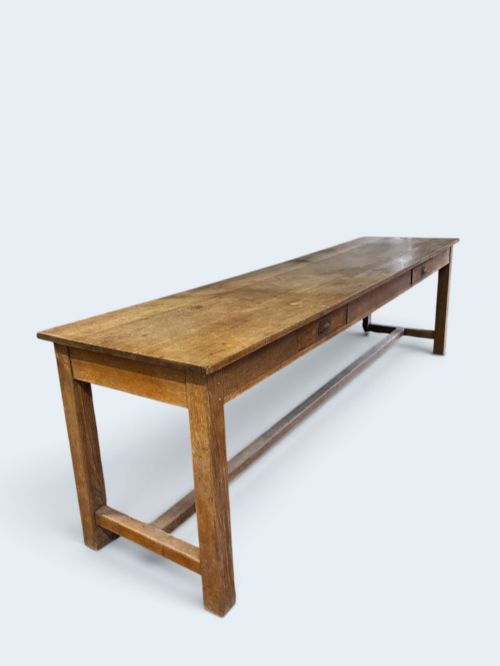
When buyers search for a rustic french sideboard console, they seek heavy timber furniture that bridges the gap between utilitarian workspace and provincial elegance. The items gathered under this heading span the nineteenth century, encompassing forms such as serving tables, drapers tables, and heavy artisans workbenches.
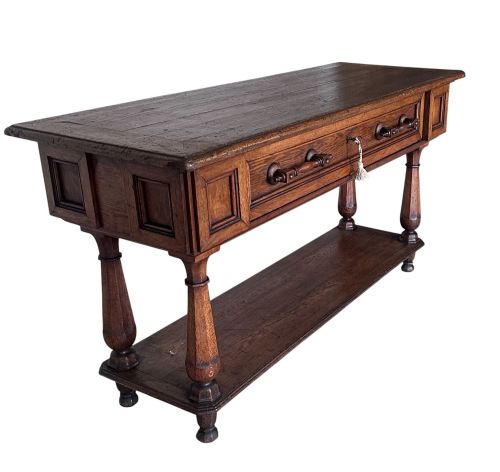
You are most likely to encounter nineteenth century oak and fruitwood pieces reflecting French provincial and rustic farmhouse traditions. These tables often feature practical additions like pot-shelves, drawers, or working vices, shaped by their original domestic or trade use.
Materials and construction methods
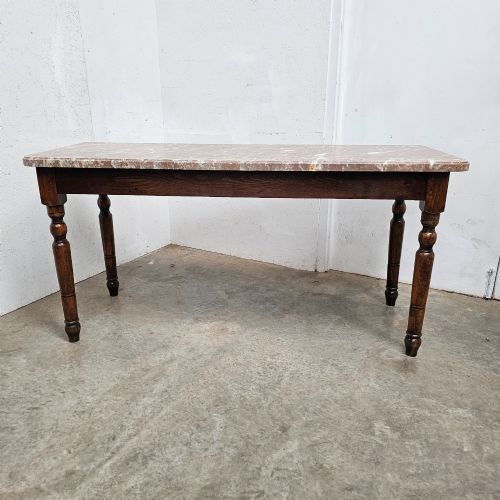
Makers relied heavily on solid hardwoods like oak, cherrywood, beech, and pine, selecting timber for sheer durability rather than decorative veneer. Iron hardware, brass elements, and occasional marble tops added structural resilience and functional contrast to the wooden frames.
Joinery remained straightforward and robust, designed to withstand heavy daily labour in kitchens, shops, and workshops. Surfaces often display the marks of hand-working, alongside layers of historic paint and natural patination accumulated over generations.
Current listings feature nineteenth-century pieces constructed from oak, pine, beech, cherrywood, and iron, spanning forms from drapers tables to pot-shelf serving tables.
Understanding quality differences
Quality rests in the integrity of the original timber and the honesty of the wear rather than slick restoration. Pieces retaining their structural mechanisms, such as wooden vices or original drawers, demonstrate superior utility and historical value.
Proportion and timber selection set finer examples apart from standard workshop tables. A balanced frame built from dense fruitwood or substantial oak carries a stronger presence than a lighter utility piece.
The Rustic French Sideboard Console Glossary
- Pot-shelf
- A lower slatted or solid tier fitted beneath a serving table or sideboard, historically used for storing heavy pots and pans. This feature elevates the practical capacity of the console.
- Provincial
- A design descriptor indicating regional manufacture outside Paris, favouring sturdy utility and local timbers over courtly refinement. These pieces reflect the practical needs of French country life.
- Workbench
- A heavy-duty workshop table featuring thick tops and sometimes integrated vices, repurposed today as console tables. Their robust construction handles everyday items with ease.
- Patination
- The deep surface sheen and colour acquired by wood and metal through decades of use, handling, and exposure. It serves as a visual indicator of age and authenticity.
- Fruitwood
- Dense timber harvested from fruit-bearing trees such as cherry, used by provincial cabinetmakers for its fine grain and warm tone. It yields a rich surface when polished through use.
Rustic French Sideboard Console: Frequently Asked Questions
What is a rustic french sideboard console?
It is a heavy timber table originating from nineteenth-century France, encompassing serving tables, workbenches, and drapers consoles.
These pieces combine utilitarian function with provincial charm, featuring solid woods like oak, pine, and cherrywood.
How were these tables originally used?
Many served practical roles in French country houses, kitchens, shops, or artisan workshops as workspaces and storage units.
Pot-shelves and drawers held heavy kitchenware, while integrated vices supported woodworking and trade tasks.
Where should I place a console table?
They suit hallways, living rooms, and kitchens where their narrow proportions and generous surface length provide practical utility.
A marble-topped version works well in a kitchen setting, while an oak serving table anchors a dining room wall.
How do I care for antique timber?
Maintain the wood by avoiding direct sunlight and excessive heat fluctuations that can dry out the nineteenth-century grain.
Apply natural wax sparingly to nourish the surface and preserve the historic patina built up over generations.
Can I use a workbench as a sideboard?
Yes, many buyers repurpose nineteenth-century artisans workbenches as statement console tables in modern interiors.
Their substantial length and historic vices introduce striking character and useful surface space to a room.