
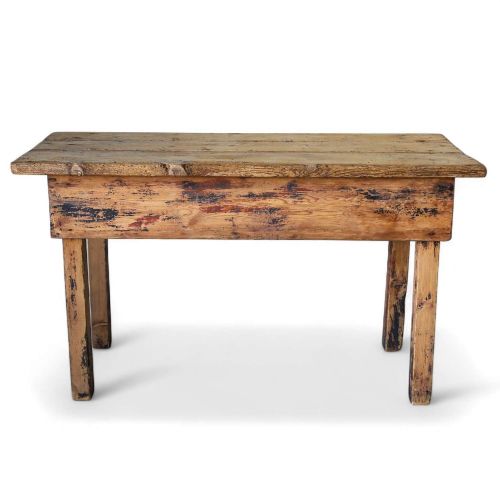
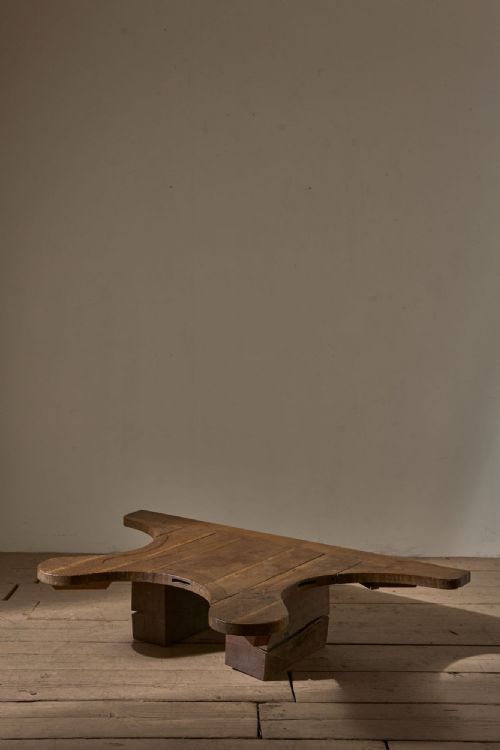
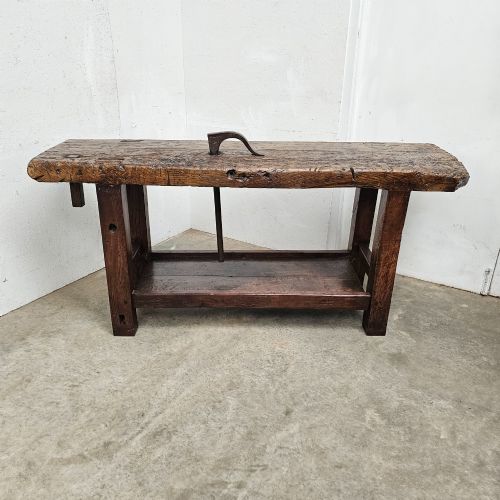
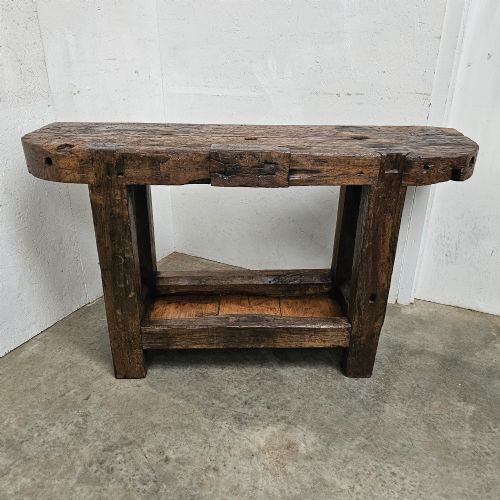
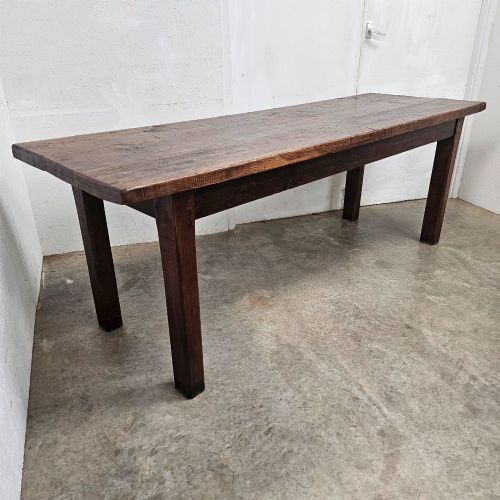
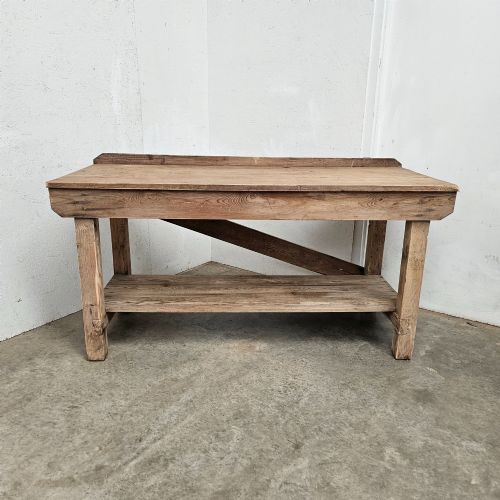


Vintage Timber Workbench Table
A vintage timber workbench table brings honest utility and heavy surface character into a modern interior.
Vintage Timber Workbench Table
A vintage timber workbench table combines the utilitarian design of a historical workspace with the domestic versatility of a large table. These pieces originate from various regional workshops, craft rooms, and industrial settings spanning the nineteenth and early twentieth centuries. Surviving examples appear in forms ranging from French artisan benches with vises and clamping bars to English pine potting tables and Welsh farmhouse work tables.
Buyers seeking a vintage timber workbench table encounter robust surfaces suited for use as kitchen prep stations, console tables, or coffee tables. Many pieces show the distinct marks of manual labour, including tool scars, ink stains, and heavy patination acquired through decades of trade use. Proportions range from compact primitive elm examples to substantial country house benches stretching over eight feet in length.
Regional variations dictate the structural appearance and timber choice of each vintage timber workbench table. French designs frequently utilise oak, beech, sycamore, and elm with integrated trestle bases or deep work surfaces, while English and Welsh iterations lean towards heavy pine and oak construction. The presence of original vices, lower shelves, and sliding clamping bars distinguishes dedicated craft furniture from standard domestic tables.
Materials and construction methods
Makers constructed each vintage timber workbench table using dense hardwoods and softwoods selected for structural resilience under heavy manual load. Oak, pine, elm, beech, and sycamore form the primary body timber, providing thick, solid tops capable of withstanding constant impact and pressure. Cast iron and wrought iron components frequently appear in the form of vices, support brackets, and trestle frames.
Joinery methods prioritize absolute rigidity over decorative refinement, utilising heavy pegged mortise and tenon joints, through-tenons, and substantial stretchers. Workbenches integrate functional hardware such as wooden screw vises and iron clamping bars directly into the primary timber frame. Surfaces are generally left unvarnished or treated simply, allowing natural wear, scrubbing, and historical wax buildup to form the final patina.
Expect to find hidden chalk tally marks and ingrained sawdust wedged deep within the historical joints of working benches.
Assessing quality and authenticity
Quality in a vintage timber workbench table rests in the integrity of the original timber and the authenticity of its working hardware. Pieces retaining their original integral vices, sliding wooden screws, and deep-working tops demonstrate superior historical completeness. The depth and honesty of the surface patina, formed by genuine working use rather than artificial distressing, elevate the standing of a piece.
Structural soundness separates premier examples from heavily compromised pieces, requiring robust joints and stable timber bases that do not wobble. The proportion of the top relative to the base affects the overall visual balance, particularly in longer country house benches and trestle formats. Original tool marks and maker adjustments add historical depth, whereas modern replacement timber or newly introduced hardware diminishes the integrity of the object.
The Vintage Timber Workbench Table Glossary
- Workbench
- A heavy-topped table fitted with vices or stops, designed to hold materials securely during carpentry or craft labour.
- Trestle table
- A table comprising two or more support frames connected by a horizontal beam or stretcher, carrying a loose or fixed top.
- Patina
- The surface sheen and colour depth developed on wood and metal through age, handling, and regular use over generations.
- Scrubbed top
- A wooden surface cleaned repeatedly with water and a stiff brush, removing old finishes to leave a pale, raw grain.
- Clamping bar
- A sliding wooden beam integrated into a workbench top used to secure large boards in place during assembly.
Vintage Timber Workbench Table: Frequently Asked Questions
Can I use a workbench as a dining table?
These heavy tables make striking dining furniture provided the height and knee clearance accommodate standard chairs. Many examples offer ample surface area and deep legroom for daily gatherings.
Consider the presence of protruding wooden vices or side drawers that might restrict seating positions along the edges.
How do I care for an old timber surface?
Maintain the wood by applying natural beeswax or hardwax oil periodically to nourish the dry grain and protect against moisture. Avoid harsh chemical cleaners that strip away the historical surface character.
Promptly wipe up liquid spills to prevent staining on scrubbed or unsealed pine and oak tops.
How do I date a nineteenth-century workbench?
Examine the tool marks, construction joints, and fastener types to determine the manufacturing era of the frame. Hand-sawn boards and pegged joinery generally indicate earlier nineteenth-century production.
Patina accumulation around frequently touched areas like handles and edges provides further clues to active working age.
Are these tables heavy to move?
Solid hardwood and thick pine construction makes these pieces exceptionally heavy and robust. Moving them typically requires two people and careful planning around tight doorways.
Some trestle formats feature removable tops that lift off the base frames to simplify transport.