

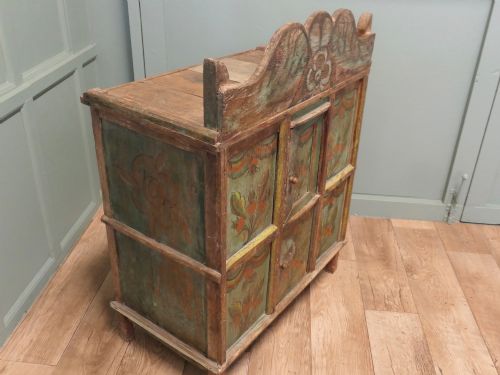
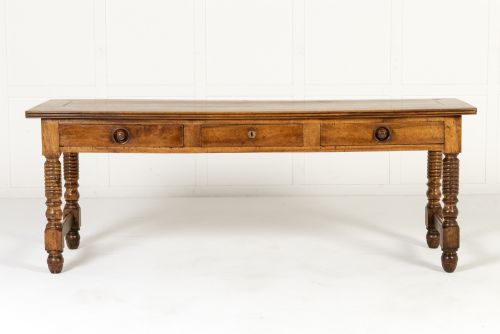
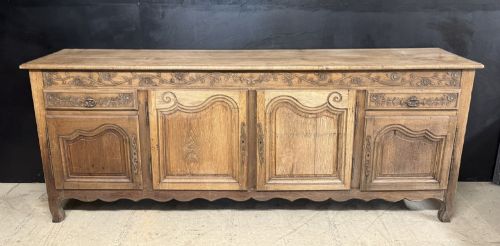
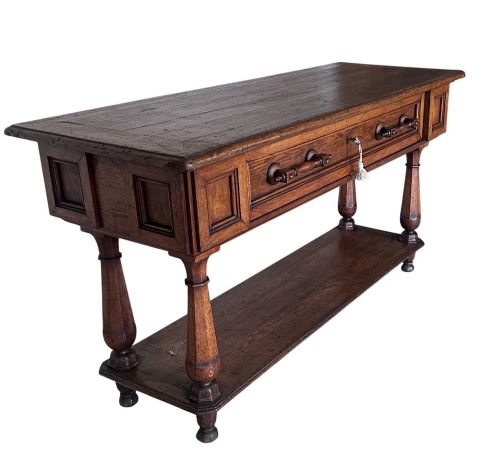
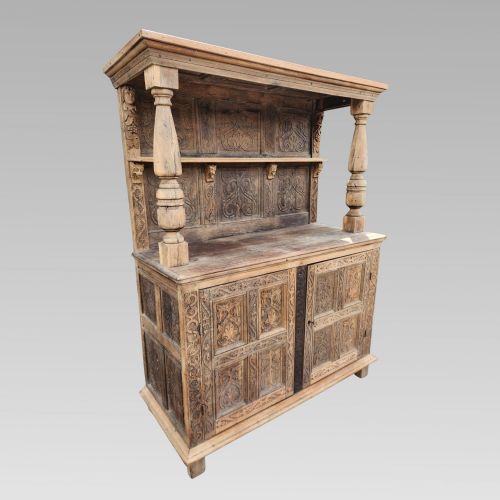
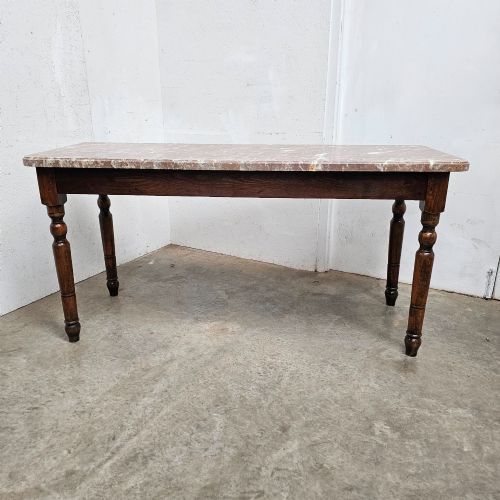


Rustic French Provincial Sideboard
A rustic french provincial sideboard brings practical storage and regional character into a modern interior through honest timber and time-worn surface.
Rustic French Provincial Sideboard
A rustic french provincial sideboard encompasses low buffets, enfilades, and dresser bases originating from regional workshops across France. These storage pieces served rural farmhouses, chateaux, and village kitchens for storing provisions, linens, and tableware.
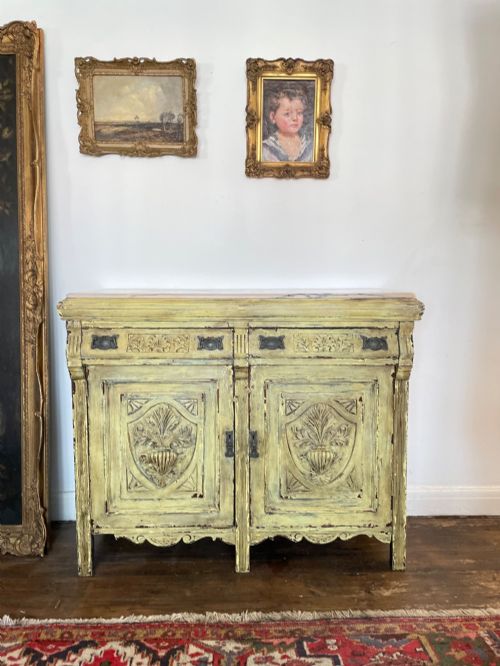
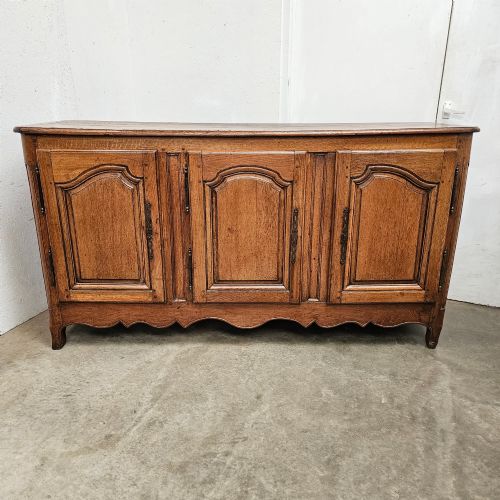
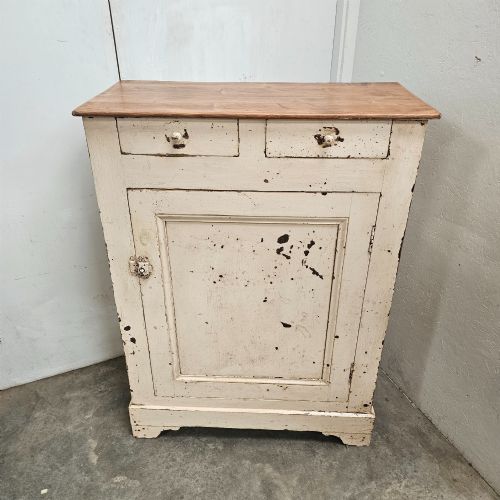
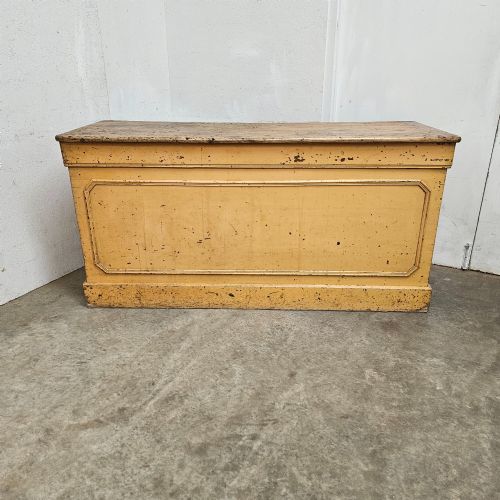
The pieces on this page span the eighteenth and nineteenth centuries, including utilitarian shop counters, housemaid cupboards, and low sacristy cabinets. Oak forms the backbone of the selection, accompanied by fruitwood, cherrywood, walnut, chestnut, and painted pine.
Buyers encounter long serving tables, multi-door enfilades, and marble-topped console tables alongside traditional buffets. Each form reflects the domestic habits and local timber availability of its specific French district.
Materials and construction
Regional cabinetmakers relied on solid hardwoods like oak, walnut, chestnut, and fruitwood, joined using traditional pegged mortise and tenon construction. Pine served for secondary elements or received painted finishes in provincial workshops.
Hardware consists of forged iron hinges and latches, occasionally paired with brass fittings on finer urban-influenced pieces. Surfaces show the marks of hand planes and adzes, sealed with natural wax or retaining layers of original paint.
Rustic French Provincial Sideboard Retail Price Guide 2026
Typical asking prices for rustic french provincial sideboard among the pieces listed under this phrase on Sellingantiques today, from the lower quarter to the upper quarter. They describe what is for sale here now, not the wider market.
One nineteenth-century cabinet arrived directly from a closed Breton bed front, preserving centuries of agrarian slumber within its carved panels.
Judging the work
Quality rests upon the integrity of the timber and the honesty of the surface, distinguishing untouched provincial pieces from heavily restored examples. Heavy patination accumulated through generations of domestic use elevates the standing of a sideboard.
Proportion and regional carving detail dictate the character of the piece, separating utilitarian workbenches from refined enfilades and buffet vaisseliers. Original ironwork and unaltered backboards retain the historical credibility of the construction.
The Rustic French Provincial Sideboard Glossary
- Enfilade
- A long sideboard featuring a linear sequence of doors and drawers, designed for formal dining rooms. This form provides expansive surface area and deep interior storage.
- Buffet de Corps
- A tall two-part cupboard featuring a smaller upper section set back upon a deeper base. These large storage pieces anchored traditional rural kitchens.
- Confiturier
- A small single-door cupboard originally utilised for storing confit meats and preserves. These compact pieces function well as bedside tables or small storage cabinets.
- Lit-clos
- An enclosed bed frame from Brittany, portions of which are occasionally repurposed into cabinets. This regional form displays distinct folk art carving.
- Fruitwood
- Timber harvested from fruit-bearing trees such as cherry, pear, or apple. Cabinetmakers valued these dense woods for their warm tone and fine grain.
Rustic French Provincial Sideboard: Frequently Asked Questions
How do I clean a painted pine sideboard?
Dust the surface regularly with a dry, soft cloth to prevent grime buildup in the wood grain. Avoid commercial solvent cleaners that strip historical paint layers.
Apply a microcrystalline wax sparingly if the painted surface appears dry. Test any maintenance product on a hidden area first.
Can I use an enfilade in a hallway?
An enfilade provides long surface space and deep cupboards suitable for storing boots, linens, and hallway paraphernalia. Measure your corridor width carefully because these pieces have substantial depth.
Ensure clearance for doors to swing open fully against the wall. Lower profiles prevent the furniture from overwhelming smaller entryways.
How do I date an oak sideboard?
Examine the interior boards, drawer construction, and tool marks left by the maker. Hand-sawn timber and forged iron nails indicate eighteenth or early nineteenth-century manufacture.
Panels constructed with uneven widths and pegged joints point toward provincial workshop origins. Machine-cut screws and uniform pine secondary wood suggest later nineteenth-century production.