


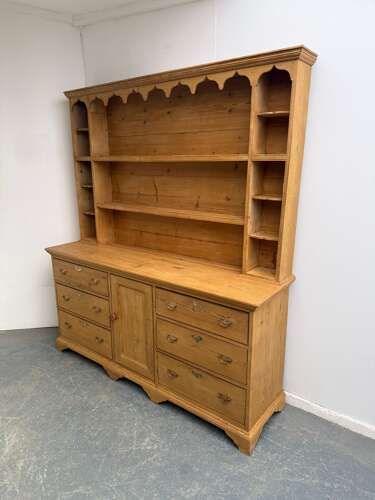
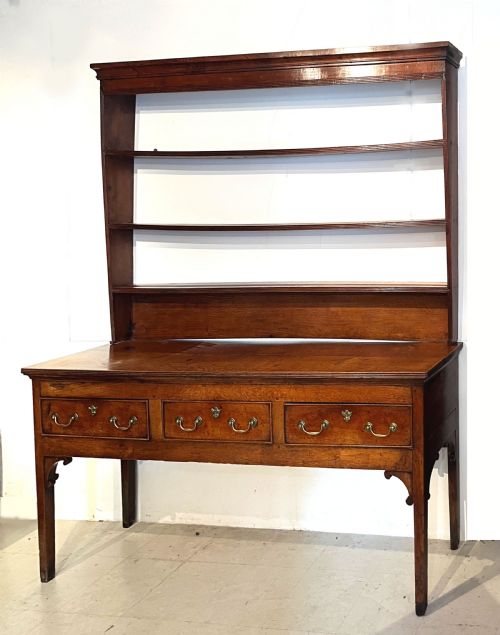

Wooden Welsh Dresser
A wooden welsh dresser brings heavy timber storage and display plate racks into a room, shaped by centuries of kitchen and dining use.
Wooden Welsh Dresser
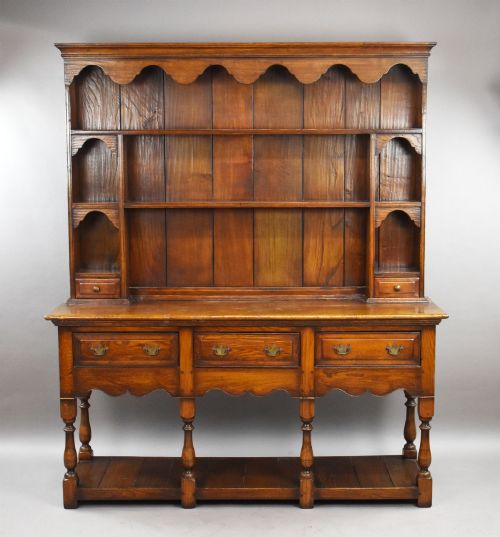
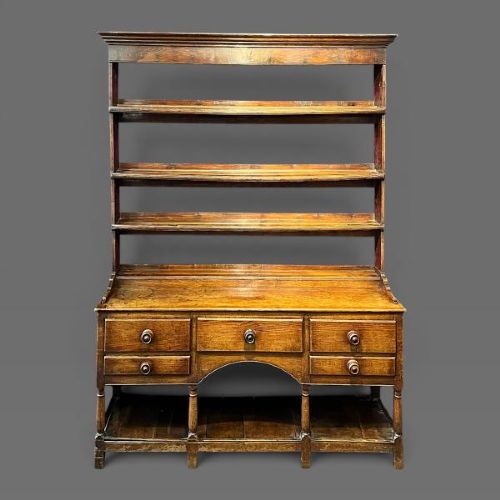
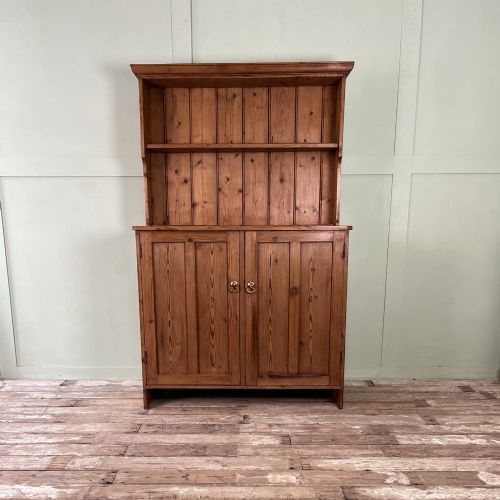
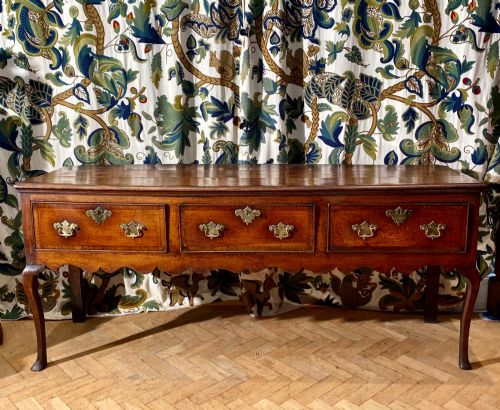
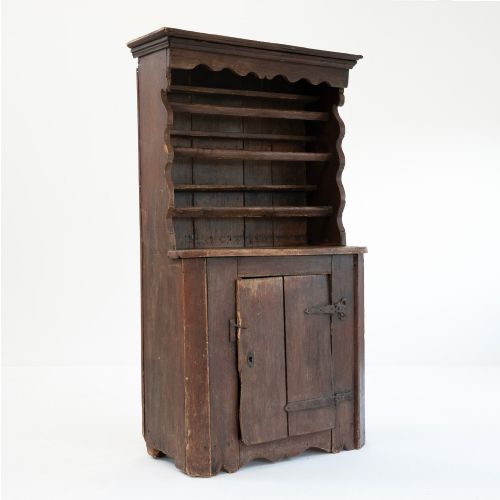
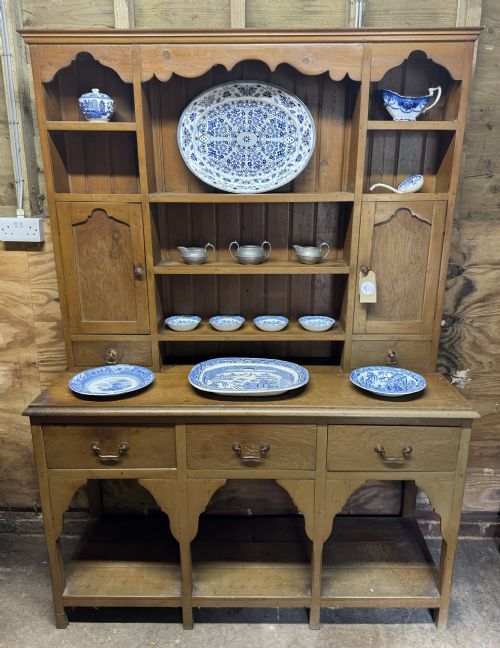
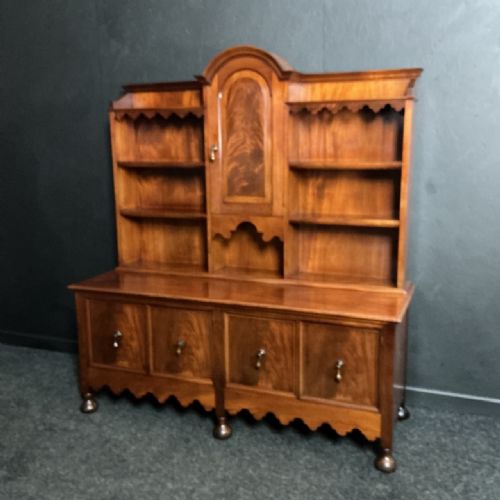
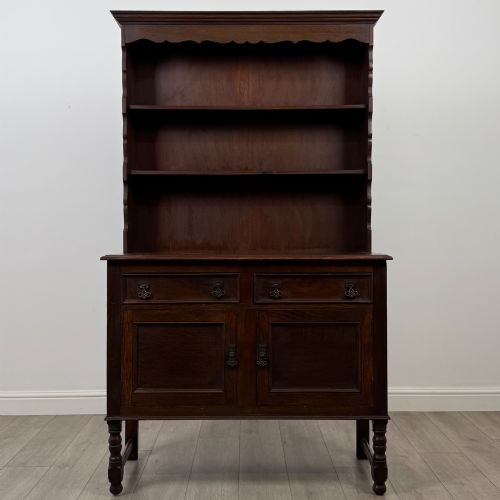
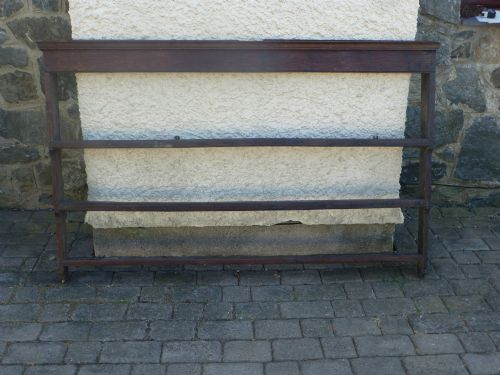
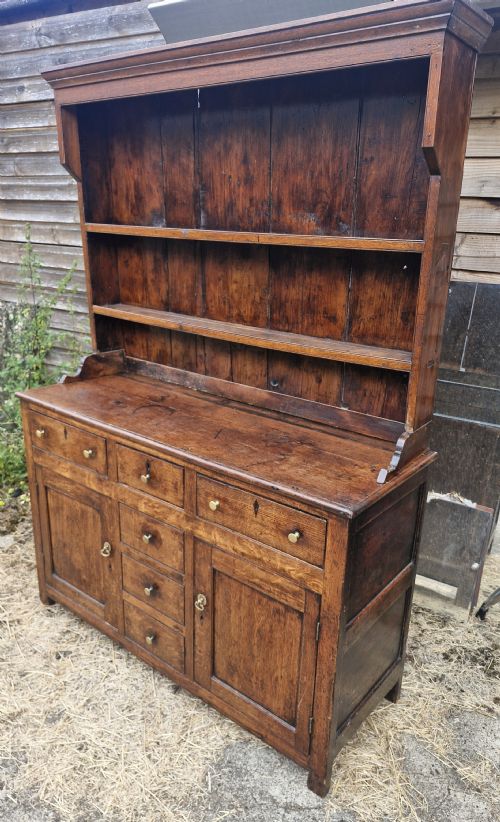
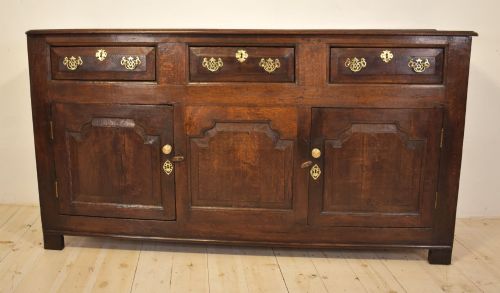
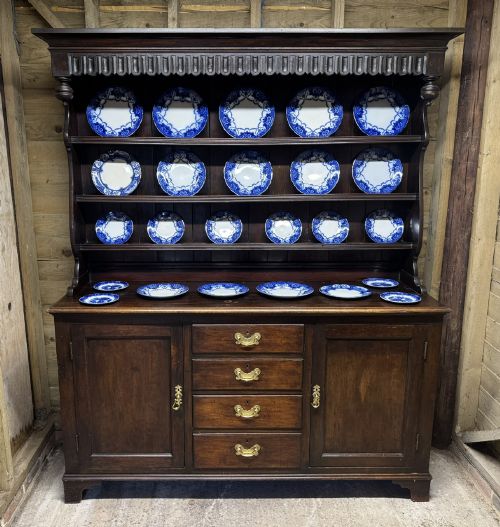
A wooden welsh dresser combines a lower base fitted with drawers and cupboards with an upper plate rack for displaying crockery. These kitchen and dining pieces appear across the eighteenth and nineteenth centuries, taking forms such as potboard bases and cottage dressers.
The material ground of these pieces rests chiefly on native timbers, with oak and pine forming the structural core of most examples. Regional variations emerge through styles labelled as Georgian Country, Welsh Country, and English Country.
Buyers encounter open plate racks designed for everyday tableware alongside enclosed cupboard sections and potboard bases. The overall silhouette spans from robust eighteenth-century formats to slimmer Edwardian interpretations.
What varies in quality
The integrity of the timber framing and the retention of original components, such as plate racks and hardware, dictate the standing of a piece. Examples retaining their initial surface patination and uncompromised structural timbers hold greater authority.
Proportion and regional detailing separate standard utility pieces from those displaying refined cornices, fielded panels, or integrated potboards. The harmony between the base unit and its upper rack marks the success of the construction.
Wooden Welsh Dresser Retail Price Guide 2026
Typical asking prices for wooden welsh dresser among the pieces listed under this phrase on Sellingantiques today, from the lower quarter to the upper quarter. They describe what is for sale here now, not the wider market.
Listings feature eighteenth and nineteenth-century eras alongside Edwardian pieces, constructed primarily from oak, pine, elm, and painted surfaces.
The Wooden Welsh Dresser Glossary
- Potboard
- An open slatted lower shelf positioned near the floor between the legs of a dresser base. This lower tier allowed heavy pots and pans to be stored off damp stone flags.
- Plate rack
- The shelving superstructure mounted to the back of a dresser top, designed to display ceramic plates upright. Slender vertical wooden laths or grooves keep the crockery from sliding forward.
- Belly rack
- A regional configuration of drawer arrangements and shapings across the central section of the dresser base. Such variations mark distinct local cabinet-making traditions.
- Patina
- The surface sheen and colour acquired by wood and hardware over long periods of handling and waxing. Genuine surface wear distinguishes untouched historic pieces from later restorations.
- Cottage dresser
- A smaller, simpler form of storage furniture built for domestic country use rather than grand houses. These items typically employ local pine or oak timbers with minimal ornamentation.
Wooden Welsh Dresser: Frequently Asked Questions
What is a wooden welsh dresser?
A wooden welsh dresser is a traditional storage item consisting of a lower sideboard base with drawers and cupboards, paired with an open display rack for plates above.
These pieces served as the central storage and display hub in historic kitchens and dining spaces.
How do I date a wooden welsh dresser?
Dating relies on observing construction methods, timber choices, handle types, and overall stylistic markers such as Georgian proportions or Edwardian details.
Eighteenth-century examples often display pegged joints and heavy oak construction, while later nineteenth-century pieces may utilise pine or mixed hardwoods.
Are the plate racks original?
Many dressers retain their matching upper plate racks, though some lower bases survived centuries separated from their original top sections.
Examining the timber species, joinery style, and historic fixing marks helps determine if the base and rack grew up together.
How do I care for a waxed wood finish?
Maintaining a historic waxed surface involves regular dusting with a dry cloth and occasional application of traditional beeswax to nourish the timber.
Avoiding direct heat sources and excessive moisture protects the underlying grain and preserves the accumulated patination.