







Rustic French Coffer Chest
A rustic french coffer chest brings centuries of country utility into a modern room, offering heavy timber storage with honest regional character.
Rustic French Coffer Chest
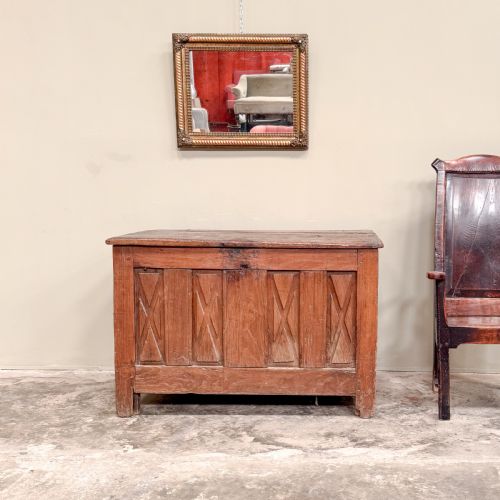
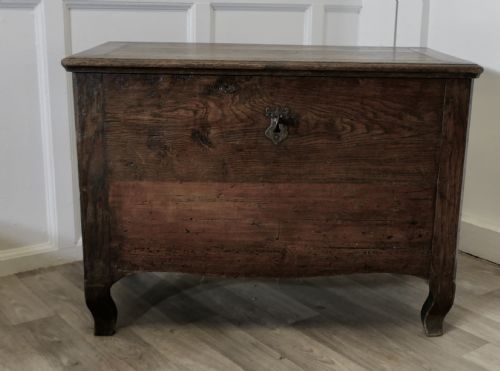
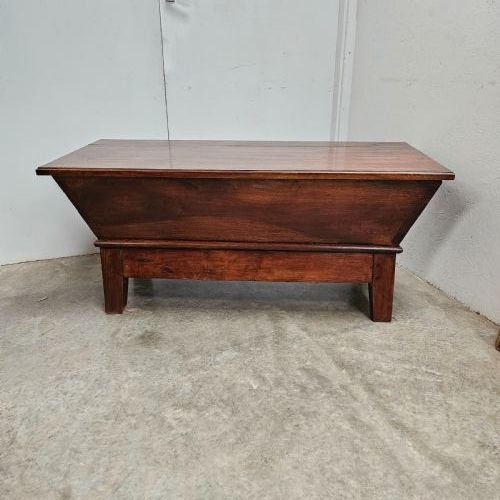
A rustic french coffer chest is a traditional heavy wooden container built for domestic storage, security, and sometimes food preparation in provincial homes. These sturdy pieces include forms such as blanket boxes, dough bins, proofing boxes, and strong boxes spanning several centuries from the seventeen hundreds onward.
The versions most commonly met on this page date from the nineteenth century alongside earlier examples from the seventeenth and eighteenth centuries. They originate from French provincial and country workshops where local carpenters utilised whatever stout timber came to hand.
Makers shaped these chests from solid woods including oak, elm, cherrywood, pine, and walnut, frequently mounting them with visible wrought iron hardware. Their simple rectangular volumes served practical household needs long before fitted furniture became standard in rural districts.
How they were made
Carpenters constructed each rustic french coffer chest using thick planks of native timber joined with pegged mortise and tenon corners. Oak, elm, and cherrywood provided the primary structural strength for lids and sides that needed to endure daily farm labour.
Blacksmiths forged heavy wrought iron hinges, hasps, carrying hoops, and corner straps to secure the lids and reinforce the heavy wooden walls. Iron components were often pinned directly through the timber with hand-beaten nails, leaving robust tooling marks visible on the surface.
Rustic French Coffer Chest Retail Price Guide 2026
Typical asking prices for rustic french coffer chest among the pieces listed under this phrase on Sellingantiques today, from the lower quarter to the upper quarter. They describe what is for sale here now, not the wider market.
Some elm dough bins feature iron cannonball boxes designed to store heavy ammunition or small dense objects safely on rural estates.
What varies in quality
The quality of a rustic french coffer chest depends upon the selection of timber and the integrity of the original joins. Dense heartwood with tight grain patterns yields a heavier, more stable body than secondary softwoods.
Finer examples retain their original wrought iron hardware and undisturbed surface patination accumulated over generations of domestic use. The proportion of the box and the crispness of hand-planed edges separate standard utility pieces from exceptional provincial furniture.
The Rustic French Coffer Chest Glossary
- Coffer
- A large wooden chest traditionally used for holding valuables, linen, or documents. These deep boxes feature hinged lids and sturdy boarded construction.
- Dough bin
- A specialised trough-like chest utilised in French country kitchens for kneading and proving bread. The sloping or flat lids allowed the timber interior to maintain a consistent temperature for yeast.
- Hasps
- Fastening devices consisting of a metal plate with a slot that fits over a staple, secured by a pin or padlock. They provided necessary security for household stores.
- Provincial
- Denoting items originating from the regions outside the capital city. Provincial furniture often displays regional timber preferences and traditional local construction methods.
Rustic French Coffer Chest: Frequently Asked Questions
What were these chests used for?
These heavy wooden chests served foundational storage roles in rural French households, holding heavy woollen blankets, family linen, grain, and dry provisions. Strong boxes and coffers with iron hasps also secured valuable documents, silver, and currency against theft.
Dough bins and proofing boxes fulfilled a specific domestic function in the kitchen, providing a hygienic wooden surface for mixing and resting bread dough before baking.
How do I date a wooden coffer?
Dating relies upon observing the timber species, construction marks, and hardware style rather than relying on a single feature. Seventeenth and eighteenth-century examples frequently employ heavy, quarter-sawn oak with pegged joinery and hand-forged ironwork.
Nineteenth-century pieces often introduce softer woods like pine or domestic fruitwoods such as cherry and elm, accompanied by machine-sawn elements alongside traditional hand-planed surfaces.
Are these chests heavy to move?
Solid hardwood construction makes these pieces exceptionally heavy, particularly those fashioned from thick oak or walnut. Many functional variants include forged iron carrying hoops or drop handles mounted to the sides to assist two people in shifting the weight.
Positioning the chest near its permanent spot before filling it with heavy blankets or books prevents unnecessary strain on the floorboards and the frame.
How do I care for the timber?
Maintaining dry wood requires placing the chest away from direct heat sources and sudden temperature shifts that cause timber to warp or split. Feeding the grain with a neutral beeswax polish protects the historic surface without building up synthetic residues.
Avoid using wet cloths or modern chemical sprays, employing instead a soft, dry brush to lift dust from deep corners and iron straps.