





Antique French Blanket Box
An antique french blanket box brings robust storage and deep provincial character to a room, spanning rustic oak coffers to canvas luggage.
Antique French Blanket Box
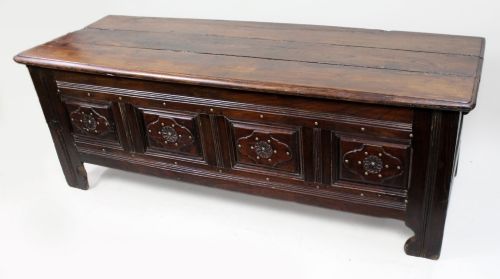
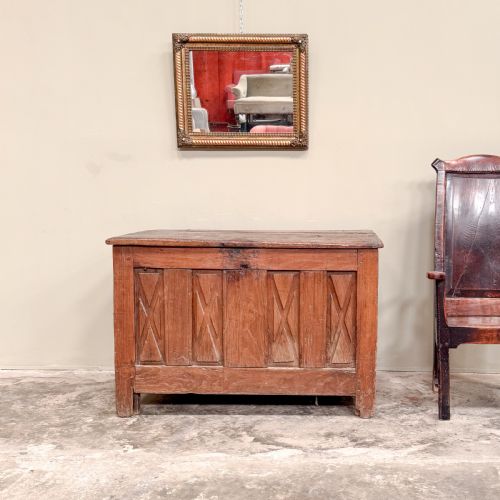
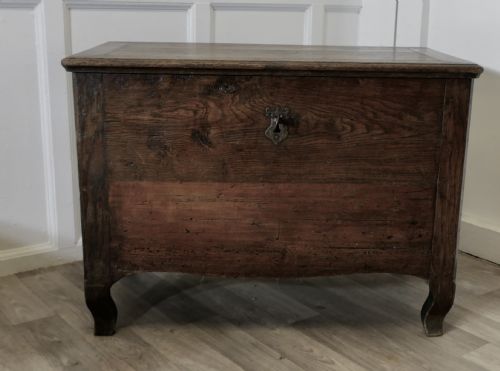
An antique french blanket box encompasses heavy oak coffers, pine storage chests, and steamer trunks originating from various centuries across France. These pieces serve as practical storage furniture that doubles as a striking focal point in a hallway or bedroom.
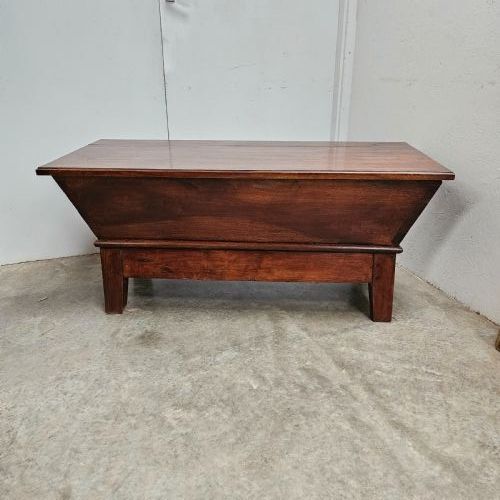
The most common examples encountered on this page belong to the eighteenth and nineteenth centuries, often rendered in solid oak or pine with provincial detailing. Buyers frequently find substantial timber coffers alongside occasional specialised forms such as dough proving boxes and canvas trunks.
Origins stretch from the seventeenth century through to the Art Deco period of nineteen twenty, showing distinct regional variations in French craftsmanship. Whether looking for a simple country pine box or a signed Parisian steamer trunk, each piece reflects the utility of its era.
Materials and construction
Carpenters relied predominantly on solid timbers such as oak, pine, elm, cherrywood, and walnut to build these robust storage pieces. Boards were joined to withstand heavy daily use, often utilising traditional framing methods suited to provincial workshops.
Hardware played a vital functional role, incorporating hand-forged iron hasps, wrought iron hinges, and brass fittings. Trunks from later periods added canvas, leather, and stencilled monograms over wooden frames for travel durability.
Materials represented across the inventory include oak, pine, elm, cherrywood, walnut, canvas, leather, brass, and iron.
Assessing quality and authenticity
Quality rests in the integrity of the timber and the honesty of the construction, where substantial oak planks and period-correct hardware command greater regard. Pieces retaining their original fixings and uncompromised structural timber demonstrate superior heritage.
The nuance between a rustic provincial workshop build and a high-end Parisian maker lies in the refinement of the execution and the selection of materials. Finer examples show thoughtful proportions and patination earned through centuries of genuine use.
Aux Etats Unis·Louis Vuitton
The Antique French Blanket Box Glossary
- Coffer
- A heavy wooden chest traditionally used for storing valuables or textiles. Early examples feature robust pegged joints and hand-carved details.
- Steamer trunk
- A low-profile luggage chest designed for travel aboard ocean liners during the early twentieth century. These typically combine a wooden carcass with canvas or leather coverings.
- Provincial
- Describing furniture made in the regions outside Paris, characterised by sturdy local materials and straightforward, practical designs.
- Hasps
- Metal fasteners designed to fit over a staple and secure a lid with a padlock or pin. They provide both security and visual contrast against the timber.
- Dough proving box
- A specialised wooden trough or chest used in baking for resting bread dough. These feature tight-fitting lids and clean interior spaces.
Antique French Blanket Box: Frequently Asked Questions
What were antique french blanket boxes used for?
These boxes served primarily to store heavy woolen blankets, household linens, and winter garments in homes before fitted wardrobes became common.
Some specialised variants functioned as strong boxes for valuables or as dough troughs for rural baking before adapting to modern domestic storage.
How do I style a blanket box at home?
Position a large oak or pine coffer at the foot of a bed to hold extra pillows and throws while anchoring the room's decor.
Alternatively, place a smaller elm or cherrywood box in an entryway to provide hidden shoe storage and a solid surface for everyday items.
How can I tell an eighteenth century coffer from a nineteenth century one?
Eighteenth century pieces typically display heavier hand-carved oak construction with pegged joinery and simpler, utilitarian forms shaped by local provincial traditions.
Nineteenth century examples often introduce softer timbers like pine and cherrywood, sometimes featuring turned feet or lighter applied mouldings.
What is the difference between a coffer and a steamer trunk?
A coffer is a heavy, rigid wooden chest built by carpenters for stationary domestic storage, often dating from the seventeenth or eighteenth centuries.
A steamer trunk is a lighter, fabric-covered travel case from the twentieth century equipped with metal latches and designed for mobility.