

Rustic Farmhouse Kitchen Chairs
These rustic farmhouse kitchen chairs bring everyday utility into the home, shaped by generations of domestic use.
Rustic Farmhouse Kitchen Chairs
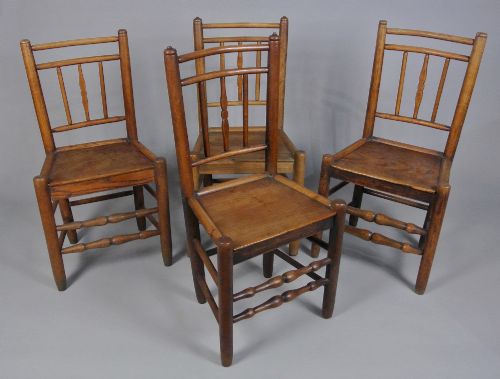
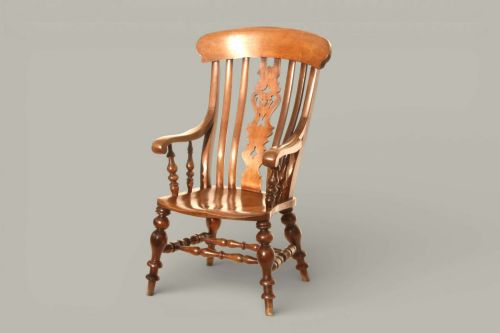
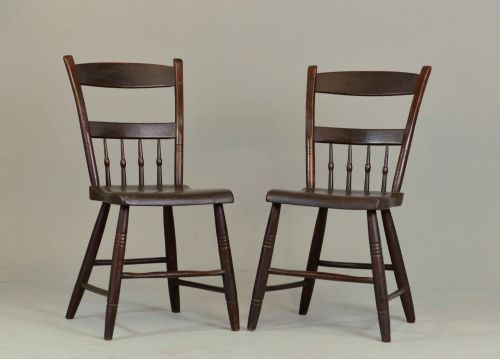
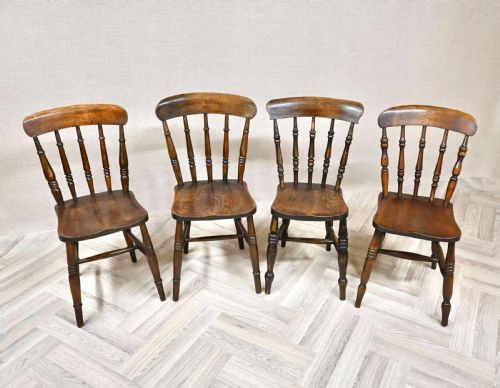
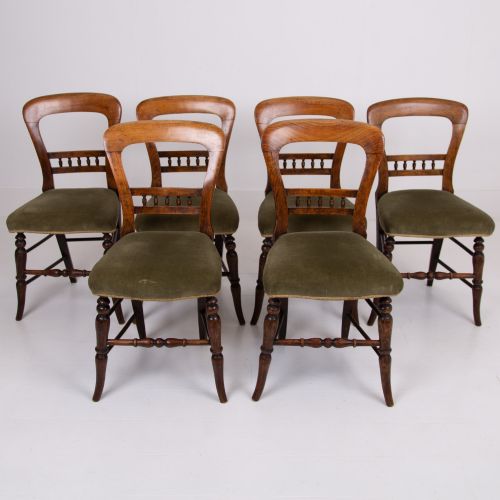
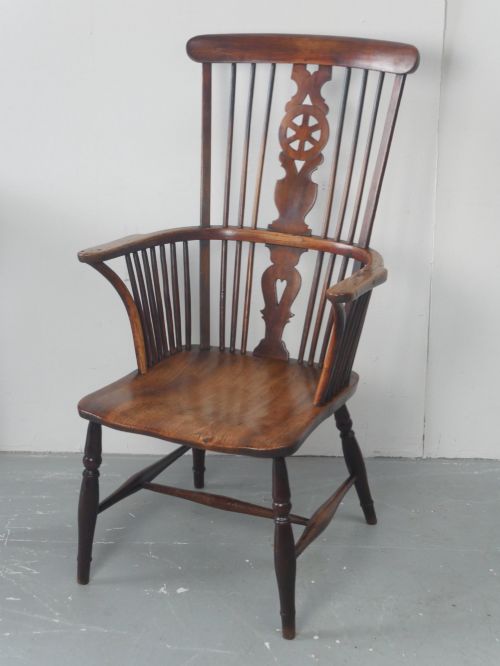
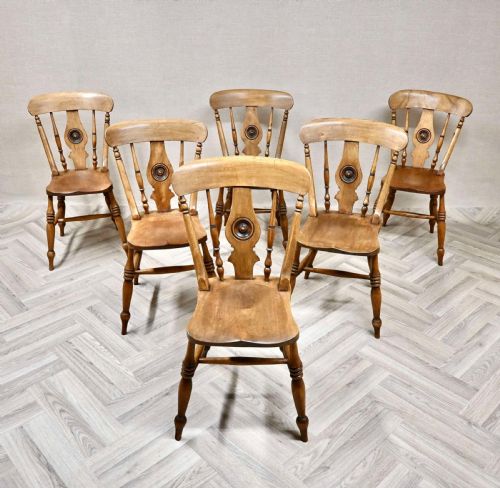
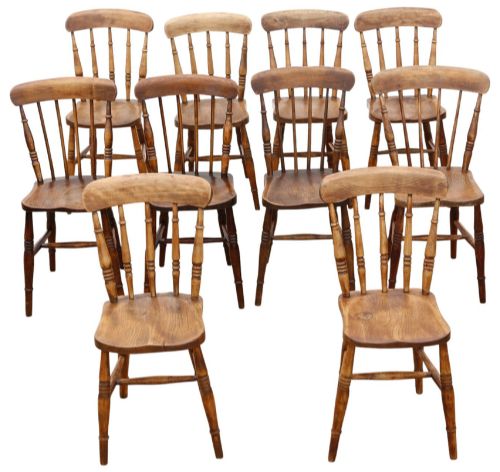
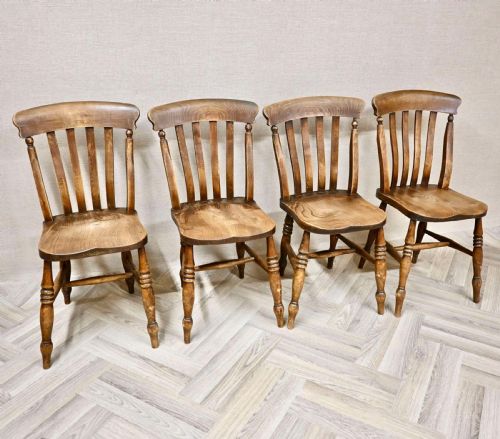
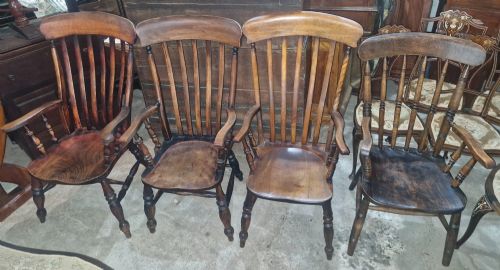
When searching for rustic farmhouse kitchen chairs, buyers encounter sturdy seating built for heavy domestic service rather than formal dining rooms. The pieces gathered here span the Georgian and Victorian eras up to the early twentieth century, taking forms such as Windsor chairs, ladderbacks, and stick backs.
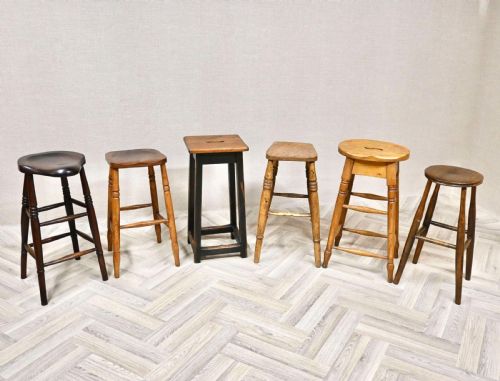
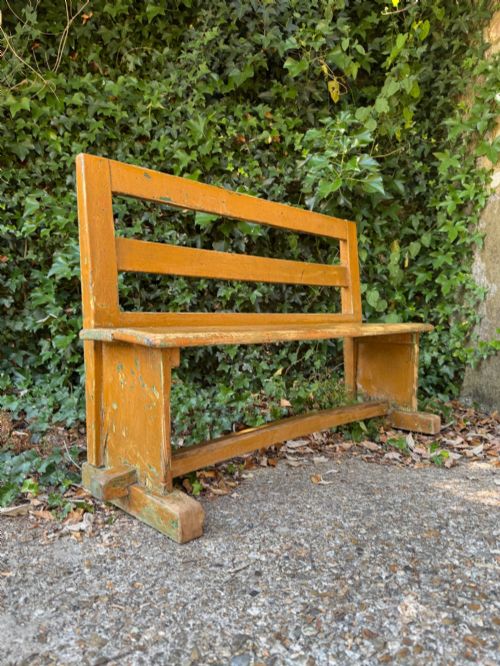
Sets frequently appear alongside individual armchairs, benches, and bar stools. Elm, beech, ash, and oak dominate the construction, often found in combination within a single harlequin set collected over time.
Originating in English and French vernacular traditions, these chairs serve dining tables and kitchen workspaces alike. Their simple profiles reflect regional workshops rather than courtly design.
How They Were Made
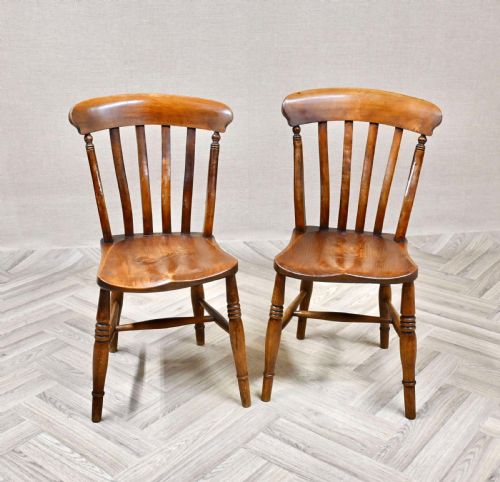
Joiners and chairmakers relied on solid native timbers like elm for carved saddle seats, beech for turned spindles, and ash for springy bentwood bows. Windsor designs employ socketed construction where legs and spindles fit directly into drilled seats.
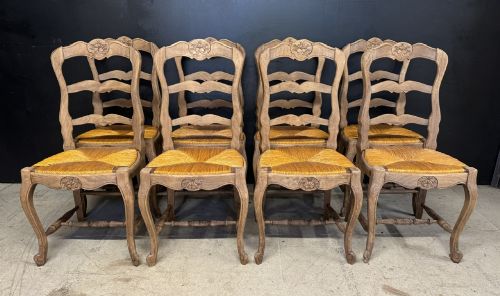
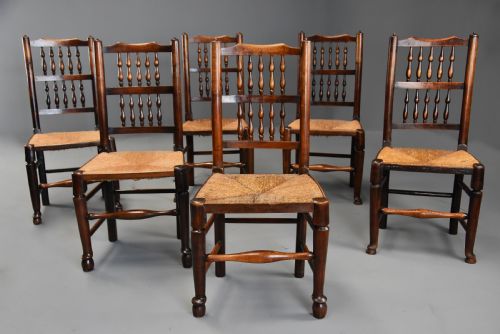
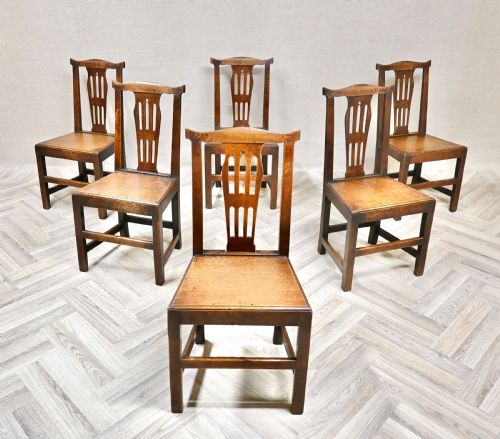
Ladderbacks feature shaped uprights holding horizontal slats, sometimes fitted with rush seating woven by hand. Double stretchers add rigidity between legs, ensuring the frames withstand daily movement.
Rustic Farmhouse Kitchen Chairs Retail Price Guide 2026
Typical asking prices for rustic farmhouse kitchen chairs among the pieces listed under this phrase on Sellingantiques today, from the lower quarter to the upper quarter. They describe what is for sale here now, not the wider market.
The listings on this site span the Georgian period, the nineteenth century, and the early twentieth century, utilising elm, beech, oak, and ash.
What Varies in Quality
The distinction between ordinary utility seating and superior examples rests in the depth of grain figure and the preservation of original surface patination. Elm seats with pronounced ripple and rich colour distinguish finer nineteenth-century survivals.
Proportion and turning detail dictate the visual weight of a chair, from slender spindle backs to robust comb backs. Retaining matched sets across larger quantities remains scarce, as most survivors accumulated as harlequin groupings.
The Rustic Farmhouse Kitchen Chairs Glossary
- Windsor
- A chair style featuring a solid wooden seat into which the legs and back spindles are separately tenoned. The curved back bow is typically steam-bent from a single piece of ash or yew.
- Harlequin set
- A collection of chairs that match in general type, period, and material but vary slightly in detail because they were gathered together over time.
- Stick back
- A vernacular chair construction where turned wooden spindles form the back support directly into the seat. These chairs often display simple regional variations without steam-bent bows.
- Ladderback
- A chair design utilising horizontal slats between vertical rear posts to form the backrest. These slats are usually curved for comfort against the back.
- Rush seat
- A seating surface woven from dried marsh rushes around a wooden frame. This traditional method provides a resilient and textured base for ladderback chairs.
Rustic Farmhouse Kitchen Chairs: Frequently Asked Questions
What defines a rustic farmhouse kitchen chair?
These chairs are unpretentious wooden seats produced for everyday domestic utility rather than formal reception rooms. They rely on regional traditions of construction using locally available hardwoods.
Their forms prioritize durability and comfort, resulting in enduring designs like the Windsor and the ladderback.
How do I care for antique wooden kitchen chairs?
Maintenance involves keeping the timber away from direct heat sources and sudden humidity changes that cause wood to split. Regular dusting and occasional application of appropriate wax preserve the surface.
Avoiding harsh chemical cleaners protects the original patination built up over generations.
Are harlequin sets authentic?
Harlequin sets consist of individual chairs sharing similar periods, materials, and styles gathered into a unified group for dining tables. This practice reflects how households naturally acquired and supplemented their seating.
Such sets offer a varied appearance while maintaining historical consistency.
How can I tell the period of these chairs?
Dating relies on observing construction marks, timber selection, and turning styles characteristic of specific decades. Nineteenth-century examples often display hand-turned components and distinct wear patterns.
Comparing joint types and wood species helps place the piece within its historical era.