


Rustic Farm Scene Painting
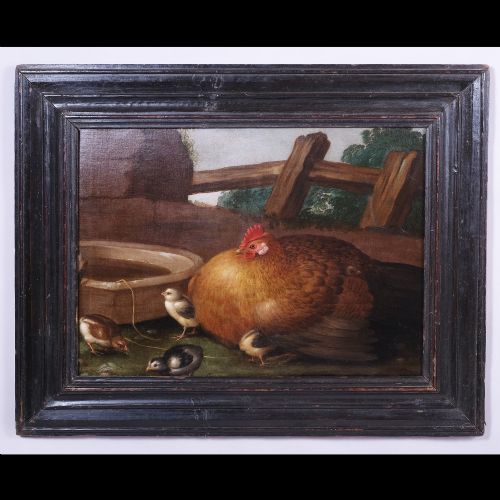
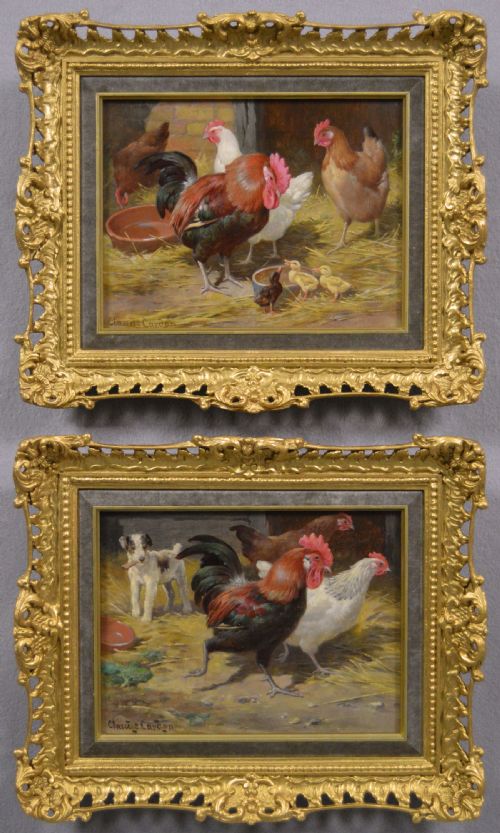
These rustic farm scene painting works capture traditional rural life and agrarian subjects, offering buyers a window into historic agricultural landscapes and farmyards.
Rustic Farm Scene Painting
A rustic farm scene painting depicts agricultural subjects, featuring farmyards, livestock, farmworkers and cottages. These works capture the realities and pastoral charm of country life from earlier centuries.
You are most likely to encounter nineteenth century and early twentieth century works on this page. These pieces range from detailed depictions of poultry and horses to expansive landscapes showing harvest time and rural cottages.
The selection includes oils on canvas, oil on board, and watercolour paintings. Many works are framed, often in giltwood, reflecting the framing traditions of their respective periods.
Materials and methods
Artists typically utilised oil paint applied to canvas, wood, or board to create these pastoral scenes. Watercolours on paper also appear frequently in the selection, capturing lighter atmospheric effects.
Many of these works are housed in period frames, including giltwood surrounds that complement the tonal qualities of the paintings.
Distinctions in quality
Quality in these works rests upon the artist's ability to render animal anatomy, human figures and natural light with conviction. Finer examples display a careful balance of composition and naturalistic detail in depicting livestock and farm architecture.
The handling of paint and the depth of the palette separate standard decorative pieces from accomplished works by named artists. Period frames that suit the artwork also contribute to the overall integrity of the piece.
Claude Cardon·Charles Vickers·Percival Glenfern·Thomas Sidney Cooper·Robert Russell MacNee·Owen Bowen·Gustav Goemans·John R. K. Duff·George Hamilton Constantine·Ernest Higgins Rigg·Georgina Lara·T.B. Garvie·John Falconar Slater·Charles Hunt Jnr·Kershaw Schofield
The Rustic Farm Scene Painting Glossary
- Oil on canvas
- Pigments bound in oil medium applied to a woven fabric support. This was the standard medium for substantial paintings across the eighteenth and nineteenth centuries.
- Watercolour painting
- A painting method where fine pigment is suspended in a water-based solution on paper. These works often have a translucent quality.
- Giltwood
- Wood carved and coated with gold leaf or a gold-coloured metallic finish. It is commonly found on traditional picture frames from the Victorian era and earlier.
- Genre painting
- Art that depicts aspects of everyday life by portraying ordinary people engaged in common activities. In this context, it often centres on farmworkers and domestic animals.
Rustic Farm Scene Painting: Frequently Asked Questions
What subjects appear in a rustic farm scene painting?
These works typically show farmyards, livestock such as chickens, pigs, cows and horses, and agricultural labourers at work. Cottages, barns and rolling countryside often form the backdrop to these rural activities.
Animals are frequently the main focus, with artists capturing poultry, working horses and farmyard mammals in detailed realism or pastoral settings.
How do I date a rustic farm scene painting?
Dating relies on stylistic clues, clothing worn by figures, the stretcher construction of canvases, and framing materials. Signatures and attribution notes on the reverse also help establish the period.
Many works span the eighteenth, nineteenth and early twentieth centuries, with Victorian and Edwardian examples showing distinct approaches to realism and pastoral sentiment.
Where should I hang a rustic farm scene painting?
These works suit traditional dining rooms, studies, or living spaces where their warm rural tones can complement period interiors. Placing them away from direct sunlight protects the oil pigments and paper watercolours.
Pairing a framed painting with appropriate wall lighting enhances the brushwork and detail of the farmyard subject matter.
What is the difference between an oil and a watercolour farm painting?
Oil paintings utilise pigments suspended in oil on canvas, wood or board, offering rich colours and textured brushwork. Watercolours use water-based pigments on paper, presenting a lighter, more translucent appearance.
Oils were generally used for more finished gallery works, while watercolours often capture immediate outdoor sketches and smaller country studies.