



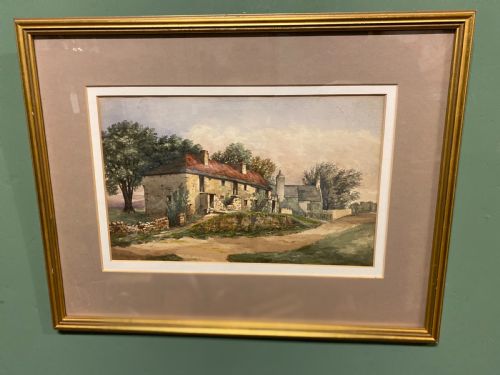
Rustic English Country Watercolour
These rustic english country watercolour works capture quiet rural life through delicate pigment on paper, bringing pastoral charm and historical atmosphere into any room.
Rustic English Country Watercolour
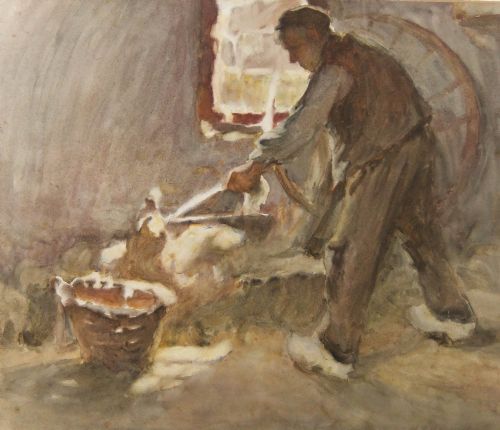
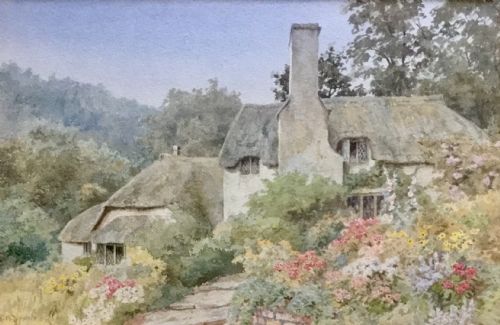
A rustic english country watercolour presents traditional rural subjects such as farmyards, blacksmiths' shops, cottages, and fenland folk. These works emerge predominantly from the nineteenth century, Georgian, Victorian, and Edwardian periods, extending into the nineteen-thirties.
The pieces on this page include specific scenes by named artists alongside anonymous depictions of country life, milkmaids, and farmworkers. Styles range from British Impressionism and British Realism to the English School and Edwardian Pastoral.
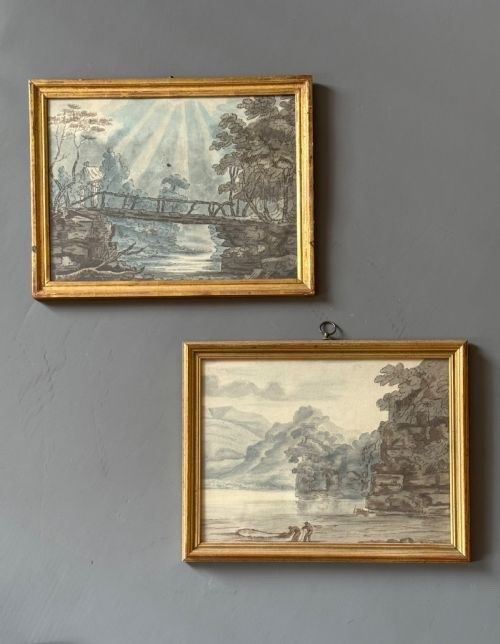
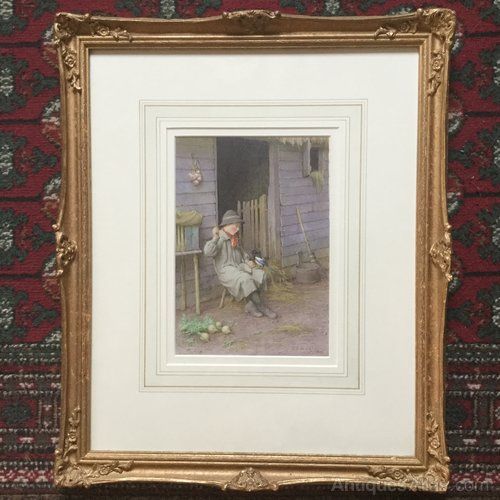
Collectors encounter these works primarily as watercolour paintings on paper, often preserved within wood, glass, and giltwood frames. The compositions document vernacular architecture and rural labour across various English counties.
What Varies In Quality
Execution and draftsmanship separate standard topographical sketches from masterworks by established names like David Woodlock or Henry Sylvester Stannard. The handling of light, shadow, and architectural or anatomical detail dictates the artistic merit of each painting.
Condition and original framing also influence the standing of a piece, particularly the stability of the paper support and the vibrancy of the surviving pigments. Works retaining their period wooden or giltwood frames offer greater historical integrity.
The listings span from the Georgian period through the Victorian and Edwardian eras into the nineteen-thirties, using paper, wood, glass, and watercolour pigment.
Henry Silkstone Hopwood·Charles Edward Wilson·Henry E Hobson·John Atkinson·Thomas James Lloyd·David Woodlock·Henry Sylvester Stannard·Edward Killingworth Johnson·George Hamilton Constantine·Walter Henry Sweet·Thomas Nicholson Tyndale·Henry John Sylvester Stannard·Fred C Jones·Theresa Sylvester Stannard·James Hughes Clayton
The Rustic English Country Watercolour Glossary
- Watercolour pigment
- The finely ground colour substance mixed with a water-soluble binder, applied to paper to create translucent washes. This medium defines the primary technique of the genre.
- Giltwood
- Wood carved and coated with a thin layer of gold leaf or gilt finish, commonly utilised for traditional framing. It adds a decorative border that enhances the artwork.
- Edwardian Pastoral
- An artistic style focusing on idyllic rural scenes, cottage gardens, and agrarian life popular during the early twentieth century. These works reflect a romantic view of the English countryside.
- British Realism
- An artistic approach depicting subjects without idealisation, recording actual rural conditions and labourers with straightforward honesty. This style grounds country watercolours in documentary truth.
Rustic English Country Watercolour: Frequently Asked Questions
What subjects appear in these watercolours?
These paintings depict traditional rural life, including thatched cottages, farmyards, blacksmiths' shops, and local country folk at work. Scenes often capture specific English villages and regional landscapes from past centuries.
Artists focused heavily on recording the quiet rhythms of agrarian existence, capturing milkmaids, farmworkers, and domestic animals within pastoral settings.
How should I frame a watercolour?
Watercolours require framing behind glass with acid-free mount board to protect the paper and pigments from atmospheric moisture and ultraviolet light. Direct contact between the paper and glass must be avoided to prevent condensation damage.
Traditional wood or giltwood frames complement the historical aesthetic of these nineteenth and early twentieth-century pieces while maintaining structural support.
How do I identify the period?
Period identification relies on stylistic clues, framing materials, and the paper support, alongside signatures or biographical dates of the artist. Victorian and Edwardian works often exhibit specific costume details and pastoral sensibilities unique to their decade.
Georgian pieces tend towards topographical accuracy and softer palette applications, while later works from the nineteen-thirties show hints of British Impressionism and realism.
Where were these scenes typically painted?
Painters travelled across various English counties, capturing local landmarks, inns, and coastal villages such as Cockington in Devon or St Ives in Huntingdonshire. Many works record vernacular architecture like timber-framed cottages and cart sheds.
These depictions served as both personal artistic studies and commercial records of a changing rural landscape during the Georgian, Victorian, and Edwardian eras.