
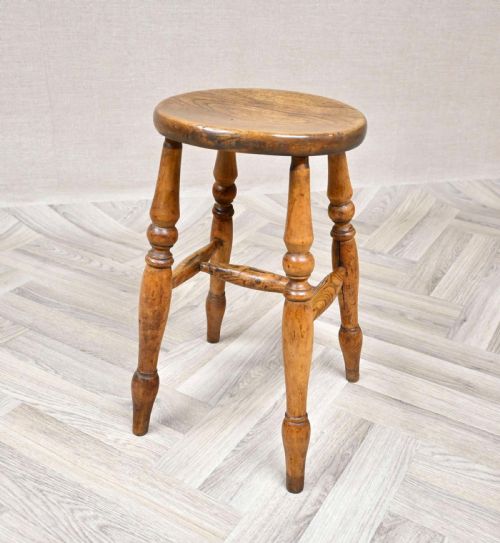

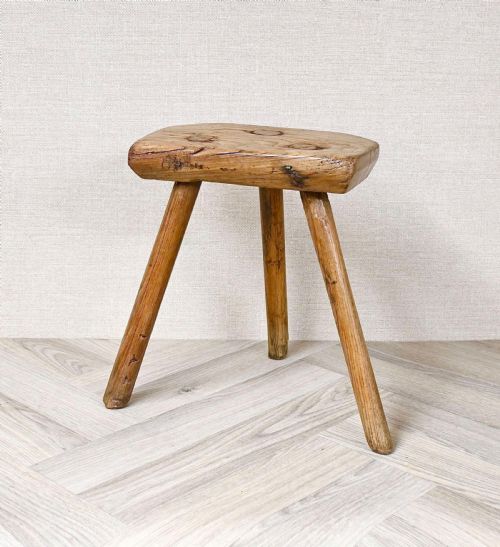
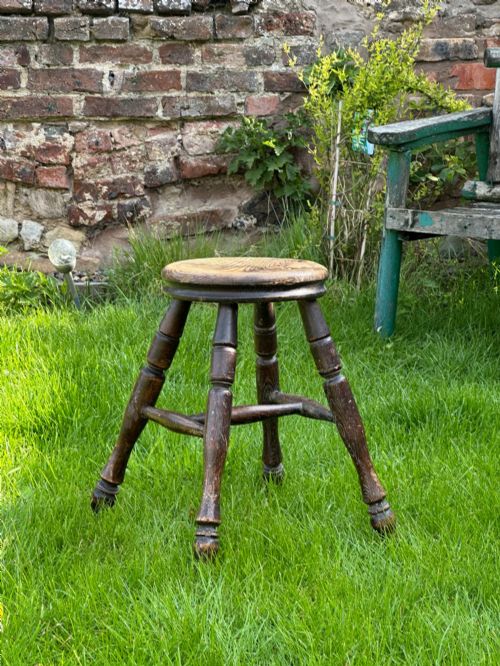


Rustic Elm Milking Stool
These rustic elm milking stool examples are honest vernacular seats shaped by generations of practical utility in dairies and farmhouses.
Rustic Elm Milking Stool
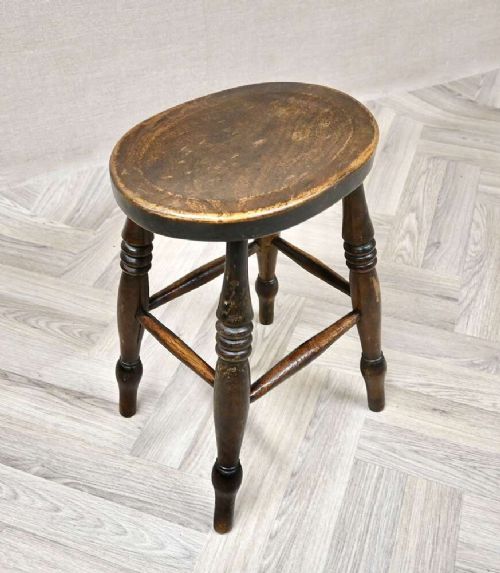
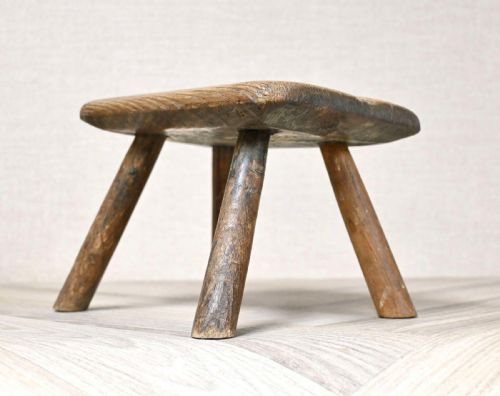
A rustic elm milking stool is a traditional piece of utilitarian furniture designed for agricultural and domestic life, primarily originating from the eighteenth and nineteenth centuries. These honest seats range from simple three-legged dairy stools to low hearth variants and specialised tradesmen's seats like jeweller's and cutler's stools.
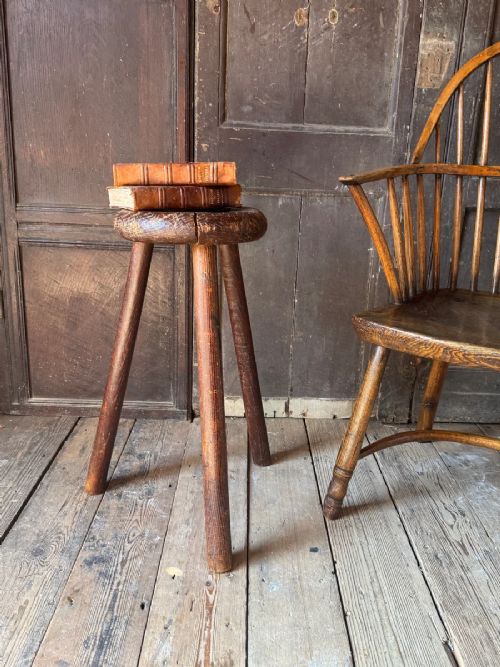
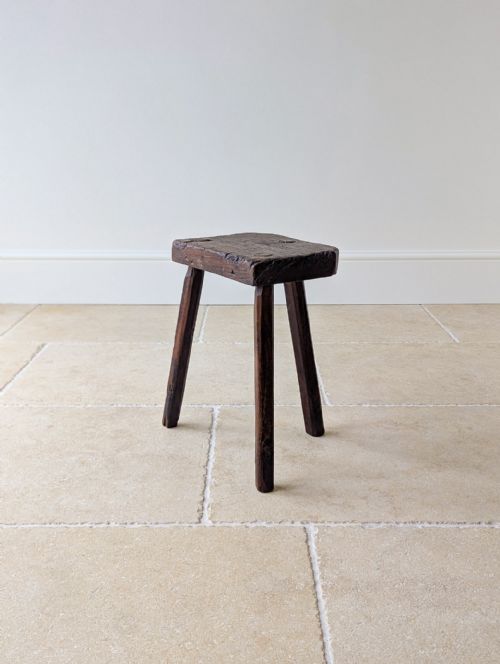
The versions most commonly met on this page belong to the nineteenth century and Victorian periods, reflecting traditional vernacular English country styles. They appear in various forms, including Windsor-seated variations, live edge solid timber tops, and tall wild elm formats.
Makers constructed these sturdy pieces for daily work rather than formal display, resulting in honest utilitarian objects that now function well as side tables or plant stands. Their enduring appeal lies in their stark simplicity and the tactile warmth of aged timber.
What varies in quality
Quality in these vernacular pieces rests upon the integrity of the timber, the pleasing proportion of the seat to the leg rake, and the honesty of any historic repairs. A well-balanced stance and substantial thickness in the elm top elevate certain examples above simpler utility objects.
The degree of wear tells a story of genuine working life, where smooth patination from hands and seating adds considerable character without compromising the structural stability of the joints.
Listings feature items spanning the eighteenth and nineteenth centuries, utilising native hardwoods like elm, ash, and oak in traditional country styles.
The Rustic Elm Milking Stool Glossary
- Vernacular furniture
- Domestic or agricultural items made by local tradesmen or country carpenters rather than urban cabinetmakers. These pieces prioritize function and local material availability over fashionable city designs.
- Live edge
- A natural edge of the tree retained on the wooden board of the seat. This rustic feature showcases the organic contour of the original log.
- Windsor
- A style of seating constructed with a solid wooden saddle-shaped seat into which the legs and back spindles are directly inserted. In milking stools, this typically refers to the sculpted shaping of the wooden top.
- Treen
- Small handmade wooden household objects and utensils. Candlestick stands and small low stools sometimes cross into this category of antique treen.
- Patina
- The deep surface sheen and soft texture developed through decades of handling, polishing, and natural ageing. A good patina indicates genuine age and continuous use.
Rustic Elm Milking Stool: Frequently Asked Questions
What is a milking stool used for today?
While originally designed for sitting close to cows during milking or performing low household tasks, today they function primarily as decorative side tables, plant stands, or occasional low seats.
Their compact size allows them to fit easily into modern living spaces while adding historical character.
How do I date an antique elm stool?
Dating relies on observing tool marks, the type of timber preparation, leg construction methods, and the overall wear of the wood. Eighteenth-century examples often feature different lathe turnings and more primitive wedging compared to Victorian pieces.
Examine the underside of the seat and the base of the legs for clues about age and manufacturing techniques.
Are these stools sturdy enough to sit on?
Most surviving country stools retain remarkable structural strength due to the tough interlocking grain of elm seats and sturdy hardwood legs. However, their primary role in modern homes is often decorative due to their age and historical value.
Check the joints where the legs meet the seat to ensure the wedged tenons remain secure before regular seating use.
What wood was used to make them?
Elm is the primary wood used for the seats because its intertwined fibres resist splitting under heavy weight and pressure. Legs and stretchers were frequently turned from harder woods like ash, oak, beech, or general timber available to the local carpenter.
This combination of different woods was a practical choice by country makers using local materials.