
Rustic Dark Wood Table
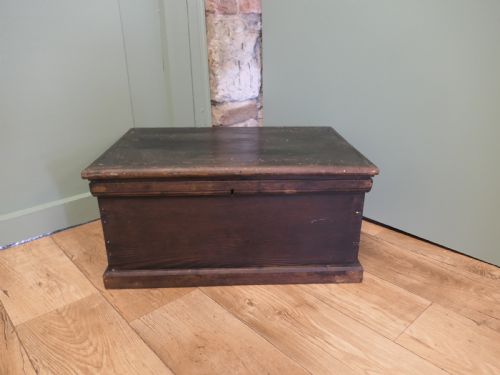
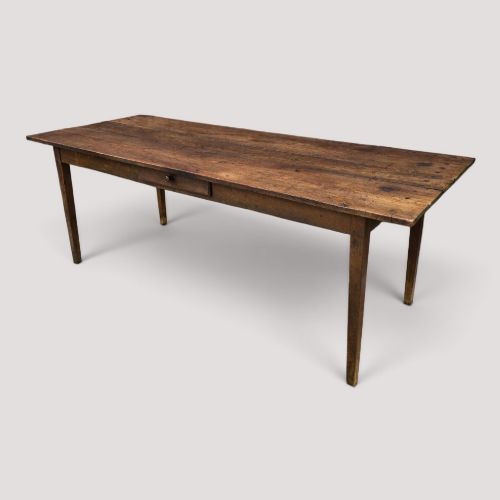
A rustic dark wood table brings tangible history and sturdy utility into a room, forged from honest timbers like oak and elm.
Rustic Dark Wood Table
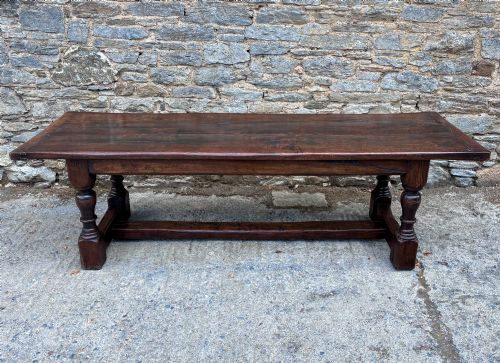
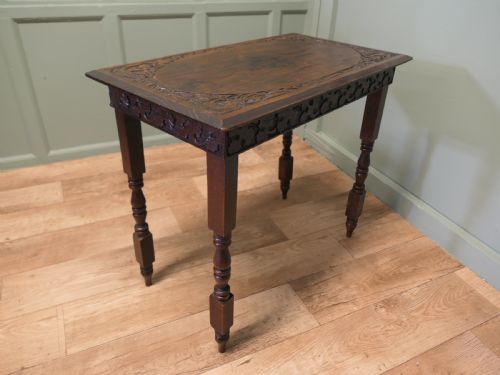
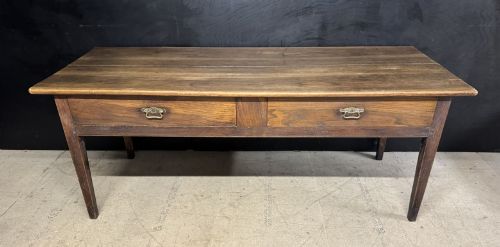
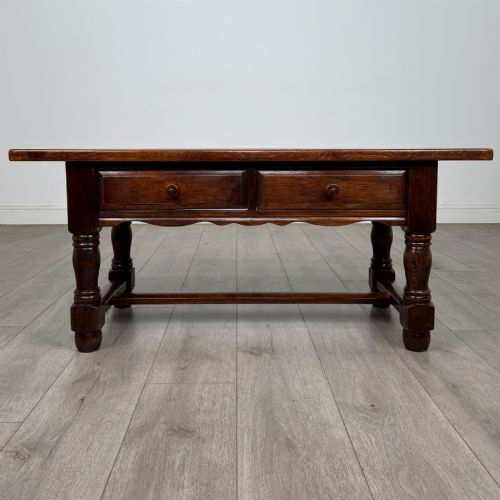
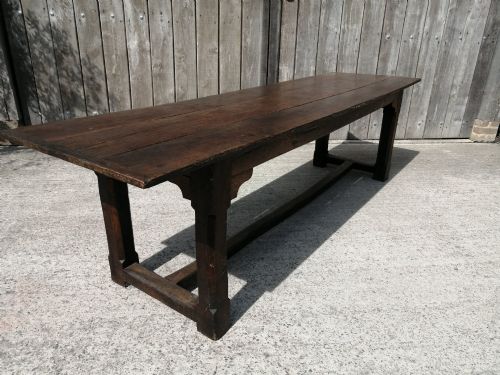
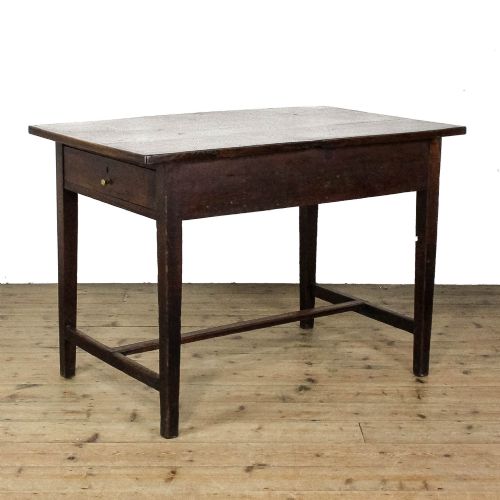
A rustic dark wood table encompasses sturdy dining boards, low coffee tables, and nimble cricket tables shaped by country makers across the eighteenth and nineteenth centuries. These pieces serve as the practical centrepiece of domestic life, showing the honest marks of daily use in kitchens, taverns, and farmhouses.
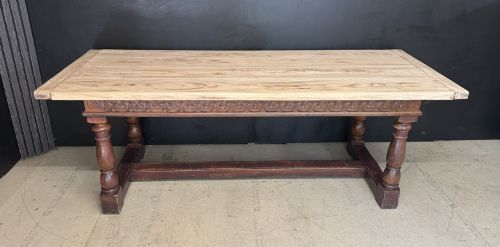
The selections available here lean heavily towards sturdy oak and elm constructions, featuring refectory formats, tavern designs, and three-legged cricket tables. Pieces arrive from English, French, and Welsh traditions, spanning simple country workshops to grander Jacobean and Georgian styles.
Materials and Construction
Makers relied on durable domestic timbers like oak, elm, beech, and pine, selecting planks for their strength and grain rather than decorative perfection. Joinery was straightforward and robust, utilising pegged tenons, thick plank tops, and turned baluster legs designed to withstand heavy daily labour.
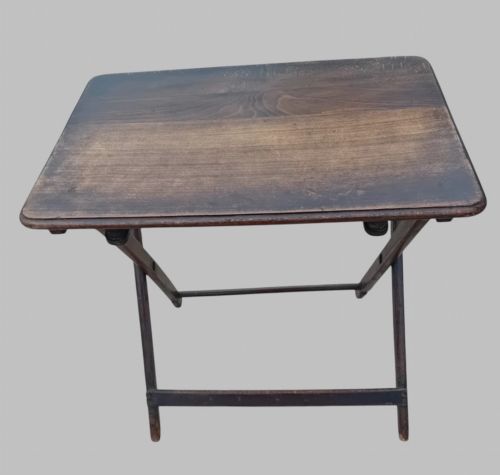
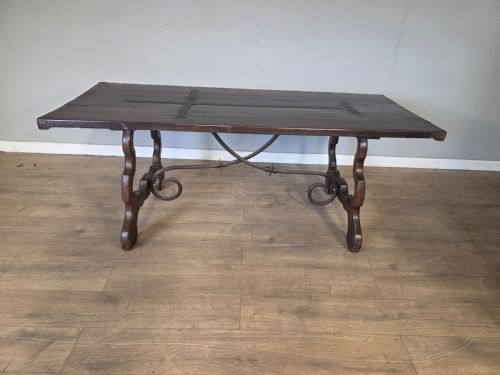
Metal accents in iron and brass occasionally reinforced structural joints or formed operating mechanisms like clamping bars on workbenches and folding campaign hinges. Surfaces were simply finished to highlight the natural dark tones of the wood rather than masked by heavy lacquers.
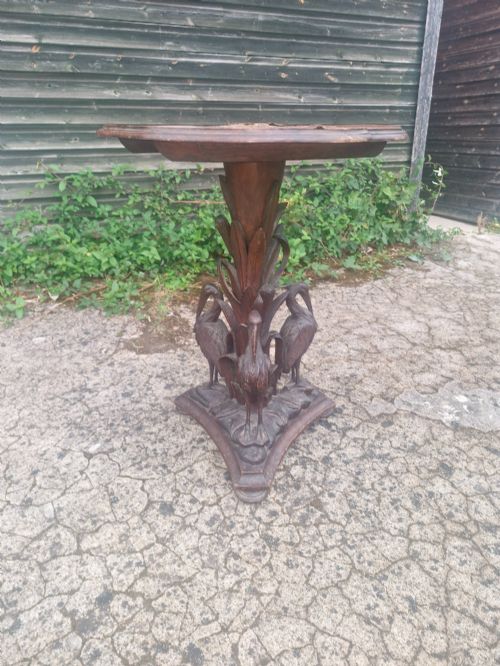
Among heavy refectory boards and workbenches, listings include a folk art twig table and a sculptural grape vine table.
Judging Quality
The character of the timber and the integrity of the original construction dictate the standing of any rustic dark wood table. Superior examples display thick, unwarped plank tops with deep patination accumulated through generations of honest service.
Proportion and structural honesty separate exceptional vernacular items from lesser pieces. Well-balanced forms with original legs, uncompromised stretchers, and minimal restorative timber command greater appreciation among collectors.
The Rustic Dark Wood Table Glossary
- Cricket table
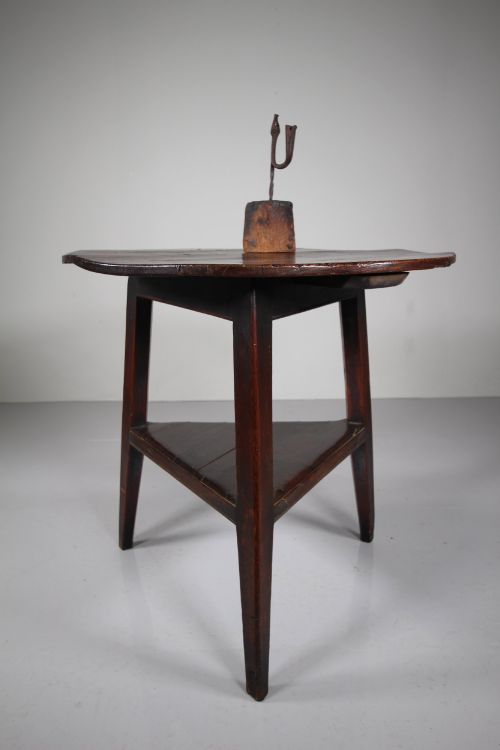
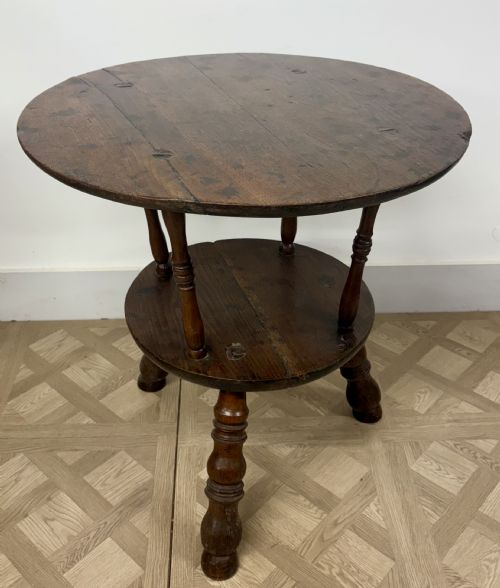
- A small, lightweight occasional table typically featuring three splayed legs and a round top. This design provided stability on uneven stone floors in early English cottages.
- Refectory table
- A long, narrow dining table originally built for monastic dining halls. These sturdy surfaces rest on substantial legs connected by low floor stretchers.
- Gateleg table
- A drop-leaf table featuring hinged flaps supported by swing-out legs that resemble a swinging gate. This clever mechanism allowed surfaces to expand or fold away to save space.
- Dresser base
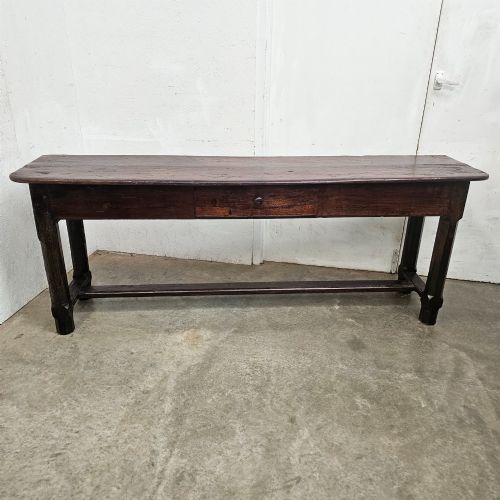
- A low cabinet or sideboard fitted with drawers and cupboards beneath a flat top. They served as primary storage and preparation surfaces in country kitchens.
Rustic Dark Wood Table: Frequently Asked Questions
What is a cricket table?
A cricket table is a traditional three-legged occasional table with a circular top, historically built for stability on uneven floors.
Their simple geometry made them versatile items in cottages and taverns, easily tucked into corners or moved beside seating.
How do I care for antique timber?
Protect antique wood surfaces by keeping them away from direct heat sources and sudden humidity shifts.
Apply natural beeswax periodically to nourish the dry grain and maintain the deep historic patina without sealing the wood.
Are these tables suitable for daily dining?
Many of these pieces were built precisely for heavy kitchen and refectory use, making them exceptionally sturdy for modern dining.
Their robust construction of oak or elm readily absorbs the knocks of daily family life while displaying scars of past centuries.
How do I identify a Georgian piece?
Georgian tables often display restrained proportions, refined turning, and solid walnut or oak construction typical of the eighteenth century.
Construction details like hand-cut joints and period hardware help distinguish these earlier examples from later revival pieces.