

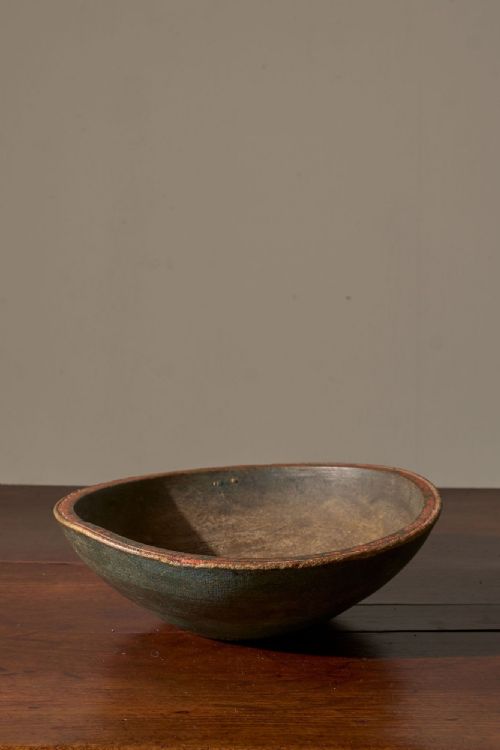


Rustic Country Wooden Bowl
A rustic country wooden bowl brings tactile warmth and domestic history into a room through simple turned or carved timber.
Rustic Country Wooden Bowl
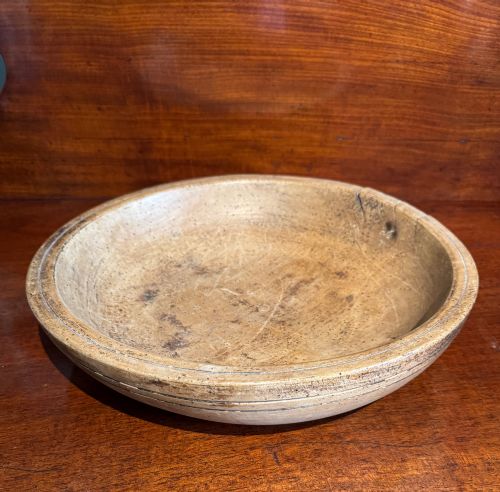
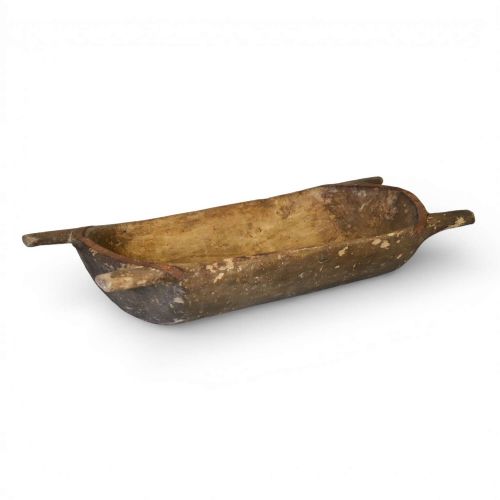
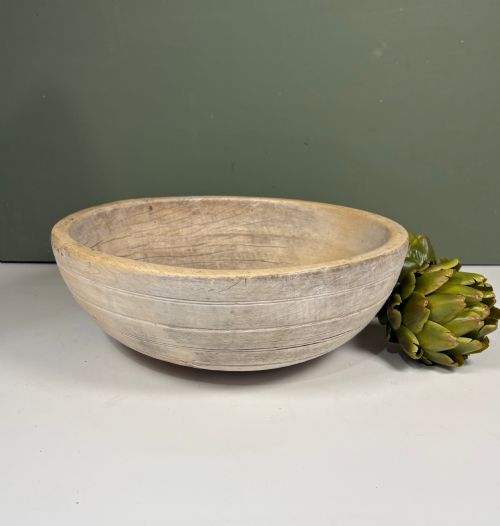
When you search for a rustic country wooden bowl, you encounter domestic vessels shaped from solid timber for practical farm and kitchen use. The selection spans dairy bowls, kneading dough bowls, platters, and dug out bowls originating from English, French, Swedish, and Welsh households.
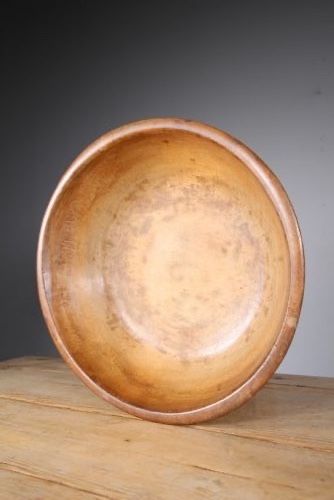
You are most likely to meet nineteenth century sycamore dairy bowls and early twentieth century hand carved examples on this page. These pieces carry the marks of everyday use, from worn rims to rich patinas developed over generations of service in rural homes.
How they were made
These vessels are formed from solid woods such as sycamore, ash, and birch, selected for their grain and stability. Makers turned them on lathes or dug them out by hand from single blocks of timber.
Surface finishes include original paint on Scandinavian pieces and hand polished wax on English and Continental examples. Iron fixtures appear on specific functional forms, while other surfaces simply record the tool marks of the initial carving.
An eighteenth century Swedish bowl keeps quiet company with a nineteenth century cat stand.
What varies in quality
Quality rests in the balance of proportion, the depth of the carved or turned profile, and the integrity of the timber. A well preserved surface patina elevates a piece, showing how the wood has aged and responded to handling over time.
The distinction between ordinary utility items and finer examples lies in the crispness of the original turning, the preservation of early painted finishes, and the harmonious character of the wood grain.
The Rustic Country Wooden Bowl Glossary
- Dairy bowl
- A wide, shallow wooden vessel historically used in dairies for setting milk and skimming cream. These pieces typically feature a flat base and gently sloping sides.
- Dough bowl
- A large trough shaped vessel utilised for mixing and kneading bread dough in farmhouse kitchens. They often display deep walls and substantial wooden construction.
- Treen
- Small handmade wooden objects for domestic use, encompassing bowls, platters, and containers. The term derives from the old English word for tree.
- Dug out
- A method of construction where a single solid log is hollowed out to form a vessel rather than being assembled from separate staves. This creates a robust, seamless bowl.
Rustic Country Wooden Bowl: Frequently Asked Questions
What is a dairy bowl?
A dairy bowl is a wide, shallow wooden vessel designed for setting milk to rise and gathering cream in traditional farm dairies. Their wide rims and shallow depths provided the necessary surface area for separating cream from milk.
Today, these bowls serve decorative purposes in homes, often displayed on tables or open shelves to showcase their aged timber surfaces and historical utility.
How do I care for wooden bowls?
Care for antique wooden bowls involves keeping them away from direct heat sources and dramatic humidity changes that can cause timber to split. Cleaning requires only a soft, dry cloth or a slightly damp sponge without soaking.
Applying a light coat of food safe mineral oil or beeswax periodically helps maintain the moisture in the wood and protects the historic patina from drying out.
What woods were used?
Makers utilised local hardwoods available to them, with sycamore appearing frequently for dairy bowls due to its clean grain and resistance to splitting. Ash, birch, and mahogany also feature across different regional traditions.
Solid timber selection depended on the intended function of the vessel, balancing the need for a stable turning wood against the requirement for durability during daily kitchen tasks.