

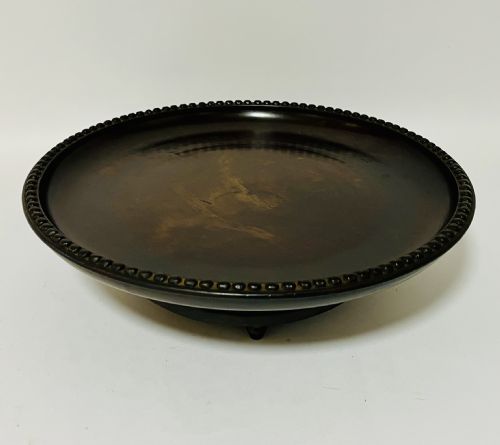
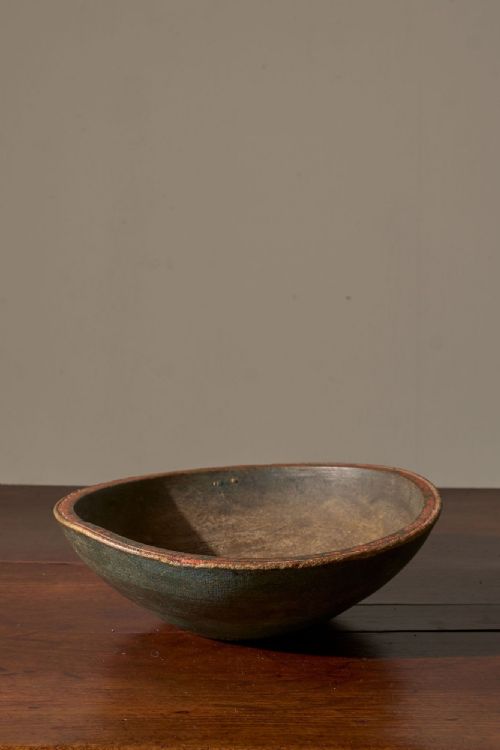


Carved Wooden Centrepiece Bowl
A carved wooden centrepiece bowl commands the table, bringing heavy timber and deep relief work right to the heart of the dining room.
Carved Wooden Centrepiece Bowl
A carved wooden centrepiece bowl brings functional form and deep relief carving together for the middle of a dining table or sideboard. These items appear across several distinct historical periods, stretching from the eighteenth century into the nineteen-thirties.
The most common examples on this page date from the nineteenth and early twentieth centuries, fashioned in styles ranging from Swiss folk art and Black Forest work to Arts and Crafts and Renaissance Revival. They take the shape of decorative bowls, pedestal bowls, and table garnitures, sometimes serving dual purposes such as cheese coasters.
Makers shaped these vessels from heavy timbers, employing regional motifs like fruiting vines alongside painted or hand-polished finishes. Every piece reflects the domestic and decorative tastes of its particular era, from Georgian mahogany to Swedish painted softwood.
How they were made
Craftsmen shaped these bowls primarily from solid woods such as oak, mahogany, walnut, and pine, working the timber by hand to achieve substantial forms. Dark stained finishes and hand-polished surfaces highlight the natural grain and deep texture of the material.
Carvers employed chisels and gouges to render elaborate motifs directly into the solid timber, producing high-relief fruiting vines, animal figures, and geometric borders. Some examples incorporate contrasting elements like brass hardware or painted decoration applied directly over the wood.
Design styles represented across the current selection include Arts and Crafts, Renaissance Revival, Swiss Folk Art, and Swedish Country.
What varies in quality
The depth and clarity of the carving separate simpler vessels from ambitious sculptural works, particularly in Swiss and Black Forest pieces where undercut foliage and naturalistic forms demand exceptional hand skill. Crisp tool marks and thoughtful composition indicate a master carver rather than a hurried workshop production.
The choice of timber and the stability of the construction dictate the lasting integrity of the bowl. Dense hardwoods like walnut and mahogany retain sharp relief edges over centuries, whereas softer timbers rely entirely on the thickness of the original block to prevent warping.
The Carved Wooden Centrepiece Bowl Glossary
- Black Forest
- A regional carving style originating in Switzerland and Germany known for realistic depictions of animals, foliage, and deep sculptural relief. These pieces often utilise limewood, walnut, or other dense timbers.
- Cheese Coaster
- A low-profile vessel or trolley fitted to hold a wheel of cheese on the dining table. They frequently feature turned or carved wooden rims and sometimes incorporate castors.
- Tazza
- A shallow ornamental bowl raised upon a central foot or pedestal. The form derives from Renaissance metalwork and translates into carved wood during the nineteenth century.
- Renaissance Revival
- A nineteenth-century design movement that draws heavily on sixteenth-century architectural and decorative motifs. Pieces in this style display heavy scrolling, classical figures, and deep geometric carvings.
- Table Garniture
- A matching set of ornamental vessels meant to be displayed together on a dining table or sideboard. They serve a purely decorative function rather than holding food.
Carved Wooden Centrepiece Bowl: Frequently Asked Questions
What were carved wooden centrepiece bowls used for?
These vessels originally held fruit, nuts, or decorative arrangements to anchor the visual weight of a dining table or sideboard. Wealthy households utilised them as part of larger table garnitures during formal meals.
Over time, many pieces transitioned into purely decorative objects, displayed on side tables or hung as wall art to showcase the intricate relief work.
How can I tell the period of a carved bowl?
Examine the wood species, tool marks, and stylistic motifs to place the object within a specific era. Georgian pieces typically employ mahogany with restrained classical detailing, while late-nineteenth-century items favour heavy Swiss folk art or Black Forest carving.
Tool marks left by hand chisels differ from modern mechanical routing, offering clues to the manufacturing date and workshop methods.
Are these bowls suitable for daily use?
While sturdy enough to hold dry items like fruit, antique wooden bowls require gentle handling to preserve their historic finishes and delicate carved details. Acidic fruits or moisture can damage untreated interior surfaces over extended periods.
Most collectors choose to display them as decorative art pieces rather than subjecting them to heavy everyday dining use.