









Rustic Country Sofa Table
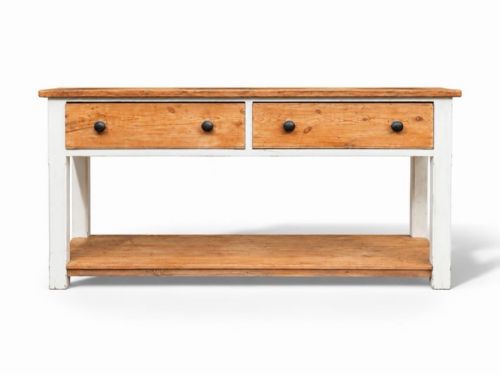
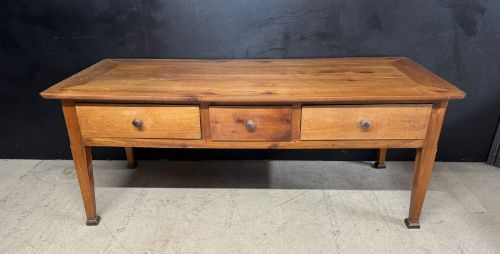
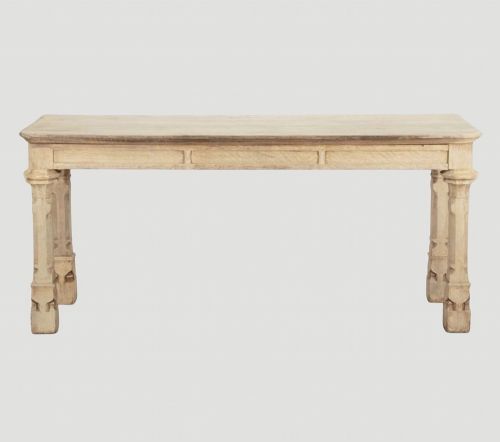
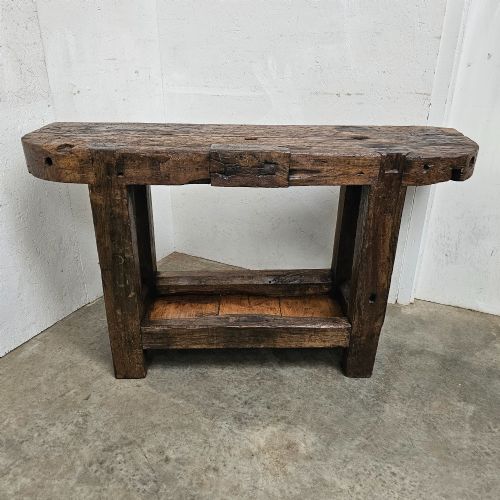
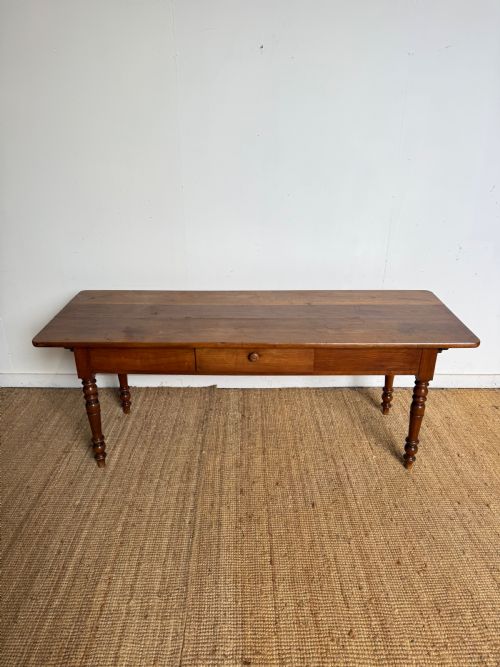
These rustic country sofa tables combine utilitarian timber construction with regional European character, offering narrow proportions suited for placement behind seating.
Rustic Country Sofa Table
A rustic country sofa table bridges the gap between narrow console surfaces and domestic utility, often appearing in forms derived from side tables, hall tables, and workbenches. These pieces serve domestic spaces where surface area is required behind low seating without blocking walkways or dominating the room.
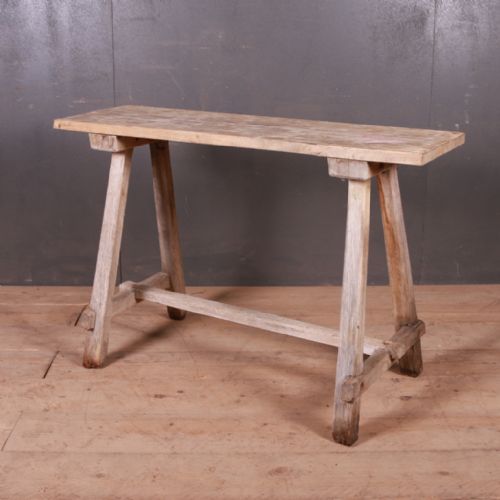
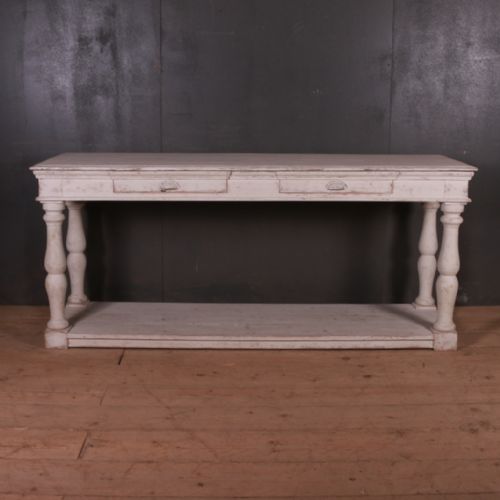
The selection here encompasses vernacular European designs, spanning French provincial examples and British pine furniture. Forms range from trestle tables with potboards to narrow painted consoles and low occasional tables.
Makers utilised available timbers such as pine, oak, elm, walnut, and cherrywood. Pieces originate across the eighteenth, nineteenth, and early twentieth centuries, reflecting the practical needs of rural households.
Materials and construction methods
Construction relies heavily on solid timber, notably pine and oak, alongside harder woods such as elm and cherrywood for structural durability. Surfaces often show visible grain, pegged joints, and utilitarian joinery characteristic of vernacular workshop production.
Many examples incorporate painted finishes in grey, green, or neutral tones, sometimes layered over older paint schemes or bare wood. Metal and iron elements appear in structural braces or hardware where utilitarian strength takes priority over decorative concealment.
Rustic Country Sofa Table Retail Price Guide 2026
Typical asking prices for rustic country sofa table among the pieces listed under this phrase on Sellingantiques today, from the lower quarter to the upper quarter. They describe what is for sale here now, not the wider market.
Some nineteenth-century tables still bear the faint flour dust and ink stains of rural kitchens and provincial cottage offices.
Assessing quality in vernacular tables
Quality rests in the integrity of the timber and the balance of proportions, particularly how narrow the frame remains while maintaining stability. The choice of wood dictates longevity, with dense bleached oak or seasoned pine holding up better than softer secondary woods.
Surface patination plays a central role in distinguishing superior examples. Original or historic painted finishes that show genuine wear hold more integrity than recent overpainting, while well-proportioned trestle bases and potboards indicate careful rural carpentry.
The Rustic Country Sofa Table Glossary
- Console Table
- A table designed to stand against a wall, typically narrow in depth to fit hallways or living areas. These surfaces often support lamps or decorative objects.
- Potboard
- A lower slatted shelf fitted between the legs of a table, historically used for storing pots and kitchen utensils. This feature appears frequently on trestle and country dining forms.
- Trestle Table
- A table structure comprising two or more supports connected by a horizontal beam or stretcher. This design allows maximum legroom along the length of the top.
- Bleached Oak
- Oak timber treated to lighten its natural dark tone, exposing the grain and texture. This finish appears on several nineteenth-century French and English surfaces.
- Vernacular Furniture
- Everyday items made by local tradesmen for regional use rather than high-style urban workshops. These pieces prioritise function and local material availability.
Rustic Country Sofa Table: Frequently Asked Questions
What defines a rustic country sofa table?
These tables are narrow, utility-driven surfaces originating from regional workshops across Britain and continental Europe. They are built from domestic timbers and designed to fit behind seating or along hallways.
The materials include pine, oak, and fruitwoods, frequently finished with plain timber patination or historic painted surfaces. Their proportions remain slender to suit compact living arrangements.
How do I choose the right size?
Measure the height of the sofa back and the available floor space behind the seating. A proper sofa table should sit level with or slightly below the top of the sofa frame.
Consider the depth of the room to ensure the narrow profile leaves adequate clearance for walking. Length should correspond to the overall span of the seating without extending past the armrests.
Are painted finishes original?
Many nineteenth-century country pieces feature layered paint applications reflecting domestic updates over generations. Grey and green tones are common among surviving examples from this era.
Distinguishing original coats requires examining underlying layers for wear and oxidation. Historic paint adds character and protects the underlying pine or oak construction.
How should I care for antique timber?
Keep wooden surfaces away from direct heat sources and strong sunlight to prevent the timber from splitting or warping. Dust regularly with a dry cloth and avoid harsh chemical polishes.
Applying occasional natural wax helps preserve the surface sheen of unpainted pine and oak. Painted surfaces require gentle cleaning with a damp cloth to protect the finish.