


Rustic Country Scene Picture
A rustic country scene picture brings the quiet rhythm of traditional agricultural life directly into a modern room.
Rustic Country Scene Picture
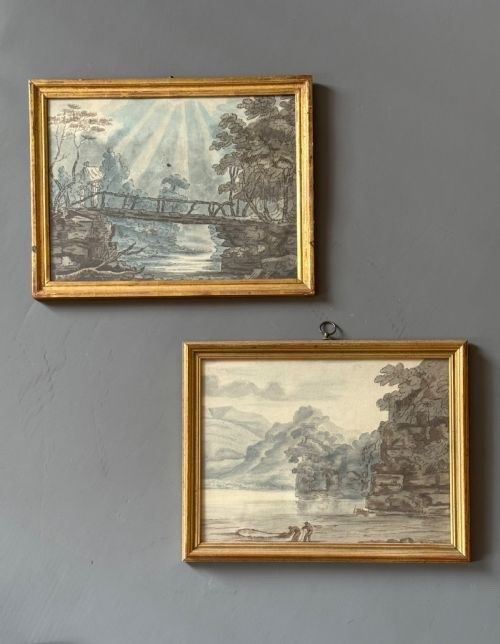
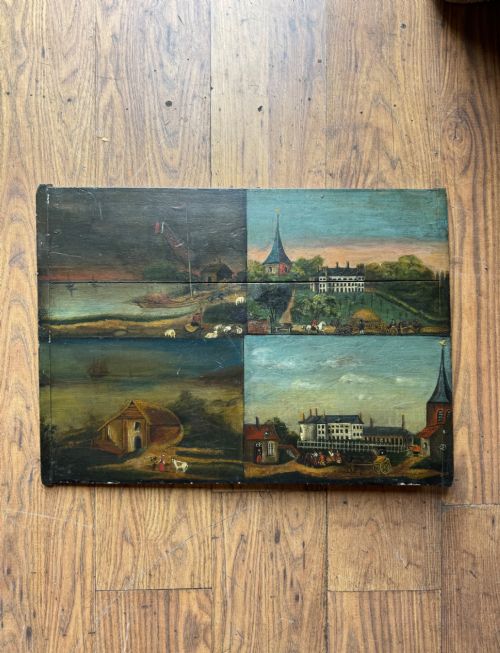
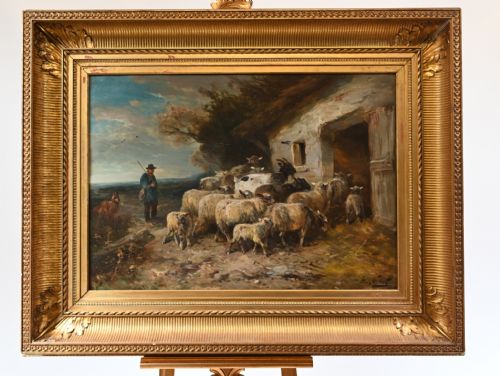
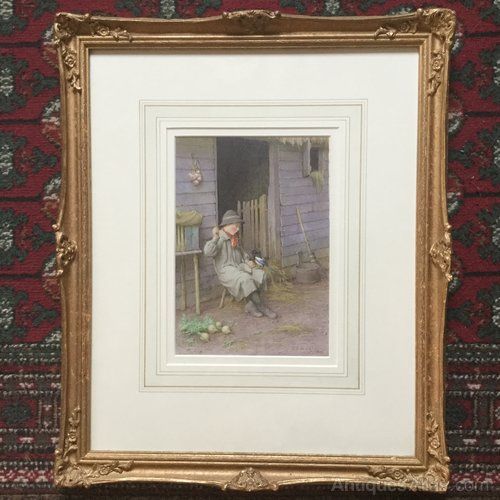
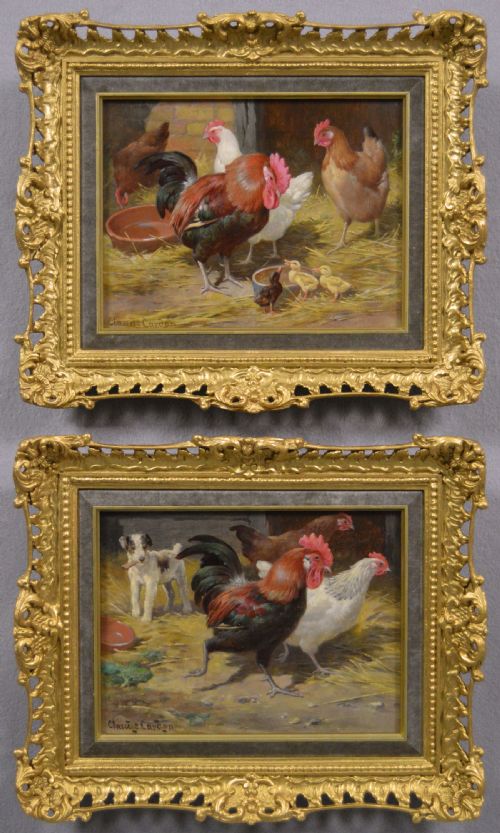
When you search for a rustic country scene picture, you encounter framed paintings and works on paper depicting farmyards, cottages, shepherds, and agricultural workers. The pieces span from the eighteenth century through to the mid-twentieth century, capturing changing rural traditions across Britain and Europe.
The most common examples on this page are nineteenth-century oil paintings and watercolours showing pastoral landscapes, farm animals, and village life. These range from provincial naive folk art to accomplished academic watercolours and oils.
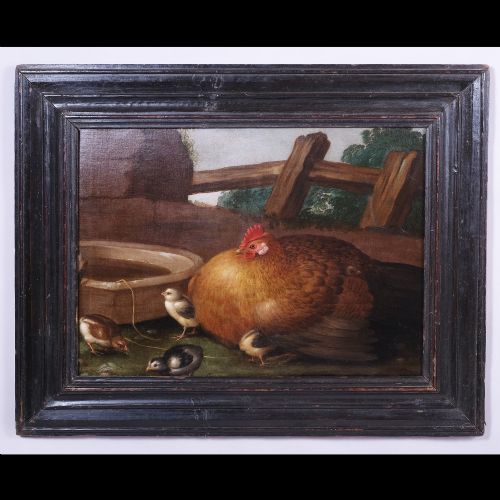
Subjects frequently focus on livestock, thatched cottages, and everyday agricultural tasks such as harvest work or tending to poultry. Such works reflect a long-standing fascination with the peace and labour of the countryside.
Materials and construction
Artists relied primarily on oil paint applied to canvas or wood board, alongside watercolours and gouache executed on paper. Giltwood and gesso frames often house these works, providing protective borders that match the period aesthetic.
Support materials vary from stretched canvas and wooden panels to heavy watercolour paper and occasional specialist mediums like sand pictures. Each combination of pigment and support determines how the surface ages and retains its colour over centuries.
Listings feature works produced across the eighteenth, nineteenth, and twentieth centuries, executed in oil, watercolour, and gouache.
Assessing quality and execution
Quality rests upon the artist's command of light, composition, and anatomical accuracy in rendering figures, animals, and architectural elements. Stronger pieces display confident brushwork and a balanced palette that creates genuine depth within the rural landscape.
Condition plays a vital role, distinguishing works with preserved original pigments and stable surfaces from those suffering heavy restoration or discoloured varnish. The framing also contributes, as period-appropriate giltwood enhances the overall integrity of the piece.
Henry Schouten·Claude Cardon·Henry John Yeend King·John Inigo Richards·John Falconar Slater
The Rustic Country Scene Picture Glossary
- Oil on Canvas
- Pigment suspended in drying oil applied to a woven fabric support stretched over a wooden frame. This medium allows for rich colour blending and textured brushwork.
- Gouache
- An opaque water-based paint composed of pigment, water, and a binding agent such as gum arabic, often mixed with white to create solid areas of colour.
- Naive Folk Art
- Artistic work created by self-taught painters focusing on direct observation and charm over strict adherence to academic rules of perspective.
- Lithograph
- A printmaking process where an image is drawn onto limestone or a metal plate with a greasy medium and then transferred to paper using ink.
- Giltwood
- Wood that has been coated with a thin layer of gold leaf or gilt powder, commonly found on decorative picture frames from the eighteenth and nineteenth centuries.
Rustic Country Scene Picture: Frequently Asked Questions
What periods do these artworks cover?
The pieces span from the eighteenth century through the nineteenth and twentieth centuries, capturing various historical shifts in rural art.
Styles range from early eighteenth-century farmyard scenes to Edwardian watercolours and mid-twentieth-century naive paintings.
How were these pictures framed originally?
Many works are housed in traditional frames made of giltwood and gesso, which were designed to complement the tones of the painting.
Some later watercolours utilise burr wood frames that accentuate the rustic character of the rural subject matter.
What subjects appear most frequently?
Common subjects include farmyard animals such as chickens, sheep, and cattle, alongside agricultural labourers and thatched cottages.
Artists also depicted specific rural events like harvests, milkmaids at work, and village street scenes.
How do folk art pieces differ from academic works?
Provincial naive folk art prioritises direct storytelling and simple charm, often omitting strict adherence to classical perspective and anatomical rules.
Academic works by contrast demonstrate formal training in light, shadow, and precise rendering of texture and form.