







Rustic Country Landscape
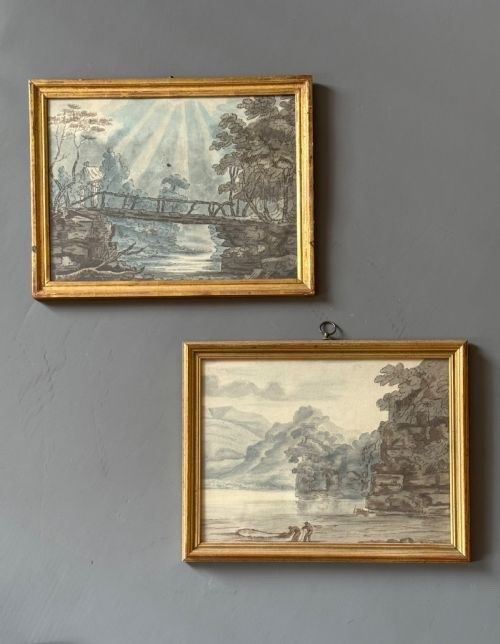
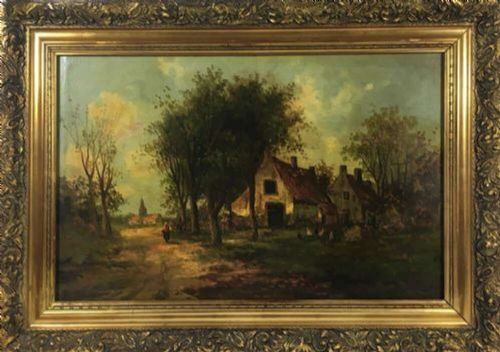
A rustic country landscape captures pastoral life, featuring cottages, fields, and farm animals rendered in oil or watercolour.
Rustic Country Landscape
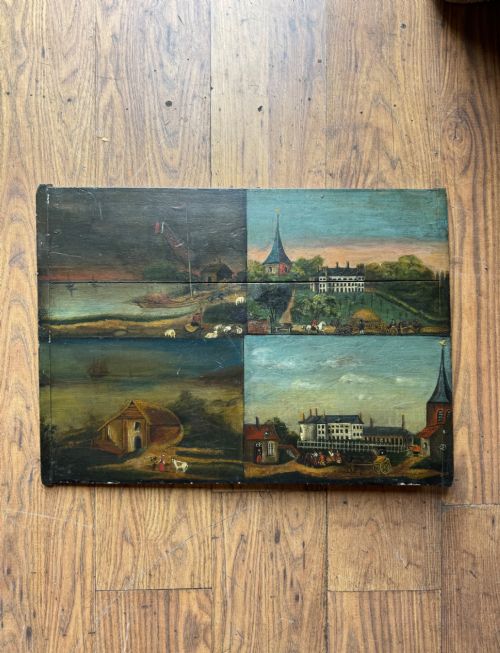
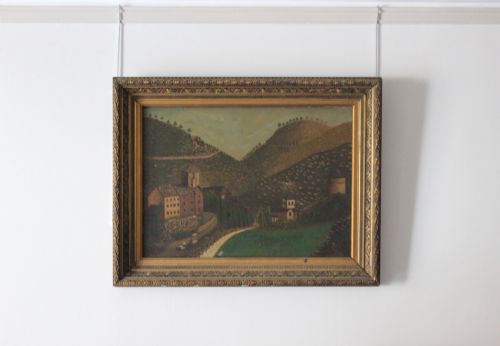
A rustic country landscape typically depicts rural British and European scenes, including farmyards, cottages, rivers, and livestock. These artworks emerge from various periods spanning the Georgian era through to the twentieth century, encompassing Victorian naturalism, British impressionism, and provincial naive folk art.
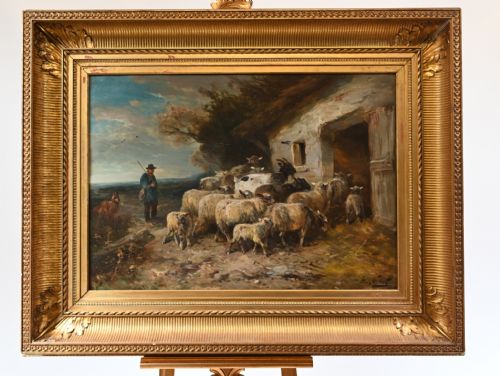
Buyers encounter works executed in oil on canvas, oil on wooden board, and watercolour on paper. Framed artwork often arrives in period settings such as giltwood or burr frames, reflecting the aesthetic preferences of nineteenth and early twentieth-century painters and collectors.
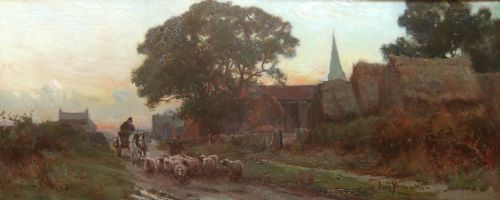
The subjects range widely from pastoral agricultural views with sheep and horses to intimate depictions of thatched cottages and rural workers. Pieces vary from academic compositions by listed artists to charming primitive works by anonymous makers.
Materials and Technique
Painters utilised oil paint applied to canvas, wooden board, or paper to achieve depth and lasting colour in their rural scenes. Watercolours on paper provide lighter, more luminous impressions of fenland folk and country cottages.
Substrates varied according to the period and scale of the work, with some nineteenth-century canvases later laid onto board for stability. Giltwood and burr frames complete the construction, preserving the paintings while framing the pastoral view.
Prizing Shorthorn bulls and pet kids share the pasture with working horses and faithful sheep dogs.
Quality and Execution
Quality rests upon the confidence of the brushwork and the accuracy of composition, particularly in the rendering of livestock, figures, and architectural elements like thatched cottages. Academic proficiency distinguishes works by accomplished professional painters from simpler folk art and primitive school pieces.
The handling of light and atmospheric perspective determines the visual success of a rustic country landscape. Superior examples capture a convincing sense of time and place, whether depicting an eventide farmyard or a quiet stream.
John Horace Hooper·Miles Birkett Foster·Henry Schouten·George Morland·John Constable·John Bell·Henry John Yeend King·Andre de Moller·John Atkinson·Ralph Dorrance·Fred Stead·John Henry Dell·Paul Jones·John Inigo Richards·Thomas James Lloyd·Owen Bowen·Abraham Hulk Junior·David Woodlock·William Miller Frazer·GW Horlor·John Syer Junior·Henry Sylvester Stannard·John Frederick Herring
The Rustic Country Landscape Glossary
- Canvas
- A heavy woven fabric stretched across a wooden frame to serve as a support for oil paint. It provides a flexible yet durable surface favoured by artists since the Renaissance.
- Giltwood
- Timber carved and coated with a thin layer of gold leaf or metallic gilt paint. This material is commonly found on traditional picture frames.
- Watercolour
- A paint consisting of pigment suspended in a water-soluble vehicle, typically applied to paper. It allows for translucent washes and delicate effects.
- Primitive
- Art created by an artist with little or no formal academic training, often characterised by a naive perspective and direct charm. These works rely on intuitive skill rather than strict proportion.
- Board
- A rigid flat panel, often made of wood or heavy card, used as a painting support instead of stretched canvas. Artists frequently utilised board for smaller plein air studies.
Rustic Country Landscape: Frequently Asked Questions
What periods do these paintings come from?
The works span from the Georgian period through the Victorian era and into the twentieth century. They reflect shifting artistic movements including realism, impressionism, and pastoral naturalism.
Dates often range from the late eighteenth century up to the 1960s, showing evolving techniques in both oil and watercolour painting.
How were these rural scenes originally displayed?
Paintings of this nature were typically hung in domestic interiors, framed in decorative giltwood or burr surrounds to complement period decor.
Many retain their original or period-appropriate frames, which protect the edges of the canvas or paper and enhance the artwork.
What subjects appear most frequently?
Common subjects include agricultural farmyards, horses and carts, sheep flocks with shepherds, and picturesque thatched cottages. Figures engaged in rural labour or travelling down country lanes also feature prominently.
Artists frequently recorded specific British and European countryside locations, capturing local inns, rivers, and fenland scenery.
How do oil paintings differ from watercolours here?
Oil paintings utilise pigment bound in drying oils on canvas or wooden boards, offering rich textures and deep tones. Watercolours employ water-soluble pigments on paper, producing lighter and more translucent atmospheric effects.
Both mediums were used extensively by artists depicting nineteenth and twentieth-century rural life.