


Rustic Country House Armchair
These rustic country house armchairs are honest vernacular seating built from solid timbers for everyday domestic comfort.
Rustic Country House Armchair
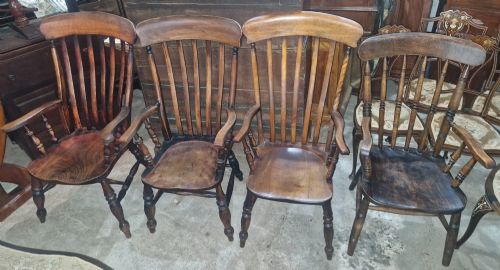
A rustic country house armchair represents the utilitarian seating tradition found in homes across the countryside, spanning periods from the eighteenth century through the early twentieth century. When exploring this selection, buyers encounter various regional forms including Windsor designs, spindlebacks, ladderbacks, and carver chairs.
The materials reflect local timber availability rather than exotic imports, resulting in solid constructions designed for practical use in kitchens, dining rooms, and parlours. Pieces range from straightforward Victorian kitchen seating to earlier George III elm examples with deep patination.
Origins vary from English vernacular workshops to French provincial and Yorkshire makers, each bringing distinct regional characteristics to the joinery and turning. These chairs carry the marks of domestic history, showing how rural makers adapted traditional forms for everyday utility.
Materials and construction
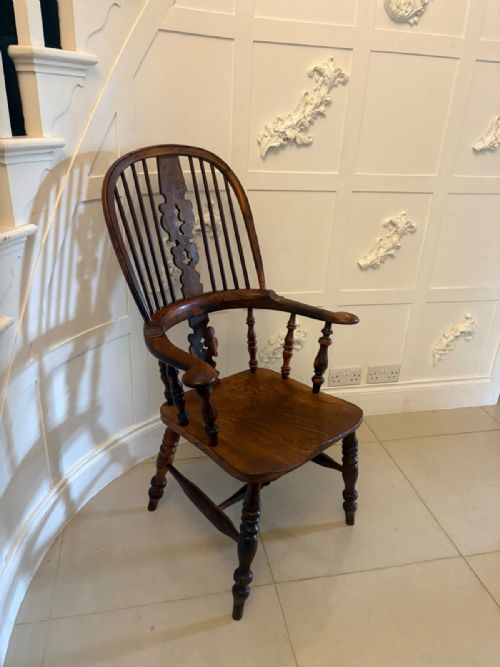
Makers utilised native timbers such as elm for solid seats, ash and beech for bent stems or spindles, and yew for figured grain on hoop backs. Combining these woods allowed craftsmen to match the material to the structural demand, using flexible ash for steam-bent parts and sturdy elm for carved saddle seats.
Construction methods rely on traditional joinery techniques including wedged tenons, spindle turning, and rush or sea grass seating woven directly into the frames. This straightforward approach prioritised structural integrity and comfort over decorative flourish.
Current listings demonstrate a prevalence of elm, ash, and beech across nineteenth century English and French vernacular seating forms.
Factors that distinguish the work
Quality in these chairs rests upon the integrity of the timber selection and the retention of original surface patination. Examples fashioned from figured yew or dense old elm display greater depth in the grain compared to later utility replacements.
The balance of the proportions and the rhythm of the turned spindles separate competent regional joinery from exceptional vernacular art. Original surfaces that have aged naturally through generations of use hold greater visual presence than stripped or heavily restored timber.
The Rustic Country House Armchair Glossary
- Hoop back
- A curved wooden bow forming the upper backrest of a Windsor chair, usually steam-bent from a single piece of timber. This technique provides both structural strength and comfortable support.
- Carver chair
- An armchair designed primarily for use at the head of a dining table or as a singular fireside seat. These pieces typically feature open arms attached to a wooden or rush seat.
- Vernacular
- Objects built by local craftsmen using traditional regional methods rather than following high-style academic designs. This tradition prioritises local materials and practical utility.
- Saddle seat
- A wooden seat base carved into a contoured, concave shape to improve seating comfort. This shaping is frequently found on eighteenth and nineteenth century elm chairs.
- Spindleback
- A chair back constructed from a series of slender turned wooden rods fitted between the seat and top rail. This lightweight yet robust design is common in country kitchen seating.
Rustic Country House Armchair: Frequently Asked Questions
What is a rustic country house armchair?
These pieces are traditional vernacular seats made from solid native timbers like elm, ash, and beech by regional makers. They served everyday domestic functions in kitchens and country houses rather than formal parlours.
Over the centuries, forms evolved from eighteenth century George III designs into Victorian kitchen Windsor chairs and Edwardian rocking variants. Their appeal lies in their honest construction and patinated wooden surfaces.
How do I date a country armchair?
Dating relies on examining the timber species, tool marks, joinery techniques, and overall wear patterns accumulated over generations. Eighteenth century pieces often feature thick elm seats and heavy turnings, whereas later Victorian examples show machine assistance.
Analysing the construction of the arm supports and the method used to fix spindles into the seat gives further clues to the period of manufacture.
Are these chairs comfortable for daily use?
Most models were designed for practical household tasks, featuring generous proportions and ergonomically carved wooden saddle seats. While they lack modern upholstery, their wooden contours offer natural support.
Adding a loose squab cushion can make them suitable for modern living rooms, studies, or reading corners without altering the historic timber frame.
Which woods were commonly used?
Elm is frequently encountered for solid carved seats due to its resistance to splitting under stress. Ash and beech provided reliable strength for turned spindles and steam-bent components.
Yew wood appears on finer Windsor examples, prized for its rich grain patterns and warm natural colour. Rush and sea grass also feature as traditional seating materials on ladderbacks and rocking chairs.