

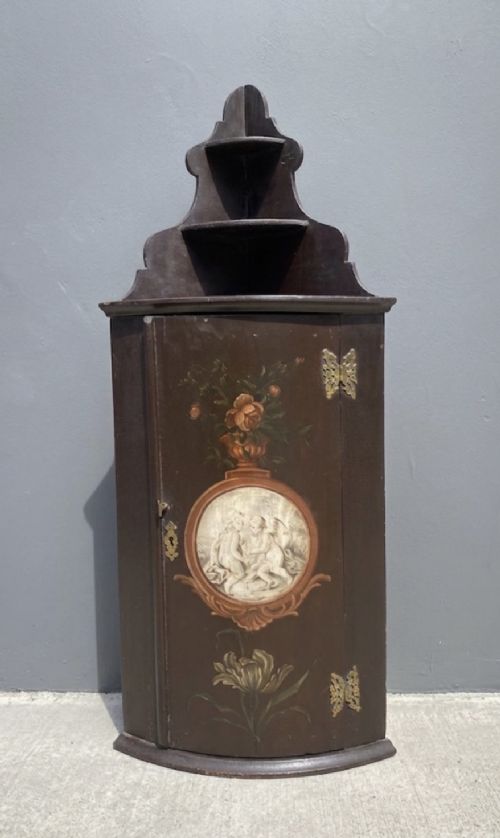


Rustic Corner Cabinet
A rustic corner cabinet makes use of dead space while bringing honest timber and regional character into a room.
Rustic Corner Cabinet
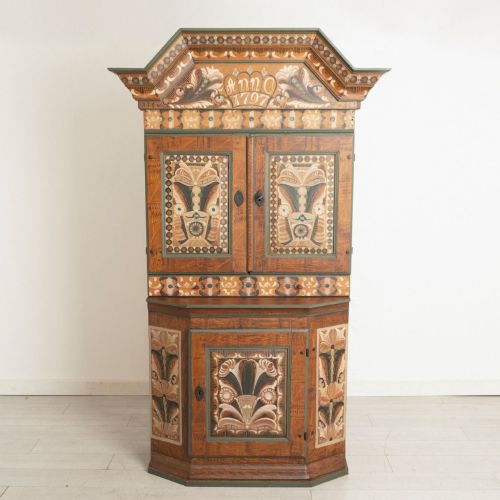
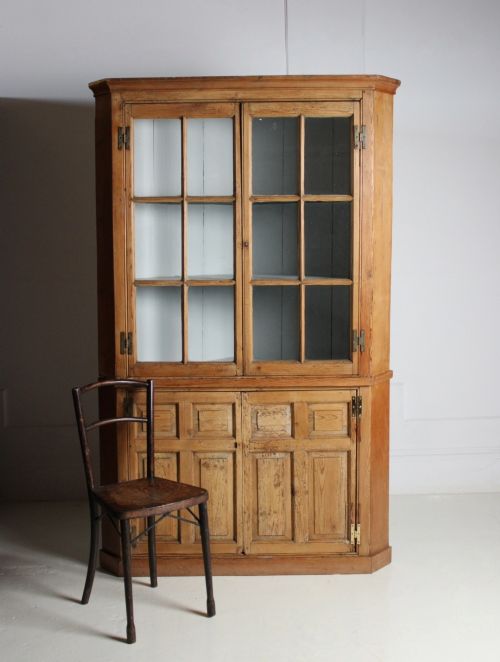
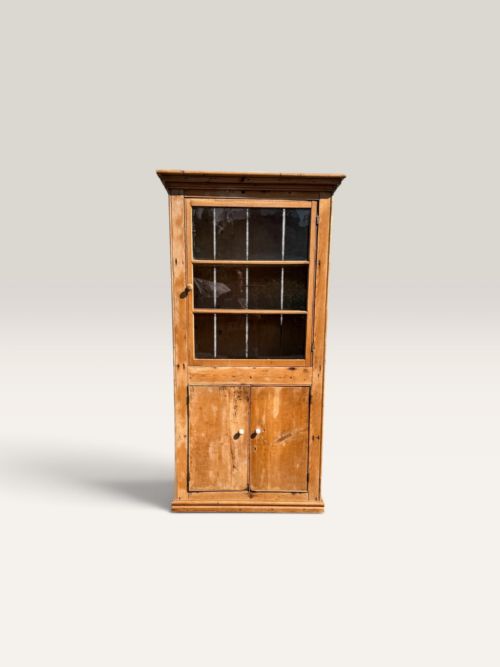
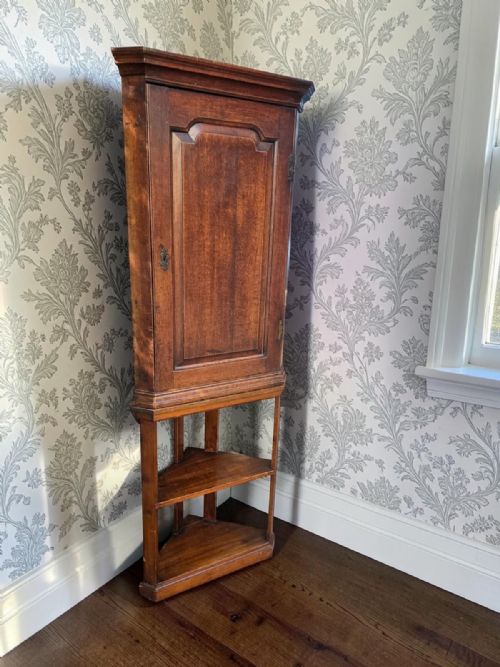
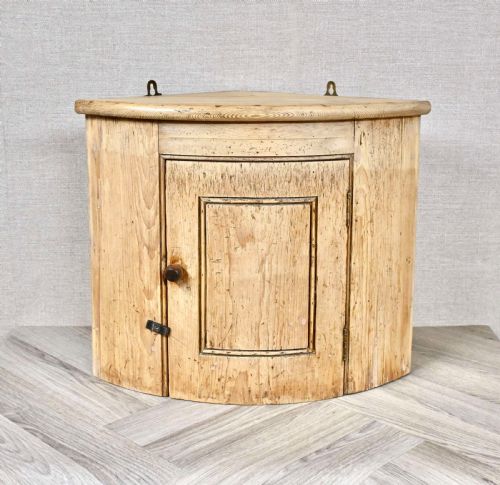
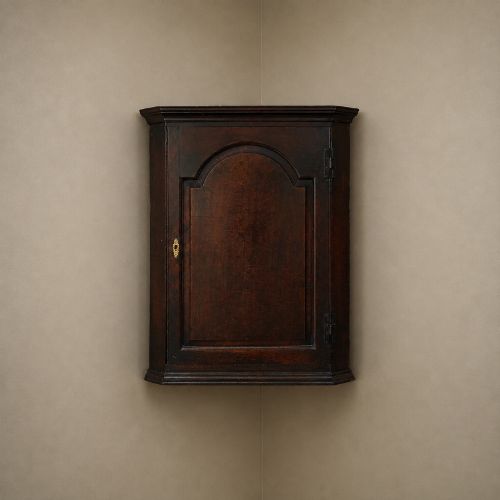
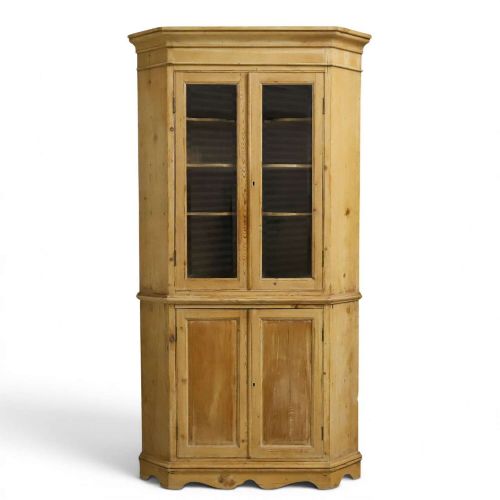
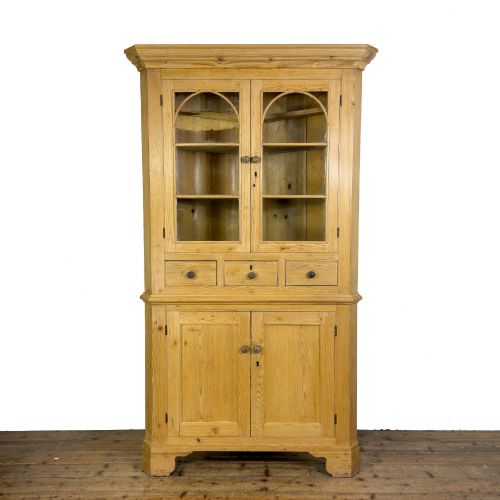
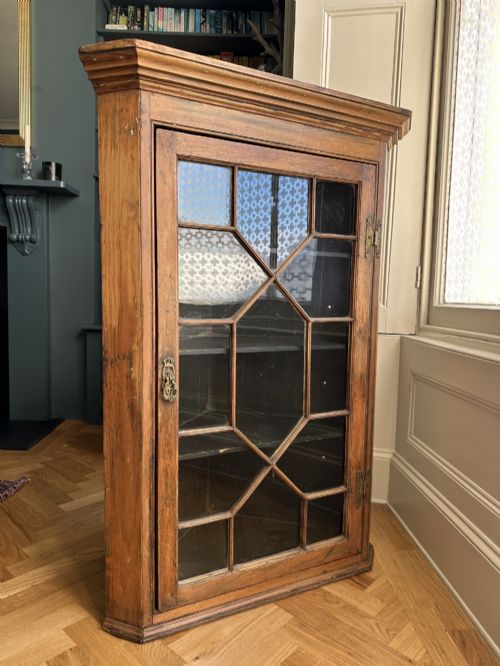
A rustic corner cabinet is a storage piece designed to fit snugly into the intersection of two walls, making efficient use of awkward corners. You encounter wall-hanging versions, floor-standing models, and two-part cupboards spanning the eighteenth and nineteenth centuries.
The materials and construction reflect vernacular traditions from English, Welsh, and Scandinavian workshops. Oak and pine appear most frequently, shaped by provincial cabinetmakers who prioritised utility and simple form over grand ornamentation.
How they were made
Timbers like oak, pine, and fruitwood were worked using straightforward joinery, often featuring panelled doors and pegged frames. Brass hinges and iron hardware secured the doors, while glass panels sometimes appeared in upper sections to display contents.
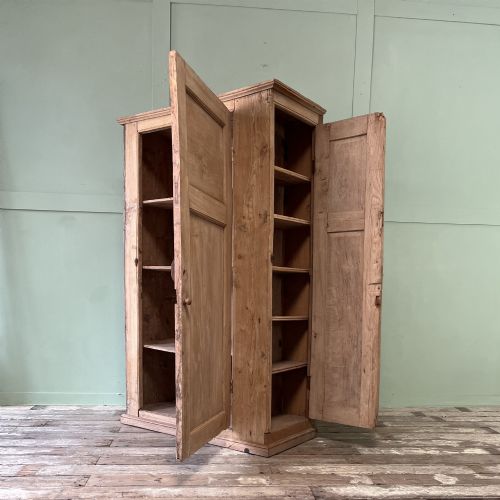
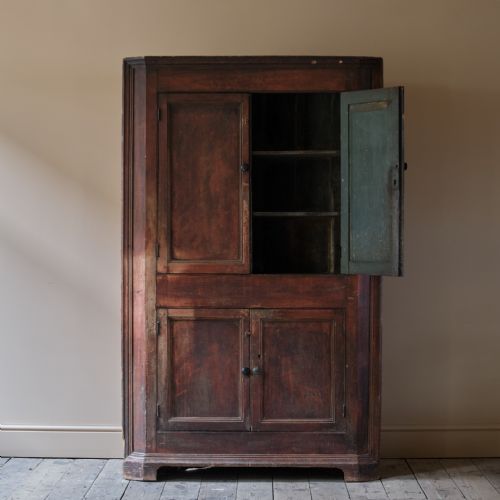
Surfaces were frequently left as exposed wood or finished with paint, sometimes revealing original layers or later decorative schemes. Interior shelves were shaped to fit the triangular footprint of the cabinet body.
Rustic Corner Cabinet Retail Price Guide 2026
Typical asking prices for rustic corner cabinet among the pieces listed under this phrase on Sellingantiques today, from the lower quarter to the upper quarter. They describe what is for sale here now, not the wider market.
Listings show these cabinets span the eighteenth and nineteenth centuries, utilising oak, pine, and occasionally fruitwood or elm.
What varies in quality
The quality of a rustic corner cabinet rests on the selection of timber and the integrity of its regional construction. Thick oak planks and well-fitted panel doors indicate a higher standard of provincial craftsmanship.
Proportion and surface finish also distinguish pieces, with well-preserved original paint or deep patination setting better examples apart from plain or heavily altered ones.
The Rustic Corner Cabinet Glossary
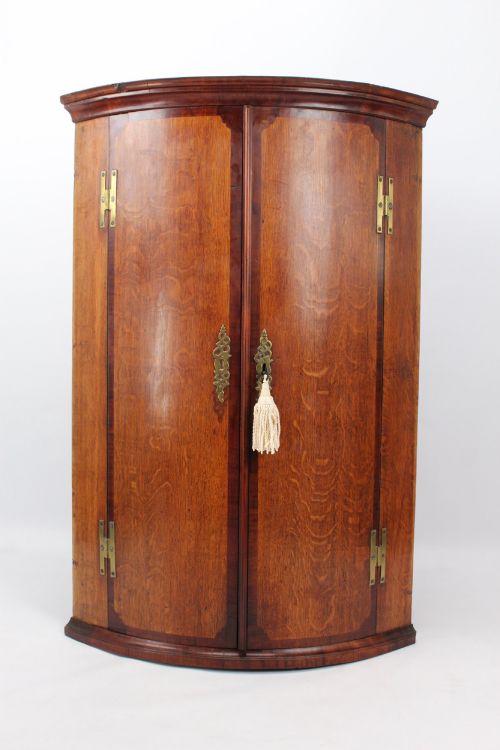
- Bow front
- A convex, curved front profile that softens the angular lines of a corner piece. This shape is often found on Georgian and later pine or oak examples.
- Cornice
- The moulded projection that crowns the top of a cabinet. It finishes the architectural silhouette against the wall.
- Vernacular
- Everyday furniture made by local craftsmen using regional materials rather than following metropolitan academic designs. Welsh and Scandinavian pieces frequently show these distinct local traits.
- Two-part form
- A cabinet constructed in separate upper and lower sections stacked together. This technique aided transport and installation in domestic spaces.
Rustic Corner Cabinet: Frequently Asked Questions
How do I hang a wall cabinet?
Wall-hanging corner cupboards require secure fixing to solid masonry or internal wall studs using appropriate brackets. Because these timber carcasses carry substantial weight when loaded with ceramics or glassware, proper wall anchors are essential.
Position the cabinet at a height that allows comfortable access to the upper and lower shelves without blocking surrounding furniture or doorways.
Are these pieces made of solid wood?
Provincial corner cabinets are constructed from solid native timbers such as oak, pine, elm, and fruitwood. Local makers utilised boards cut straight from the log for panels, frames, and internal shelving.
This solid construction accounts for the enduring weight and sturdy survival of eighteenth and nineteenth-century examples.
How do I clean painted surfaces?
Painted eighteenth and nineteenth-century cupboards require gentle dusting with a dry, soft cloth to protect fragile historical finishes. Avoid modern chemical solvents or abrasive cleaners that might lift aged paint layers.
If deeper cleaning is necessary, consult a conservator to preserve original pigments and decorative schemes.
Can I adjust the internal shelves?
Shelves in early corner cupboards are typically fixed in place with fixed wooden supports or dado housing joints. Provincial makers designed these interiors for specific storage needs rather than modular adjustment.
Checking the shelf depth and height in the description ensures the interior fits your intended use.