




Rust Red Tribal Runner
These rust red tribal runner selections bring grounded warmth and nomadic artistry into a hallway through hand-knotted wool.
Rust Red Tribal Runner
A rust red tribal runner is a narrow, elongated floor covering originating from nomadic and village weaving traditions, most frequently seen here in nineteenth and early twentieth century Persian formats.
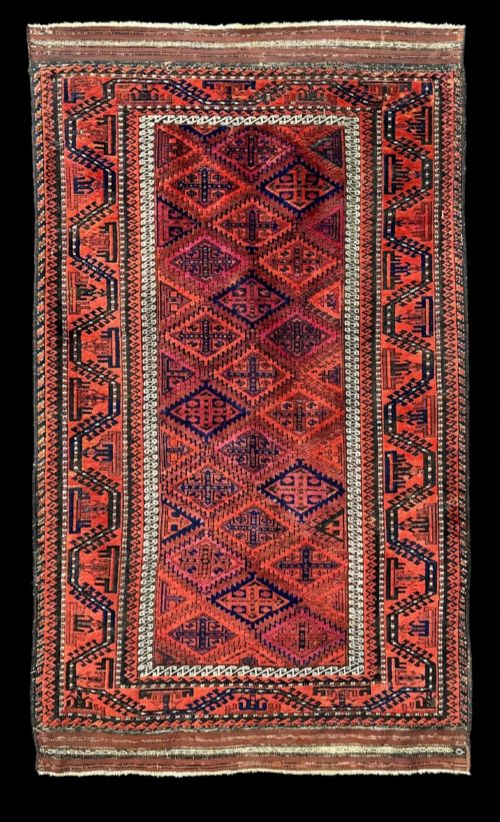
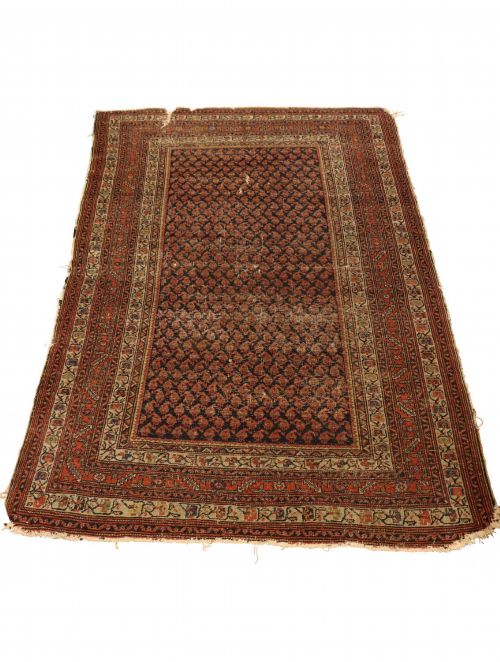
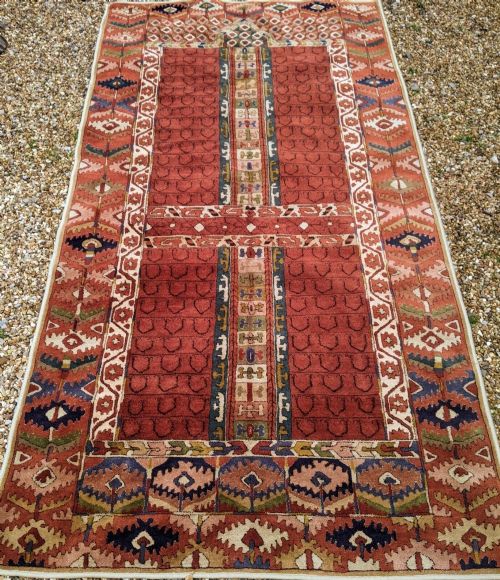
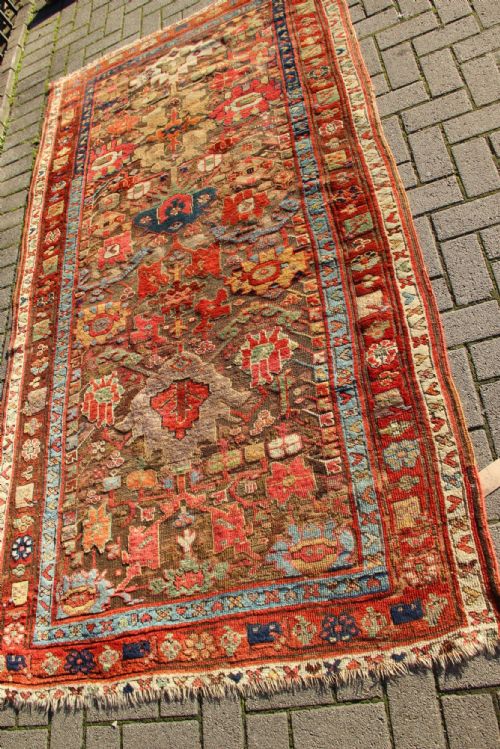
The selections span Baluch, Heriz, Kurdish, and Khorasan origins, demonstrating the distinct narrow proportions required for corridors and narrow spaces.
Buyers encounter traditional patterns such as the boteh, calyx lattice, and repeating guls executed in rich earthy tones on wool foundations.
How They Were Made
Weavers constructed these pieces by hand-knotting wool pile onto structural foundations of wool and cotton, occasionally incorporating goat hair for added durability.
Natural dye traditions produced deep rust red fields and contrasting secondary colours that aged through decades of exposure and use.
Rust Red Tribal Runner Retail Price Guide 2026
Typical asking prices for rust red tribal runner among the pieces listed under this phrase on Sellingantiques today, from the lower quarter to the upper quarter. They describe what is for sale here now, not the wider market.
Some Baluch rugs include hidden nomadic tribal markers tucked away in the borders.
What Varies in Quality
The distinction between standard village production and finer examples lies in the precision of the knotting and the complexity of the repeat designs like the calyx lattice or large guls.
Material selection and dye saturation dictate visual depth, separating simpler utility pieces from highly collectable tribal rugs with crisp geometric execution.
The Rust Red Tribal Runner Glossary
- Boteh
- A traditional almond or pear-shaped motif representing a floral spray or bush, frequently repeated across antique Persian carpets.
- Gul
- A medallion or floral octagonal stamp used repetitively in nomadic and tribal weaving, particularly characteristic of Baluch rugs.
- Runner
- A long, narrow carpet format designed specifically for corridors, hallways, and staircases.
- Knotting
- The manual process of tying individual strands of wool to the warp threads to create the pile surface.
Rust Red Tribal Runner: Frequently Asked Questions
Where should I place a narrow runner?
These narrow formats suit hallways, corridors, and bedside areas where length matters more than width.
Their elongated proportions direct movement through a home while protecting timber flooring.
How do I care for antique wool rugs?
Regular gentle vacuuming without a rotating brush protects the hand-knotted pile from excessive wear.
Professional cleaning preserves the natural wool fibres and traditional dyes.
What defines Baluch tribal weaving?
Baluch pieces typically feature dark rich palettes, geometric guls, and compact dimensions woven by nomadic groups.
Their distinctive structure often includes goat hair or wool in the foundational weave.
How are nineteenth century dates verified?
Age assessment relies on structural analysis, natural dye characteristics, and traditional motif variations.
Material wear patterns and regional knotting techniques provide further context for dating.