





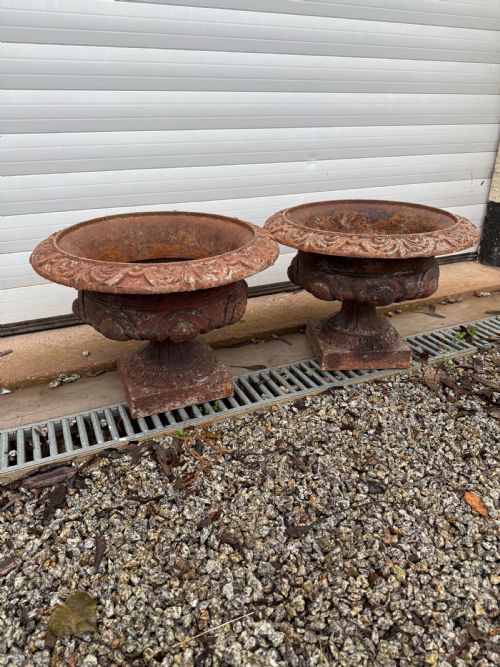


Rust Metal Planters
These rust metal planters bring enduring weight and weathered texture to a garden, offering a grounded display for foliage across centuries of design.
Rust Metal Planters
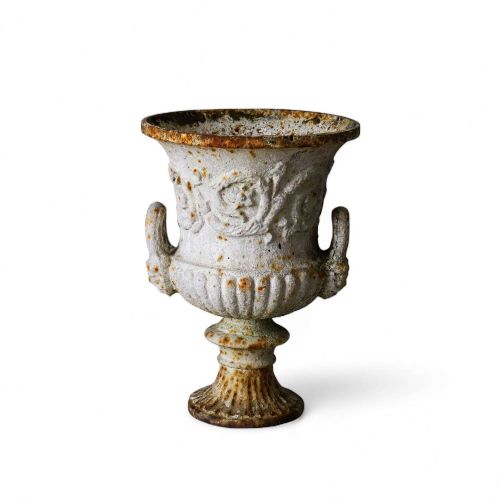
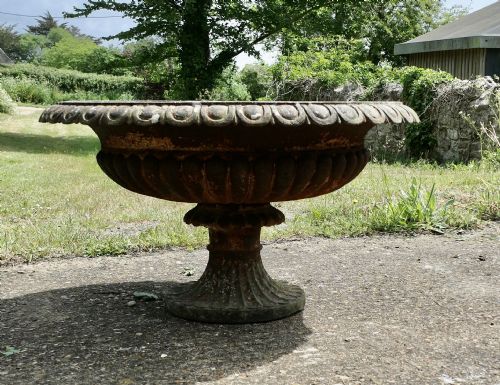
When you search for rust metal planters, you find robust garden vessels shaped primarily as campana urns, troughs, and jardinières designed to weather the elements. The examples on this page are predominantly nineteenth century pieces, drawing on Victorian and neoclassical aesthetics alongside industrial forms.
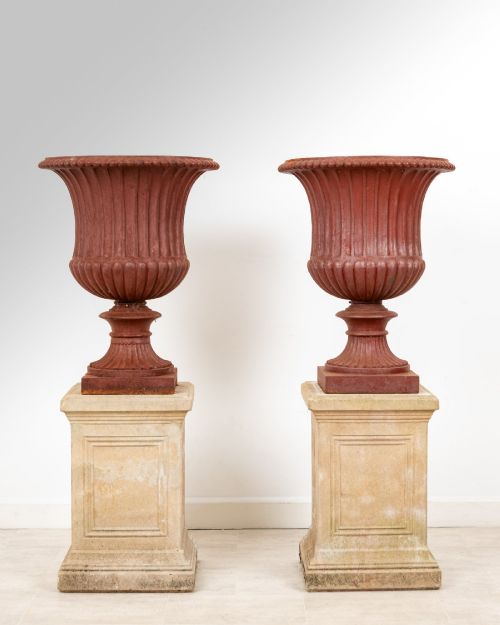
You are most likely to meet heavy cast iron pairs mounted on stone pedestals or plinths, showing the deep patination of age. These garden urns and planters bridge formal landscape architecture and practical horticulture, cast to stand permanently out of doors.
How they were made
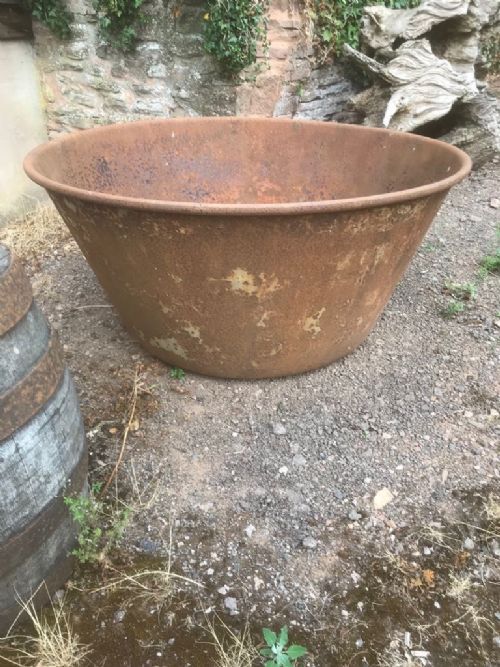
The primary material across these listings is cast iron, poured into foundry moulds to create crisp classical details and robust walls capable of holding soil and moisture. Steel also appears in larger nineteenth century planters, providing structural strength for expansive garden settings.
Makers often paired these iron and steel bodies with separate stone pedestals or plinths to elevate the planting vessels. The characteristic rusted finish develops naturally over decades of exposure, transforming the raw metal into a weathered surface.
Rust Metal Planters Retail Price Guide 2026
Typical asking prices for rust metal planters among the pieces listed under this phrase on Sellingantiques today, from the lower quarter to the upper quarter. They describe what is for sale here now, not the wider market.
What varies in quality
Quality in these planters rests on the crispness of the foundry casting and the architectural proportion of the vessel. Pieces displaying refined neoclassical detailing or well-balanced campana profiles stand apart from simpler utilitarian forms.
The integrity of the metal and the character of the natural weathering dictate the visual success of each piece. Surviving pairs that retain their original stone pedestals and uniform oxidation represent the upper tier of the range.
Andrew Handyside
The Rust Metal Planters Glossary
- Campana urn
- A bell-shaped garden vessel with a flared rim, widely produced in cast iron during the nineteenth century for formal terraces. This classical silhouette remains a cornerstone of garden ornament.
- Jardiniere
- An ornamental pot or stand designed to hold growing plants or flowers. In metal garden antiques, it often describes a wider, shallower trough rather than a footed urn.
- Plinth
- A heavy base or pedestal upon which a garden planter or urn is elevated. These stone or iron supports lift the planting vessel to improve sightlines in a garden scheme.
- Patina
- The surface texture and coloration developed by metal through age and exposure to weather. In cast iron and steel planters, this manifests as stable rust and oxidation.
- Neoclassical
- A style drawing inspiration from the classical art and architecture of ancient Greece and Rome. Nineteenth century garden urns frequently employ this vocabulary through egg-and-dart moulding and fluted bodies.
Rust Metal Planters: Frequently Asked Questions
Are these planters frost proof?
Cast iron and steel vessels are generally robust enough to withstand winter temperatures, provided water drainage is not blocked.
Ensuring excess moisture can escape prevents ice expansion from cracking the metal walls during freezing weather.
How do I date a cast iron urn?
Dating relies on stylistic clues such as neoclassical detailing, Victorian proportions, and the presence of nineteenth century foundry marks.
The manufacturing technique and the depth of the metal's oxidation also offer clear indicators of age.
Can I leave them outside permanently?
These metal planters are specifically designed for outdoor display and thrive in garden environments year round.
The natural rust patination deepens with continuous exposure to rain and soil moisture.
How heavy are these garden planters?
Cast iron and steel garden vessels are exceptionally heavy, often requiring multiple people or lifting equipment to position safely.
This substantial weight keeps them stable on terraces and lawns without the need for additional anchoring.