



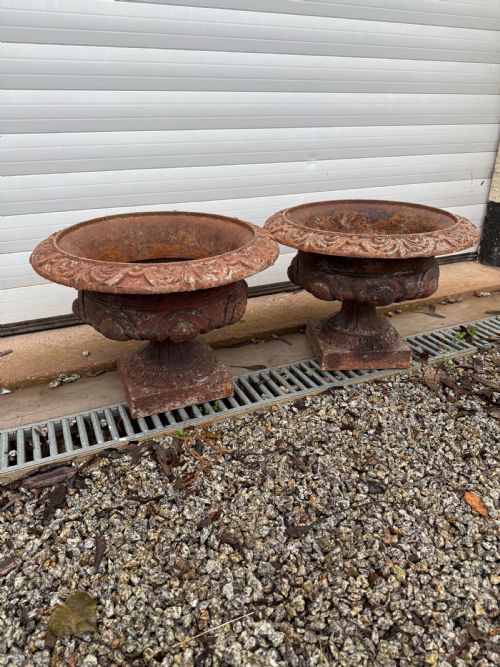


Rust Garden Urns
Rust garden urns bring architectural weight to lawns and terraces, cast in durable iron and weathered by the elements.
Rust Garden Urns
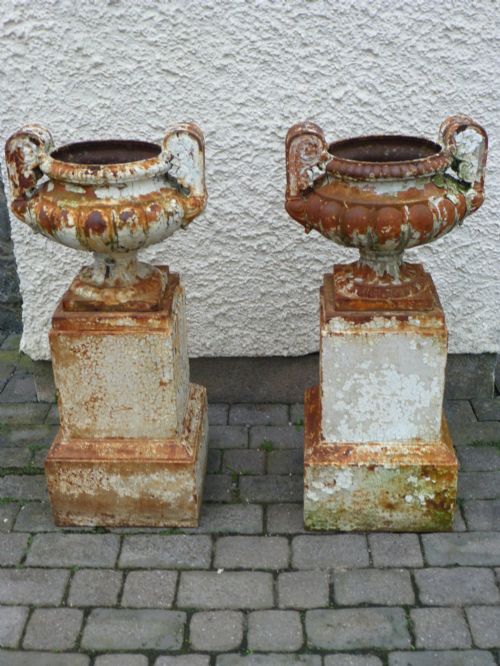
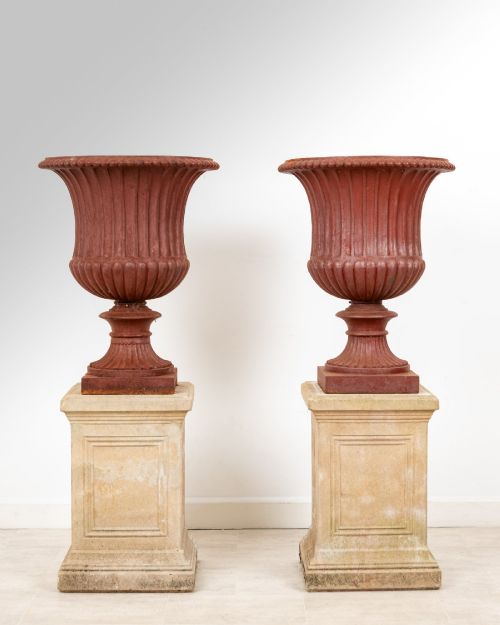
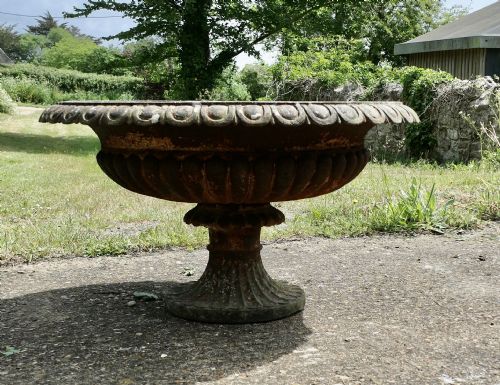
Rust garden urns are robust outdoor vessels designed to hold planting, featuring classical profiles that anchor garden schemes. When searching for rust garden urns, buyers encounter heavy cast iron forms developed for display on terraces, lawns, and steps.
The selections available span the nineteenth century and the Edwardian era, showing Regency, Victorian, and Neoclassical influences. Most examples appear as campana shapes, often paired with matching pedestals or stone plinths to elevate their presence.
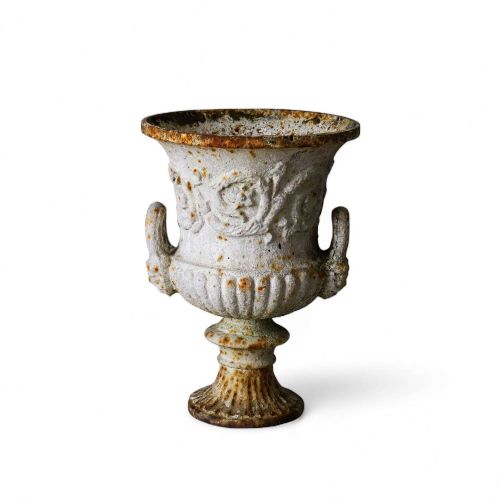
Originating as decorative focal points for large estates, these pieces now suit modern gardens seeking established character. The surface oxidation provides a rich, textured patina that signals decades of exposure to British weather.
How they were made
Foundries produced these pieces using traditional sand-casting techniques in iron, pouring molten metal into moulds to achieve crisp classical details and sturdy walls. This method created robust vessels capable of withstanding soil, moisture, and freezing temperatures without structural failure.
Many examples incorporate separate stone pedestals or plinths, combining iron bowls with heavier masonry bases to create balanced monumental heights. Early manufacturers applied foundational layers of paint that eventually weathered away, leaving the characteristic rusted surfaces seen today.
Rust Garden Urns Retail Price Guide 2026
Typical asking prices for rust garden urns among the pieces listed under this phrase on Sellingantiques today, from the lower quarter to the upper quarter. They describe what is for sale here now, not the wider market.
The inventory records both single jardinieres and matched pairs standing on original stone pedestals.
What varies in quality
Quality in these vessels rests upon the crispness of the casting detail and the proportion of the classical ornament. Finer pieces display sharply rendered foliate bands, egg-and-dart moulding, and well-defined handles that remain legible beneath layers of oxidation.
The presence of original matching plinths or pedestals significantly elevates the status of an installation, as does the survival of a matched pair. Foundry marks from notable makers also distinguish exceptional examples from standard utilitarian production.
Falkirk Carron Foundry·Andrew Handyside
The Rust Garden Urns Glossary
- Campana urn
- A bell-shaped garden vessel with an everted rim, tapering body, and footed base. This classical silhouette forms the primary profile for nineteenth-century cast iron planters.
- Plinth
- A heavy rectangular or square base supporting an urn or sculpture. These stone or iron blocks lift planting vessels off the ground to improve drainage and visual impact.
- Neoclassical
- A revival style drawing on ancient Greek and Roman architecture and decorative arts. It introduces restrained symmetry, acanthus leaves, and fluted details to garden ornament.
- Patina
- The surface texture and coloration developed on metal through age and environmental exposure. In cast iron urns, this appears as stable rust and weathered historical paint layers.
Rust Garden Urns: Frequently Asked Questions
How heavy are cast iron garden urns?
These vessels are exceptionally heavy due to their solid iron construction, often requiring multiple people or lifting equipment to position safely.
Once placed on a terrace or lawn, their substantial weight ensures they remain stable against strong winds without needing permanent fixings.
Can rust garden urns stay outside in winter?
Cast iron is robust enough for permanent outdoor placement and tolerates winter conditions well.
Ensuring the drainage hole remains clear prevents trapped water from freezing and expanding inside the bowl.
Do I need a pedestal for my urn?
Pedestals elevate the vessel to improve sightlines and create a more formal architectural statement on lawns or terraces.
Placing an urn directly on the ground suits low planting schemes, while paired plinths frame doorways and path entrances effectively.
How do I date a nineteenth-century garden urn?
Dating relies on stylistic clues such as Regency campana proportions, Victorian classical revival motifs, or Edwardian manufacturing traits.
Foundry stamps or registration marks occasionally stamped into the iron provide more precise chronological evidence.