




Russian Orthodox Art
Russian Orthodox art brings devotional depth and centuries of hand-painted tradition into your interior.
Russian Orthodox Art
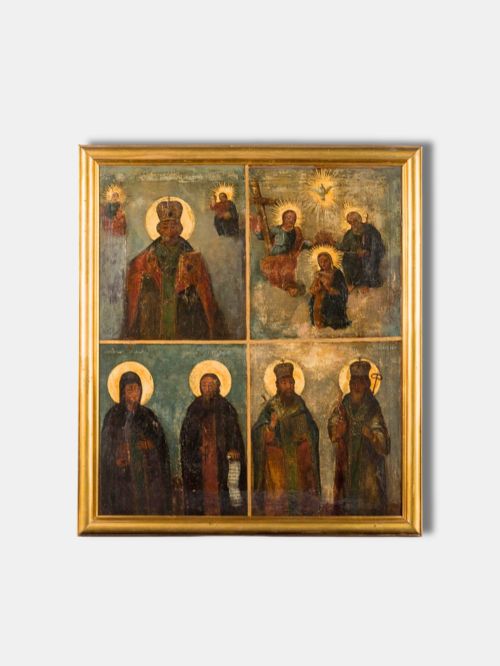
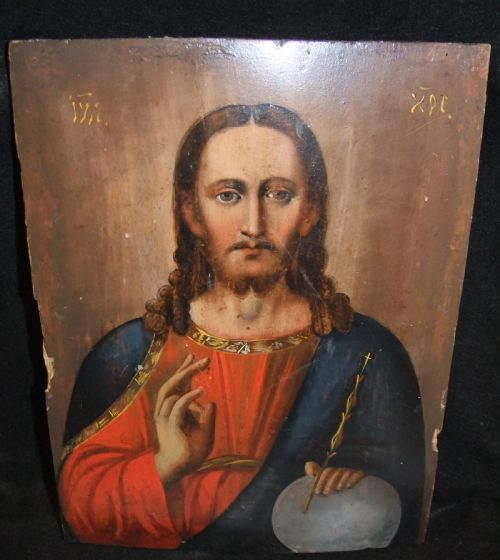
When you search for russian orthodox art, you are looking at sacred panel paintings and devotional objects created for prayer and liturgy. These pieces serve as windows to the divine, depicting saints, biblical narratives, and central figures of faith.
On this page, you are most likely to meet 19th century examples, alongside earlier pieces from the 18th century and the early 20th century. Forms range from single panel icons to multi-scene narratives and works mounted on wood.
The objects originate from Russian workshops and regional makers, encompassing traditional board paintings as well as framed works on canvas and wood panel. Each piece carries the distinct visual language of Orthodox iconography.
How they were made
Maker workshops built these pieces using wooden panels as the primary foundation for painting. Artisans applied tempera, egg tempera, and oil paints to build up the sacred imagery.
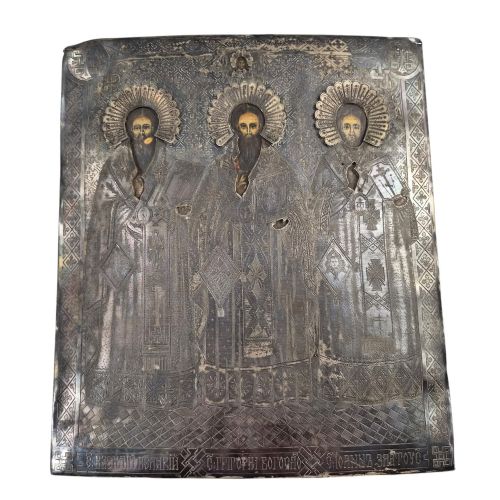
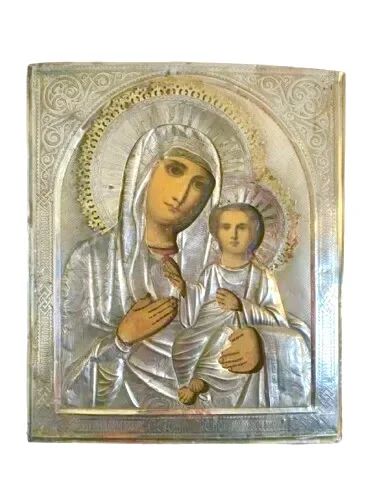
Many works incorporate precious details, utilising gold leaf and gilt wood to illuminate halos and backgrounds. Metal elements such as silver and brass appear frequently as protective covers known as oklads or rizas.
Russian Orthodox Art Retail Price Guide 2026
Typical asking prices for russian orthodox art among the pieces listed under this phrase on Sellingantiques today, from the lower quarter to the upper quarter. They describe what is for sale here now, not the wider market.
Listings feature works spanning the 18th century, the 19th century, and the early 20th century.
What varies in quality
The presence and craftsmanship of metalwork oklads or rizas significantly alter the character and distinction of a piece. High-quality silver and gilt coverings demonstrate intricate embossing and repoussé techniques that complement the painted panel beneath.
Heinrich Grünbaum·Volga Masters
The Russian Orthodox Art Glossary
- Icon
- A sacred image representing Christ, saints, or biblical scenes, traditionally painted on wood panels for veneration. These panels form the core of devotional artwork.
- Tempera
- A permanent, fast-drying painting medium consisting of coloured pigment mixed with a water-binder agent, usually egg yolk. Painters relied on this technique for its durability and matte finish.
- Riza
- A variant term for a metal cover or revetment adorning an icon. These metal shields frequently feature elaborate decorative chasing and hallmarks.
- Gilt wood
- Wood surfaces treated with gold leaf or gold dust to create a brilliant, reflective finish. This technique highlights sacred areas such as halos and borders.
Russian Orthodox Art: Frequently Asked Questions
What is russian orthodox art?
Russian orthodox art comprises religious icons, panel paintings, and artefacts created for spiritual devotion within the Orthodox tradition. These works are rooted in centuries of canonical imagery.
Created using wood, tempera, gold leaf, and metalwork, these pieces function as focal points for prayer and reflection.
How were icons used?
Icons were used primarily for personal prayer in homes and for communal liturgy in churches. Believers placed them in sacred corners or carried them during processions.
The inclusion of metal oklads and protective frames helped preserve the painted surfaces during daily devotional use.
How do I live with these pieces?
Living with these pieces involves placing them in stable environments away from direct sunlight and dramatic humidity shifts. Wood panels and tempera react to environmental changes.
Mounting them securely on walls or displaying them on dedicated shelves allows their intricate gold leaf and painted details to be appreciated safely.
How do I tell periods apart?
Distinguishing periods relies on observing stylistic shifts in the painting technique, framing, and material use. 18th-century works often show distinct regional hand styles, while 19th-century examples frequently incorporate detailed silver rizas.
Early 20th-century pieces sometimes introduce framed oil techniques on wood panels alongside traditional tempera methods.