



Rush Seated Dining Chairs
Rush seated dining chairs bring tactile texture to a room, combining traditional craft with robust vernacular forms.
Rush Seated Dining Chairs
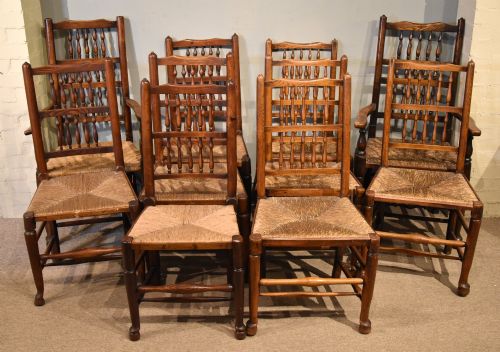
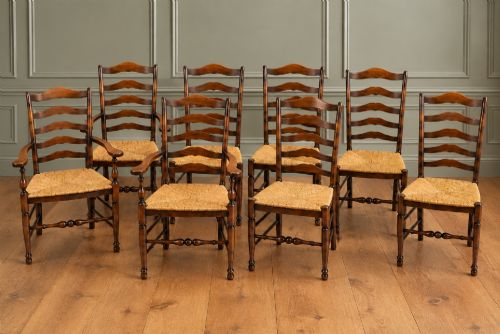
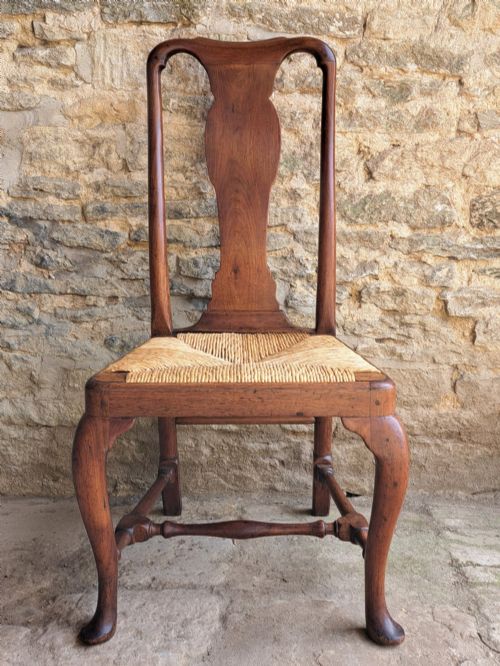
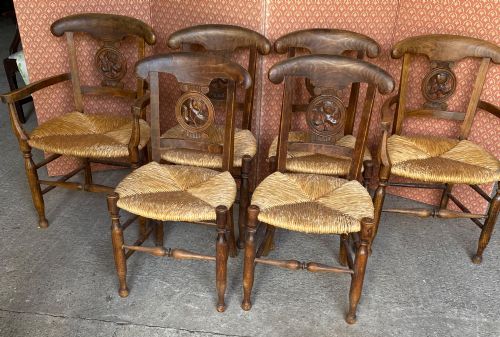
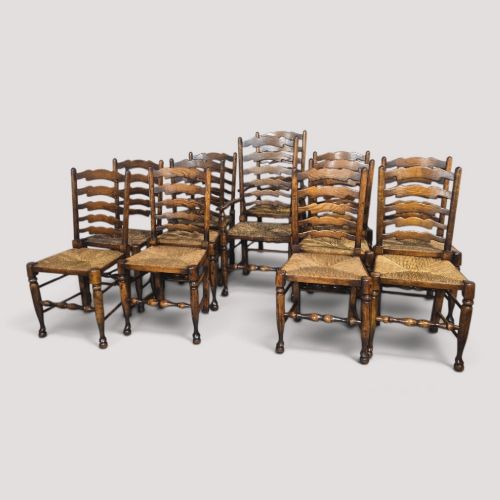
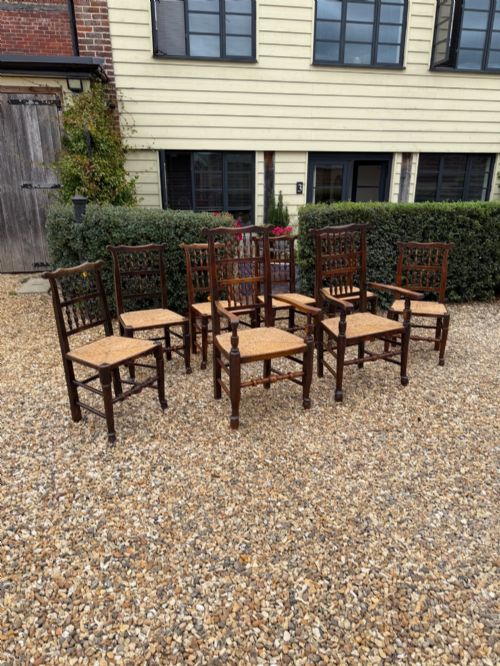
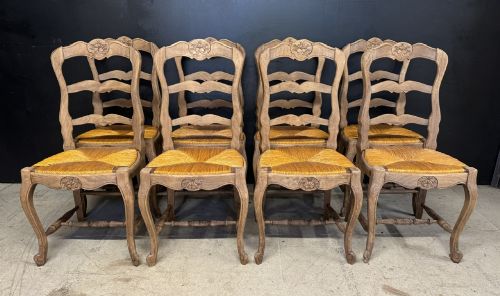
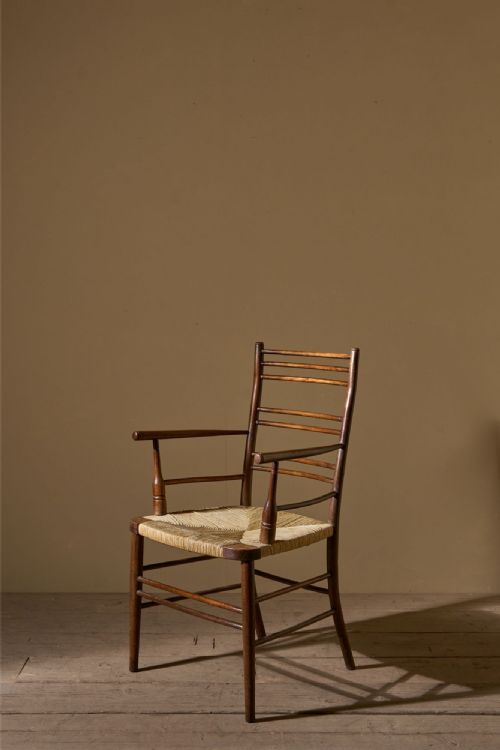
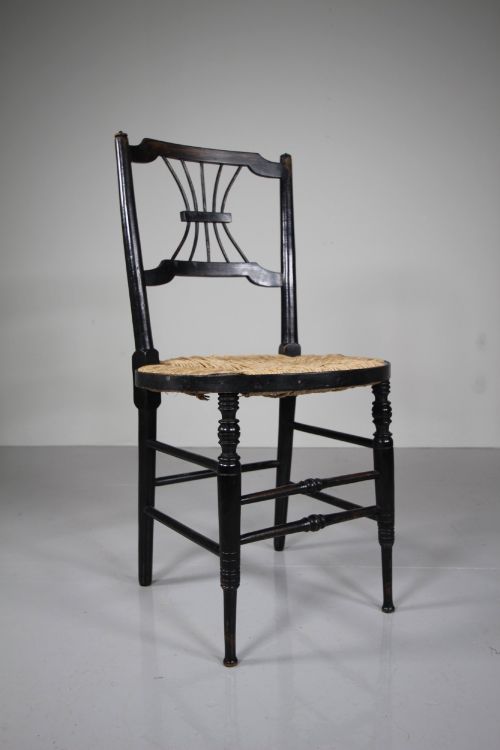
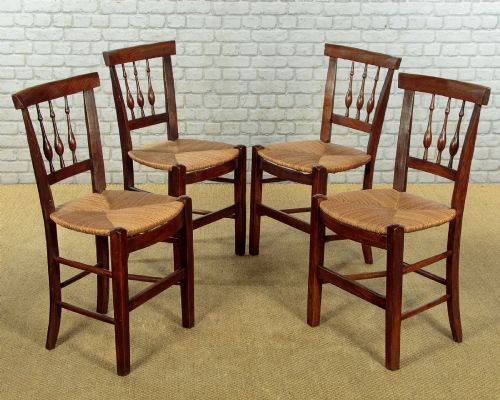
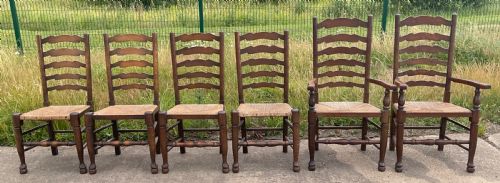
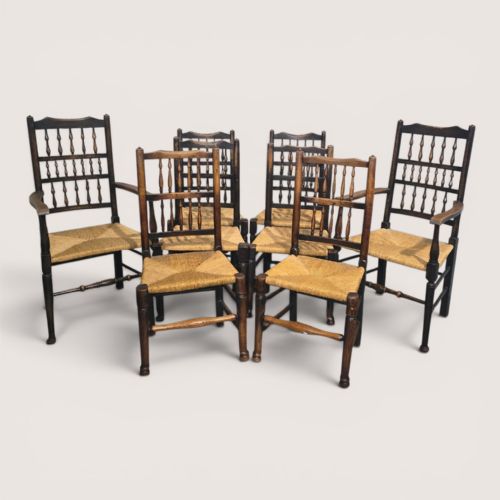
Rush seated dining chairs are functional dining seats defined by woven rush seating and traditional frames, spanning styles from English Country and Arts and Crafts to Georgian and Regency. A buyer searching this phrase encounters practical ladderbacks, spindlebacks, and kitchen chairs suited for daily use around a dining table.
The versions most commonly met on this page originate from the nineteenth century and the early twentieth century, utilising regional English vernacular designs. Elm, ash, oak, and fruitwood frequently form the structural framework, supporting the woven rush seat pads.
How they were made
Frames rely on native timbers such as elm, ash, beech, and oak, often turned on lathes to form spindles and ladder backs. Local woodturners shaped green timber to construct sturdy chair skeletons that would dry and tighten around the joints.
Seats are woven by hand using dried marsh rush, tightly wound around wooden seat rails in a distinctive envelope pattern. This organic cord creates a resilient, flexible surface that yields slightly to the sitter.
Rush Seated Dining Chairs Retail Price Guide 2026
Typical asking prices for rush seated dining chairs among the pieces listed under this phrase on Sellingantiques today, from the lower quarter to the upper quarter. They describe what is for sale here now, not the wider market.
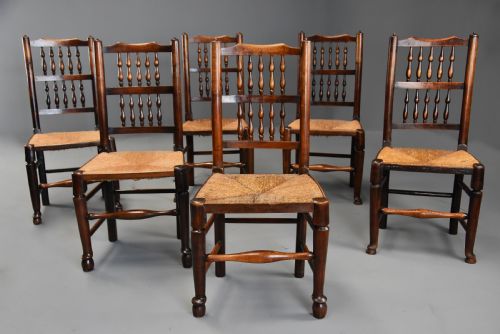
Listings feature robust nineteenth-century and early twentieth-century ladderback and spindleback forms constructed from native timbers like elm, ash, and oak.
What varies in quality
Quality rests in the integrity of the timber framing and the tightness of the woven rush. Frames that retain their original turned stretchers without excessive movement demonstrate superior structural survival.
The proportion of the ladder backs and the crispness of the spindle turnings separate standard utility pieces from finer country workshop production. Matching sets with uniform wear across all chairs command greater appreciation than assembled harlequin groups.
William Morris·Rossetti·Titchmarsh & Goodwin
The Rush Seated Dining Chairs Glossary
- Ladderback
- A chair back featuring multiple horizontal wooden slats curved to support the spine. This form is common in vernacular country seating.
- Spindleback
- A chair constructed with numerous thin, turned vertical wooden rods supporting the backrest. These slender members lighten the visual weight of the frame.
- Carver
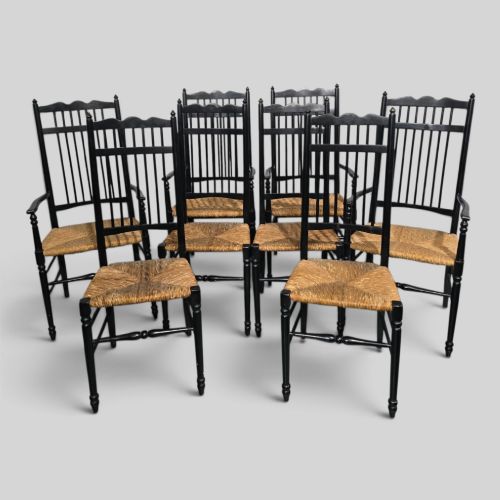
- An armchair designed with elbow rests, traditionally placed at the head of a dining table. Pairs often accompanied a larger set of matching side chairs.
- Harlequin set
- A collection of dining chairs that share similar periods or styles but were not originally manufactured together. They offer a gathered appearance rather than a strict factory match.
Rush Seated Dining Chairs: Frequently Asked Questions
How do I care for a rush seat?
Keep rush seats dry and clean them gently with a soft brush to remove dust from the woven strands. Avoid excessive moisture, which can weaken the natural fibres.
Applying a light, breathable wax to the wooden frame helps preserve the timber without affecting the woven seat. Regular rotation of the chairs around the table distributes wear evenly across the rush pads.
Are these chairs strong enough for daily dining?
Many nineteenth and twentieth-century country chairs were built for heavy kitchen and farmhouse use. Their solid wood construction and pegged joints provide considerable day-to-day durability.
When checked for structural stability, these seats easily handle regular family meals. The flexible nature of woven rush also adds comfort during long dinner parties.
What is a harlequin set?
A harlequin set is a group of dining chairs that share a similar era, timber, or ladderback design without being made as a single batch. These assemblies typically consist of matching side chairs paired with matching carvers.
Collecting in this manner was common in large country houses where dining parties expanded over time. It creates an authentic, layered look around a dining table.
How do I date a rush seated chair?
Dating relies on observing tool marks, timber types, and the turning style of the ladder backs or spindles. Elm and ash combined with hand-turned stretchers usually point towards nineteenth-century vernacular production.
Earlier eighteenth-century examples display different leg profiles and timber patination compared to Edwardian or 1930s revivals. Comparing the wear on the rush to the frame offers further clues to the age of the piece.