




Rush Seat Armchair Set
A rush seat armchair set brings together sturdy vernacular dining seating woven by hand with natural river rushes.
Rush Seat Armchair Set
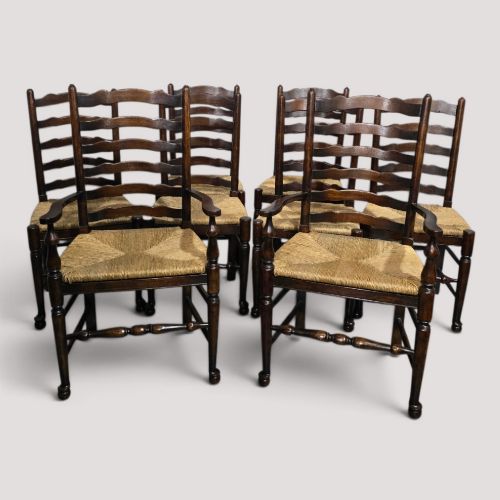
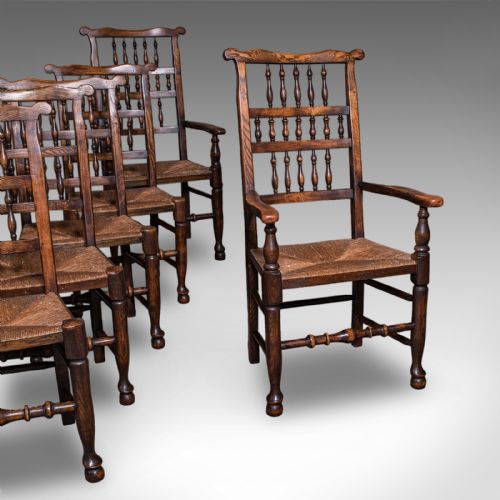
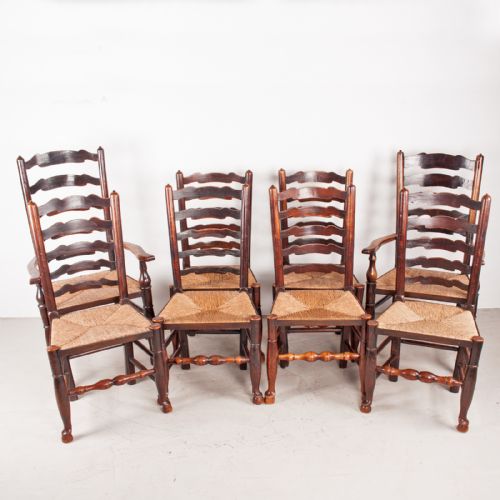
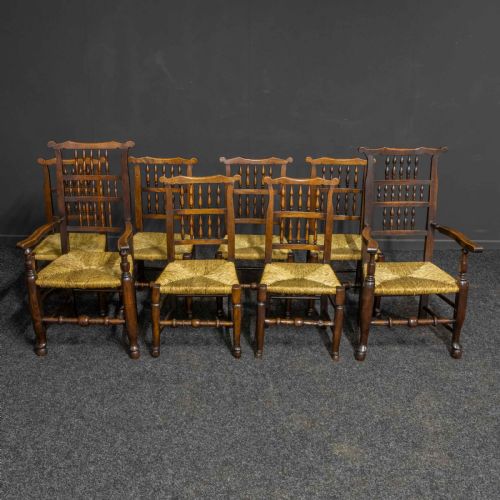
Buyers seeking a rush seat armchair set encounter dining chairs built for everyday use in kitchens, farmhouses, and vernacular settings. The groups documented here predominantly feature sets of six or eight pieces, incorporating ladderback and spindleback designs.
Originating from English and French workshops, these groupings include uniform suites alongside harlequin sets gathered together over time. Oak, beech, ash, and elm form the primary timber frameworks supporting the woven seating.
Construction and Materials
Cabinetmakers and rural joiners shaped these dining chairs using native hardwoods such as oak, beech, ash, and elm. Turned spindles, curved ladder backs, and solid uprights provide structural integrity to the frames.
The distinctive seating surfaces consist of natural rush twisted and woven tightly around wooden seat rails. This traditional cordage technique yields a resilient, textured platform designed to support daily dining.
Rush weavers often soaked marsh grasses in water before twisting them, turning simple marsh weeds into seating that outlasts empires.
Assessing Quality
The integrity of the woven rush surface dictates much of the standing of a set, as tightly twisted and densely packed strands resist sagging over decades of use. Uniformity in the timber turning and the tightness of the joinery further separate standard utility seating from finer workshop production.
Harlequin sets demonstrate a collected history where individual chairs share a vernacular style rather than a single workshop origin, contrasting with uniform sets produced as a complete suite from the outset.
The Rush Seat Armchair Set Glossary
- Rush
- Dried marshland grass twisted into cordage to weave traditional chair seats. It provides a flexible yet durable platform for dining.
- Carver
- An armchair designed to sit at the head of a dining table or to be used as an occasional chair. These pieces feature integrated armrests.
- Ladderback
- A chair back constructed with horizontal slats bridging the upright posts. This design appears frequently in English country seating.
- Spindleback
- A chair back featuring vertical turned wooden rods between the top and seat rails. It offers lighter visual weight than solid slats.
- Harlequin set
- A collection of chairs assembled to match in style and period rather than originating from a single original workshop suite. Individual pieces share similar vernacular traits.
Rush Seat Armchair Set: Frequently Asked Questions
What periods do these dining chairs date from?
The available pieces span multiple eras, including Georgian, nineteenth century, Edwardian, and early twentieth century up to the 1930s. Regional country styles persisted across these periods with subtle shifts in turning and joinery.
Craftsmen continued traditional ladderback and spindleback methods long after industrial furniture production began, preserving vernacular forms in rural workshops.
How do I care for rush seating?
Natural rush seats require a dry environment and protection from excessive moisture to prevent the dried marsh grass from degrading. Regular gentle dusting keeps the woven strands free from grit.
Avoid heavy liquid cleaners on the rush material, relying instead on dry brushing to maintain the texture of the twisted fibres over time.
Are these sets matching or mixed?
Listings include both uniform suites commissioned together and harlequin sets gathered from similar regional traditions. Harlequin groups share characteristics like ladderbacks or timber types while showing minor variations in profile.
Buyers find sets ranging from four to eight chairs, frequently combining side chairs with paired carver armchairs.
What woods were used for these frames?
Regional makers utilised accessible native hardwoods including oak, beech, ash, and elm for the chair frames. Each timber offered specific properties for bending, turning, or load-bearing.
Oak and elm provided robust strength for farmhouse and vernacular seating, while beech and ash lent themselves to slender turned spindles and ladder slats.