





Rural Village Oil Artwork
Rural village oil artwork brings pastoral life into an interior through canvas and oil paint.
Rural Village Oil Artwork
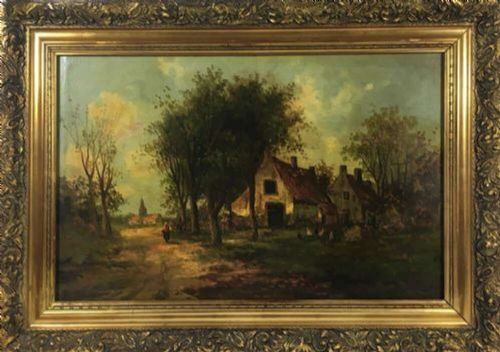
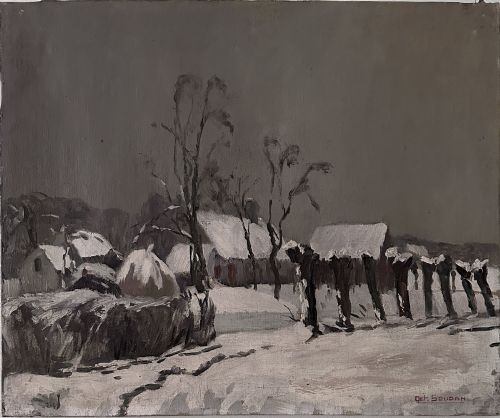
Rural village oil artwork captures pastoral settlements, farmyards, and country lanes through painted canvas. These works span the nineteenth century into the mid-twentieth century, recording agricultural life and domestic scenes in oils.
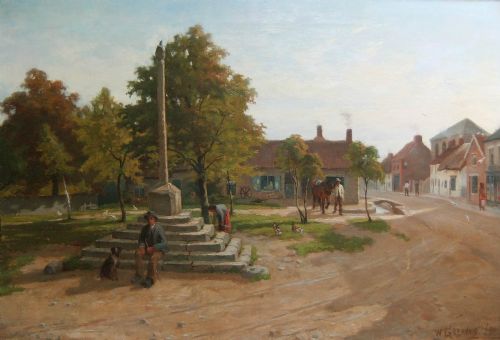
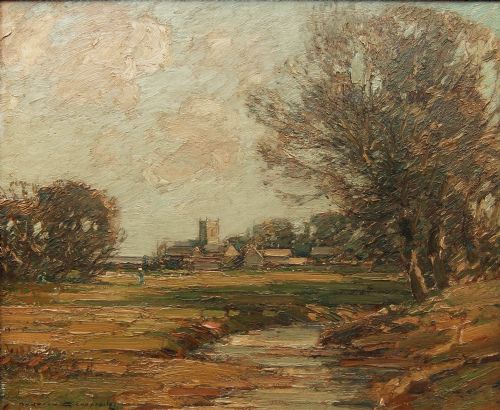
The selections on this page include British and European views rendered in Victorian, Impressionist, and Post-Impressionist modes. Most examples depict cottages, village taverns, horses, and agricultural workers within framed compositions.
Buyers encounter formats ranging from intimate cabinet pieces to large landscape canvases. The subject matter centres on community life, fields, and rural architecture observed across changing seasons.
Materials and construction
These works utilise oil paint applied to woven canvas or wood panels. Artists built up textures using brushes and palette knives to render foliage, skies, and rustic buildings.
Many surviving pieces retain period frames fashioned from giltwood, wood, and gesso. These frames provide structural support while complementing the palette of the canvas within.
Several canvases quietly document nineteenth-century village taverns, horses, and children at village fairs.
Judging quality in rural village oil artwork
Quality rests upon the handling of light, atmosphere, and spatial depth by the painter. Stronger compositions demonstrate confident brushwork and a coherent tonal balance across the village scene.
The integrity of the canvas surface and the preservation of the original pigment layer influence the visual impact. Original period frames that match the age of the painting contribute further to the piece.
William Greaves·Charles Vickers·Kershaw Schofield·Joseph Thors·John Holland Snr·Georgina Lara·Eugene Battaille·Robert McGregor
The Rural Village Oil Artwork Glossary
- Oil paint
- A slow-drying medium composed of pigments suspended in a drying oil, typically linseed oil. This medium allows for rich blending and textured impasto applications.
- Giltwood
- Wood carved and coated with gold leaf or a gold-coloured metallic finish. It frequently forms the decorative border of period picture frames.
- Gesso
- A paint mixture consisting of a binder mixed with chalk, gypsum, or pigment. It prepares rigid surfaces and frames to receive gilding or oil media.
- Impressionism
- A nineteenth-century painting style characterised by relatively small, thin yet visible brush strokes and open composition. It emphasises accurate depiction of light in its changing qualities.
- Barbizon School
- A mid-nineteenth-century French art movement towards realism in landscape painting. Painters of this circle favoured direct observation of nature and rural subjects.
Rural Village Oil Artwork: Frequently Asked Questions
What periods do these paintings date from?
The available works span from the nineteenth century through the mid-twentieth century. Dates range from the 1860s up to the 1950s and 1960s.
Most pieces reflect Victorian realism or subsequent Impressionist movements. Each work carries the stylistic markers of its specific decade of execution.
How should I hang an oil painting?
Display paintings away from direct sunlight and steady moisture sources to protect the canvas and pigments. Secure the work using appropriate wall fixings suited to the weight of the frame.
Ensure the hanging height allows comfortable viewing at eye level. Check that the wall surface provides stable support for the frame.
What surfaces were used for these rural scenes?
Artists painted primarily on stretched canvas or wooden panels. These supports were selected for their stability and texture.
Many canvases remain housed within their original wooden and giltwood frames. The interaction between the support and the oil paint determines the surface texture.
How do I identify Impressionist village scenes?
Look for visible brush strokes and an emphasis on natural light rather than rigid fine detail. The palette often captures outdoor atmospheric effects across fields and village streets.
Subjects typically include rural landscapes, cottages, and figures engaged in daily agricultural labour. These pieces rely on colour relationships to define form.