







Rural River Landscape Art
Rural river landscape art captures quiet valleys, winding streams, and traditional countryside scenes across canvas and paper.
Rural River Landscape Art
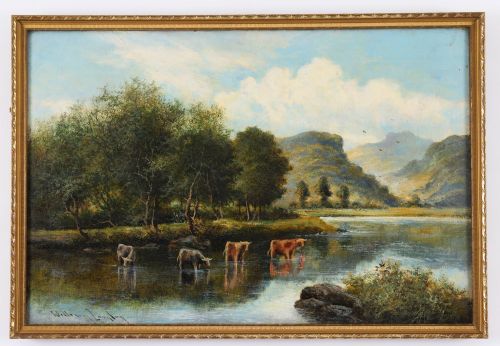
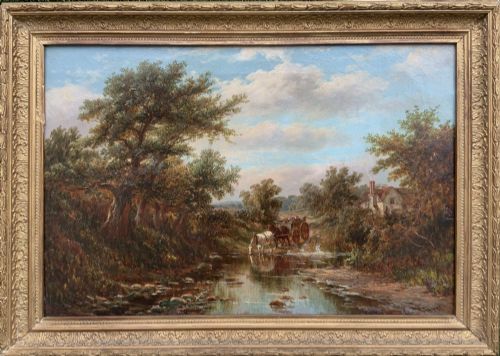
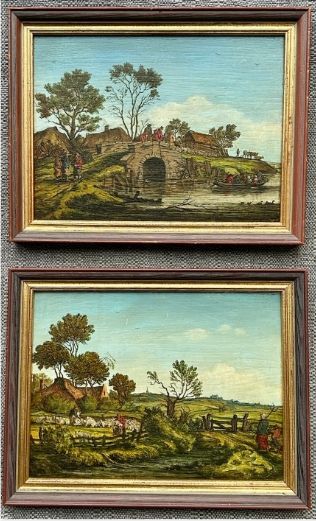
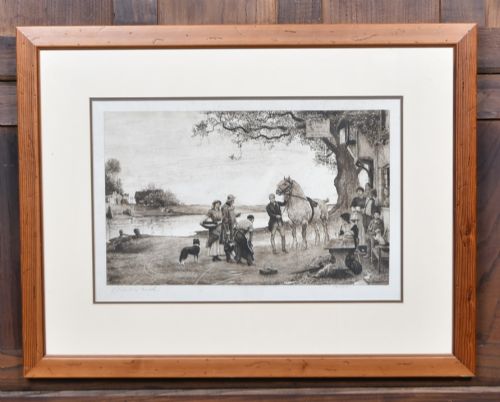
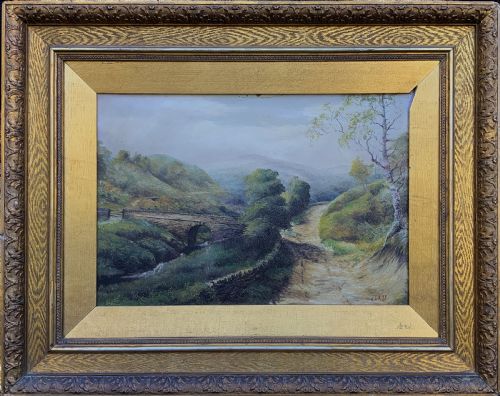
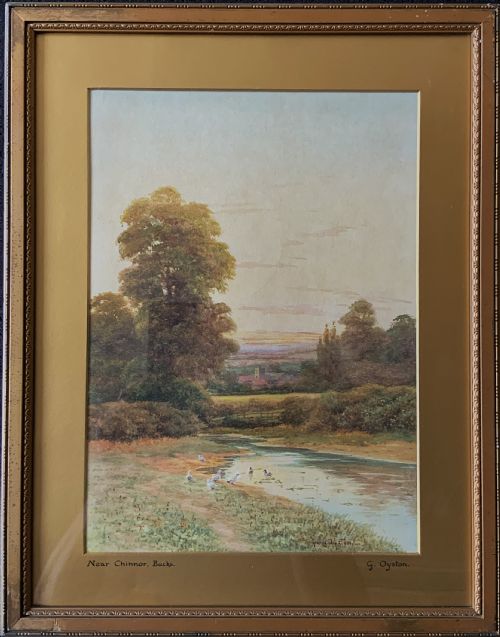
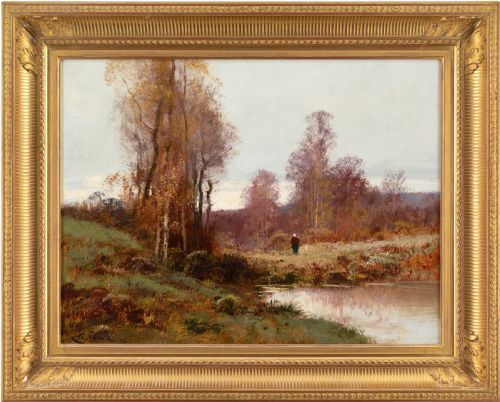
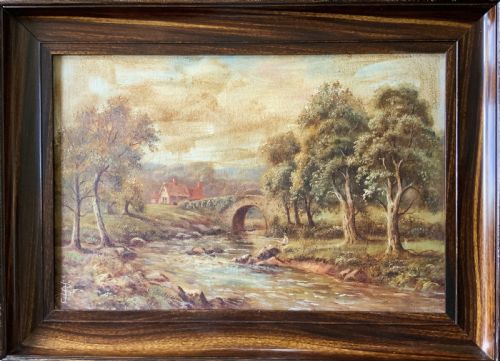
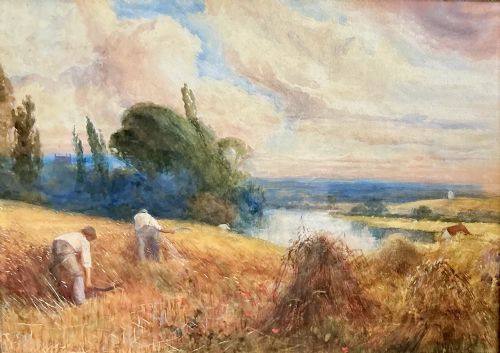
Rural river landscape art depicts pastoral waterways, riverbanks, and countryside views created during the nineteenth and early twentieth centuries. These works record quiet rural scenes, often featuring figures fishing, harvesting, or crossing bridges near streams. Works meeting this search phrase range from intimate watercolours to substantial framed oil paintings on canvas and wood panels.
The most common pieces on this page originate from the Victorian and Edwardian periods, alongside early twentieth-century examples. British and French schools dominate the selection, portraying local rivers such as the Kennet and the Cam alongside rural cottages and fenland views.
How they were made
Artists applied oil paint or watercolour onto prepared canvas, paper, or wood panels. Oil paintings utilise thick pigments to build texture on canvas, whereas watercolours rely on fluid washes applied to paper.
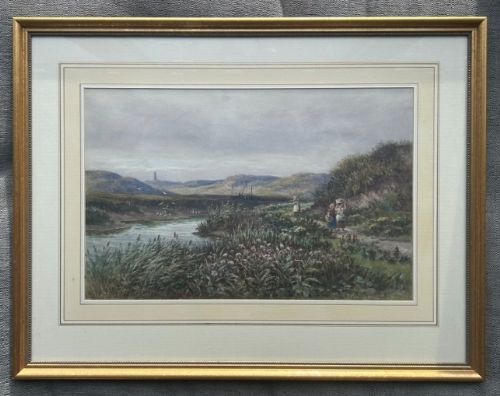
Finished works sit within protective frames constructed from wood, frequently finished with gilt decoration or glass panes to preserve the fragile paper surfaces of watercolours.
Rural River Landscape Art Retail Price Guide 2026
Typical asking prices for rural river landscape art among the pieces listed under this phrase on Sellingantiques today, from the lower quarter to the upper quarter. They describe what is for sale here now, not the wider market.
Listings span the nineteenth and twentieth centuries, incorporating Victorian, Edwardian, and Post-Impressionist styles.
What varies in quality
Quality rests upon the artist's handling of light, atmosphere, and natural detail within the rural setting. Stronger pieces demonstrate confident brushwork, balanced composition, and a convincing sense of depth along the riverbank.
The condition of the canvas or paper, the preservation of the original pigments, and the suitability of the period frame further distinguish individual works.
George Graham·Robert W Macbeth·George Oyston·Frederick Hines·Sydney Yates Johnson·John Horace Hooper·Charles Clair·Colin H Greenwood·Robert Winchester Fraser·William Joseph Boyes·William Langley·William Manners·Thomas James Lloyd·Gudrun Sibbons·Abraham Hulk Junior·Harry Pennell·William Hoggatt·Thomas Pyne·William Sidney Cooper·Alois Arnegger·George Turner·Henry John Sylvester Stannard·Sir Ernest Albert Waterlow·Henry John Kinnaird·Henry H Parker
The Rural River Landscape Art Glossary
- Oil on Canvas
- A painting medium where pigments bound in drying oil are applied to stretched woven fabric. This combination allows for rich colour blending and textured brushwork.
- Watercolour
- A painting method where coloured pigments are suspended in a water-soluble binder on paper. It produces translucent washes of colour well suited to delicate atmospheric effects.
- Wood Panel
- A rigid wooden support used by artists instead of canvas. These panels provide a smooth, stable surface for detailed landscape painting.
- Gilt Wood
- Timber framing finished with a thin layer of gold leaf or metallic gilding. It provides a traditional decorative border for antique artworks.
- British Impressionism
- An artistic movement focusing on light and everyday subjects outdoors. Practitioners captured changing daylight across rural river scenes.
Rural River Landscape Art: Frequently Asked Questions
What periods do these paintings come from?
The works span from the nineteenth century through the early twentieth century, encompassing the Victorian and Edwardian eras. Many pieces date specifically between the eighteen-eighties and nineteen-twenties.
This timeframe represents a period when landscape painting flourished across Britain and Europe, capturing rural life before industrial expansion.
Are these paintings original artworks?
The collection consists of original hand-painted works rather than modern mass-produced reproductions. Artists created these pieces directly on canvas, paper, or wood panels using traditional oil and watercolour techniques.
Signatures, dates, and inscriptions found on many of the items further confirm their unique, period origin.
How should I display watercolour paintings?
Watercolours require careful placement away from direct sunlight to prevent the pigments and paper from fading over time. Glazing with glass helps protect the delicate painted surface from atmospheric moisture and dust.
Keeping them in stable indoor humidity conditions ensures the paper remains flat within its frame.