





Blue Sky Pastoral Painting
Blue sky pastoral painting captures rural life under open skies through watercolours and oils from the nineteenth and early twentieth centuries.
Blue Sky Pastoral Painting
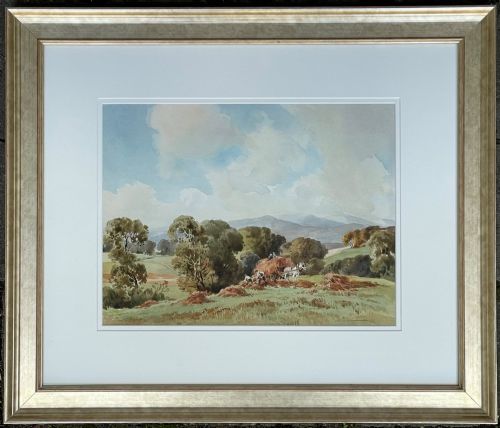
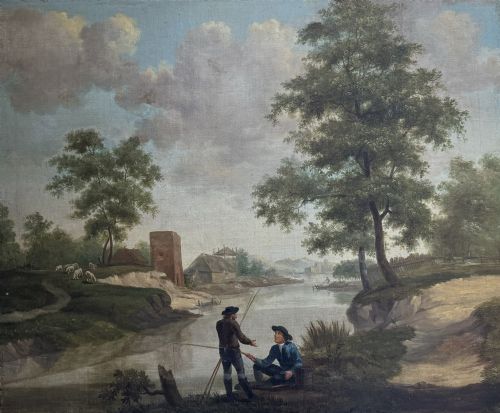
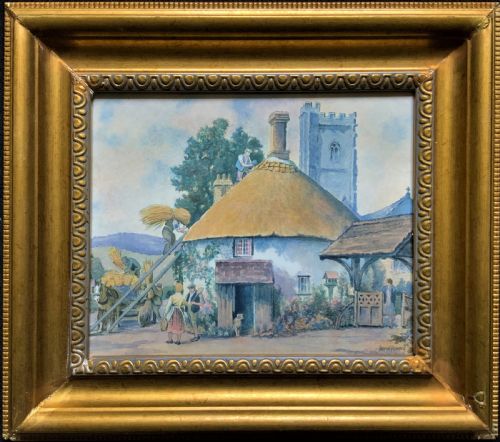
A blue sky pastoral painting portrays open fields, river estuaries, and rural cottages under expansive atmospheric skies. These works record agricultural scenes, livestock, and country life across Britain and France.
The selection on this page relies primarily on nineteenth-century and early twentieth-century examples, spanning Victorian, Edwardian, and British Impressionist traditions. Watercolours on paper and oil paintings on canvas or panel dominate the formats encountered.
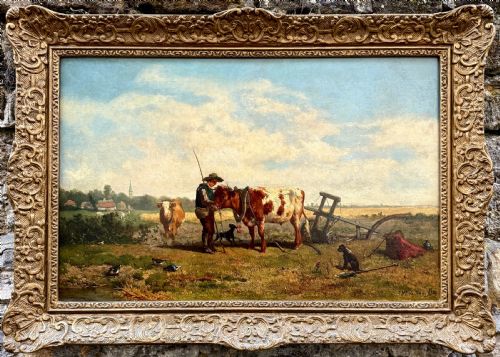
Rural landscapes frequently incorporate agricultural workers, horses, carts, and herds of cattle or sheep set against rolling hills and wide horizons. Such works capture a specific mood of quiet daylight and agricultural labour.
How they were made
Artists painted these rural scenes using watercolours on paper or oil pigments applied to canvas, wood panels, and paper supports. Watercolour pigment allows for transparent washes to build bright, luminous skies, whilst oil paint provides heavier texture and deeper tone.
Works on paper were typically mounted, glazed, and housed within wood frames to protect the delicate medium from moisture and light damage. Oil paintings on canvas stretched across wooden frames or applied directly to wood panels offered greater durability for larger landscape compositions.
Blue Sky Pastoral Painting Retail Price Guide 2026
Typical asking prices for blue sky pastoral painting among the pieces listed under this phrase on Sellingantiques today, from the lower quarter to the upper quarter. They describe what is for sale here now, not the wider market.
Several sheep, cows, and a solitary pet rabbit manage to photobomb the pastoral scenery across these nineteenth-century views.
What varies in quality
Quality rests upon the artist's handling of atmospheric light, cloud structure, and the natural interaction between the sky and the landscape below. Skilled brushwork brings movement to foliage and livestock, whereas lesser examples rely on stiff repetition and flat washes.
Compositional balance distinguishes accomplished paintings from routine topographical records, with superior pieces guiding the viewer's eye naturally across the horizon and into the middle distance. The preservation of the original pigment, paper stability, and the integrity of the canvas surface also influence the standing of each work.
Percy Lancaster·Johannes de Haas·Philip Richard Morris·Cornelius Pearson·Henry John Kinnaird·James William Booth·William Sydney Cooper·George Vicat Cole·Frederick W. Jackson·Florence Hess·William Greaves·Bernard Walter Evans·Will Anderson·Basil Bradley·Peter Jackson·Frederick J. Knowles·Henry Sylvester Stannard·Frederick George Coleridge·Thomas Rose Miles·Sir Ernest Albert Waterlow·Herbert Royle·John J. Hamer·David Heward·Jessie Hall·James Orrock
The Blue Sky Pastoral Painting Glossary
- Watercolour
- A paint consisting of colour suspended in a water-soluble vehicle, commonly applied to paper supports. It permits translucent layers that suit bright atmospheric effects.
- Pastoral
- A genre of art depicting the rural life of shepherds, farmers, and agricultural workers in natural landscapes. These scenes emphasise tranquility and traditional country routines.
- Oil on canvas
- Pigments bound in a drying oil applied to a stretched woven fabric support. This medium allows for rich colour blending and textured impasto surfaces.
- British Impressionism
- A late nineteenth and early twentieth-century painting movement focusing on everyday subject matter and natural light. Artists worked outdoors to capture fleeting weather conditions.
- Panel
- A flat piece of wood used as a rigid support for oil paintings prior to or alongside the adoption of canvas. Panels provide a smooth, stable surface for fine detail work.
Blue Sky Pastoral Painting: Frequently Asked Questions
How do I care for antique watercolours?
Watercolour paintings require protection from direct sunlight to prevent the pigments and paper from fading over time. Keep them in rooms with stable humidity levels to avoid warping or foxing on the paper support.
Ensure the glazing remains intact and sealed to keep dust and atmospheric pollutants away from the painted surface. Professional framing with acid-free mounts preserves the longevity of works on paper.
What defines a pastoral landscape?
A pastoral landscape depicts rural scenes involving farming, livestock, and open countryside rather than urban or industrial views. These compositions often feature figures engaged in daily agricultural tasks beneath expansive skies.
The inclusion of animals such as sheep, cattle, and working horses serves to animate the countryside setting. Artists utilised these elements to evoke a sense of peaceful rural harmony.
How can I tell oils and watercolours apart?
Oil paintings feature a heavier, built-up paint texture that sits on top of canvas or wood panels, often showing visible brushstrokes. They generally possess a subtle sheen and do not require glass protection.
Watercolours present a flat, matte appearance where the pigment sinks into the absorbent paper fibres, allowing the white of the paper to illuminate the scene. These works are invariably framed beneath glass to protect the delicate surface.
Where were these landscape scenes painted?
Many nineteenth and early twentieth-century painters travelled across rural Britain and France to record specific agricultural regions and river valleys. Locations mentioned in titles include riverbanks, coastal estuaries, and country parishes.
Artists often worked <i>en plein air</i> to capture the changing light and local atmosphere of specific counties and rural communities. This direct observation grounds each landscape in a recognizable geographic setting.