




Rural Genre Scene Artwork
Rural genre scene artwork captures traditional country life, depicting everyday rustic moments through Victorian oils and watercolours that bring pastoral charm into modern spaces.
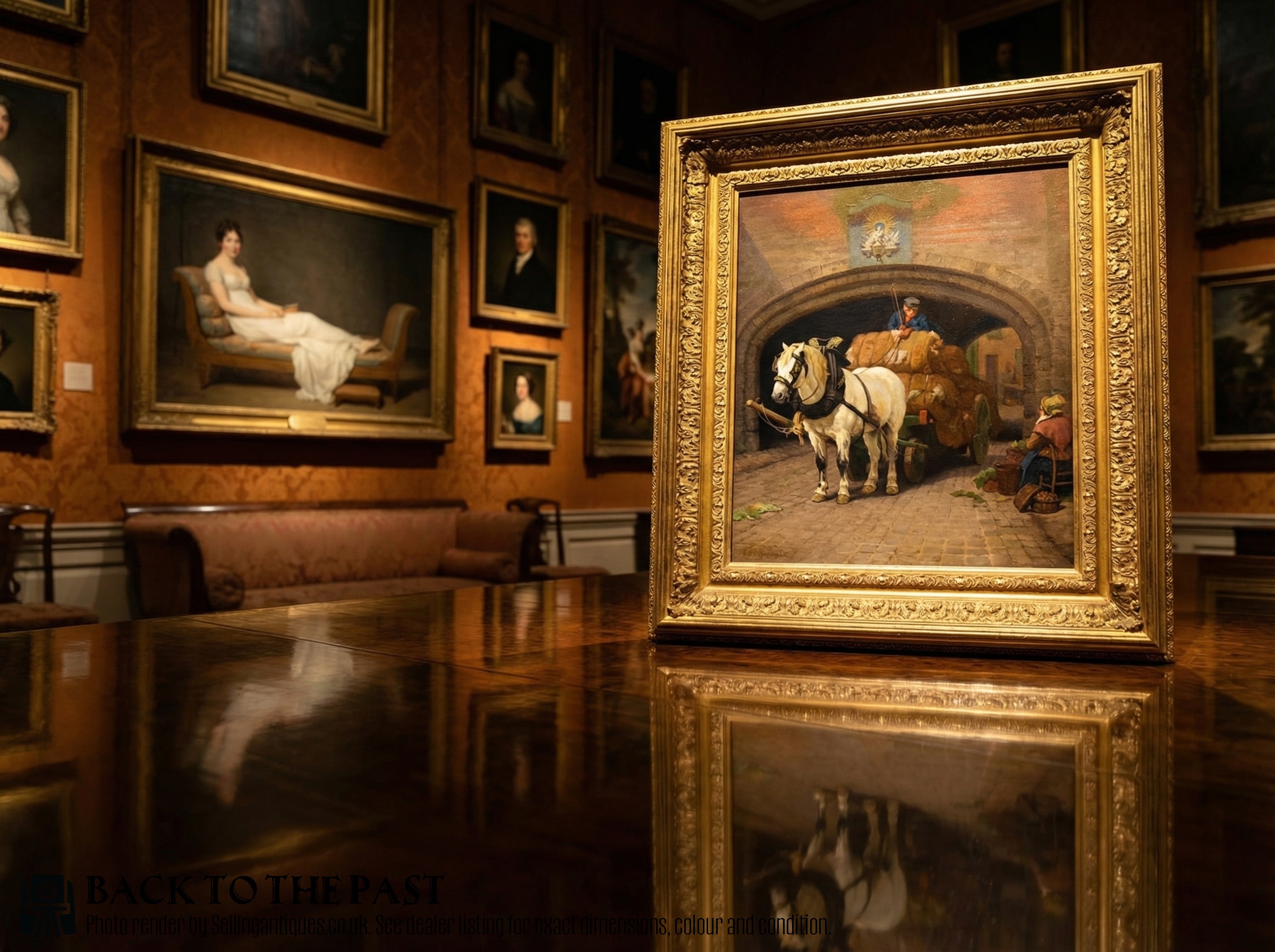
Rural Genre Scene Artwork
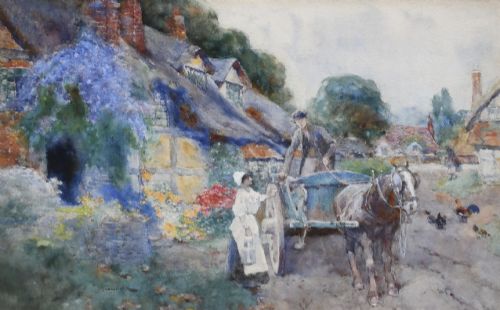
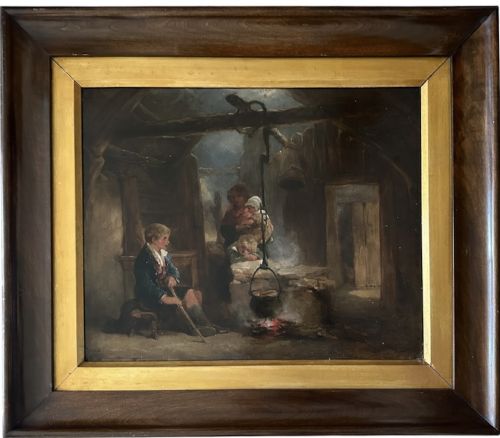
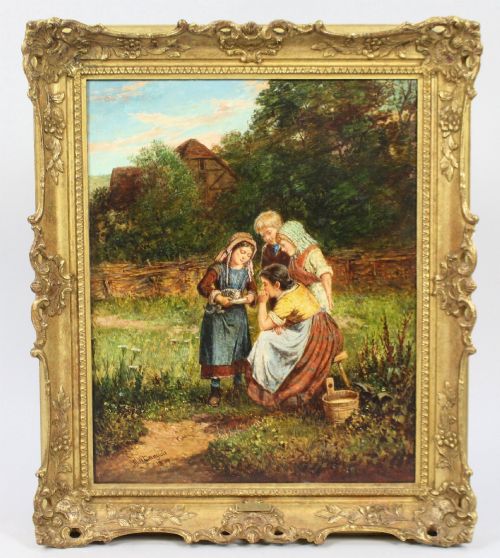
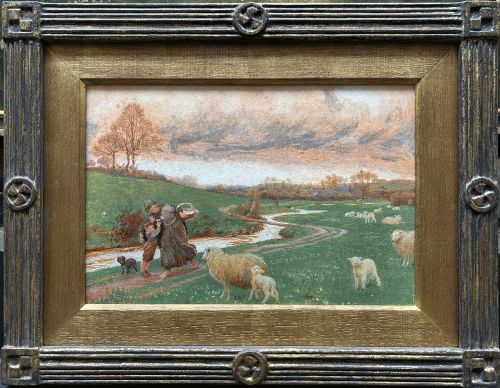
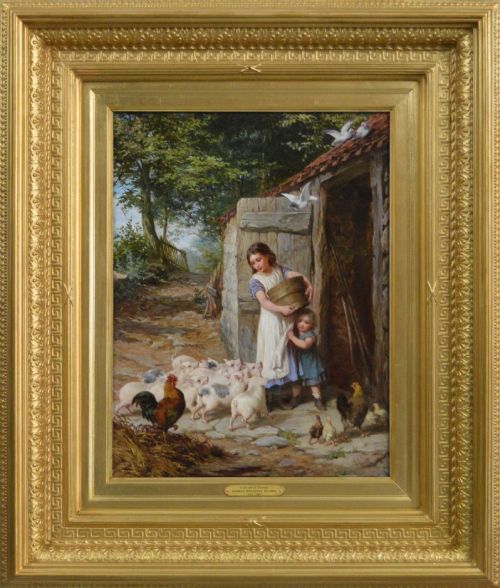
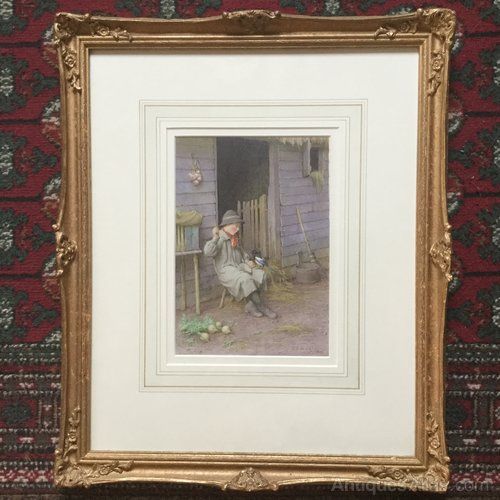
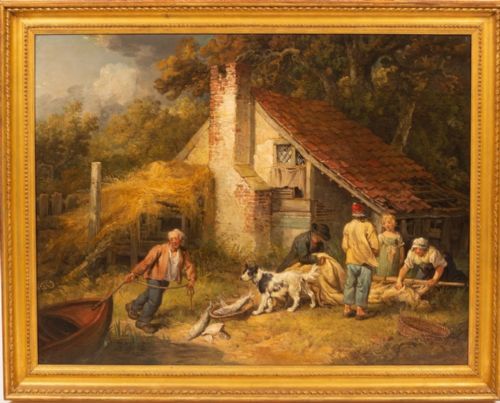
Rural genre scene artwork depicts figures engaged in daily country pursuits, farmyard chores, and cottage life across the eighteenth, nineteenth, and early twentieth centuries. These pieces typically portray children feeding animals, farm labourers at work, and domestic moments set against pastoral backdrops.
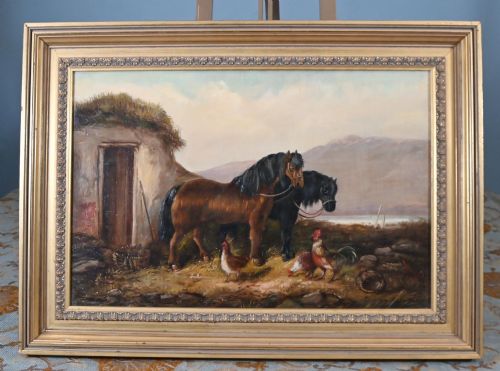
The works on this page appear primarily as oil paintings on canvas or board, alongside watercolours and lithographs from the Victorian and Edwardian periods. Common subjects include cottage doors, farmyards with horses and livestock, and children in village gardens.
Originating largely from British and English schools, these paintings reflect a historical fascination with idyllic country living. Collectors encounter both named academic artists and regional painters documenting traditional rural trades.
Materials and technique
Artists painted these rural scenes using oil paints on stretched canvas, wooden boards, or paper panels, often building rich textures with multiple layers of pigment. Watercolours on paper also feature prominently, requiring precise brushwork to capture natural light and atmospheric detail in cottage gardens and river landscapes.
The completed works were housed in period frames constructed from wood, gesso, and giltwood, frequently finished with gold leaf. These frames range from ornate Victorian mouldings to simpler linear surrounds that protect the painted surface.
Rural Genre Scene Artwork Retail Price Guide 2026
Typical asking prices for rural genre scene artwork among the pieces listed under this phrase on Sellingantiques today, from the lower quarter to the upper quarter. They describe what is for sale here now, not the wider market.
Pigs, poultry, donkeys, and goats regularly photobomb these serious Victorian agricultural scenes.
Factors determining quality
Quality rests in the handling of light, anatomical precision in figures and animals, and the depth of composition within the pastoral setting. Superior works demonstrate careful observation of texture in farmyard environments, fabric, and foliage.
The skill of the framing and the preservation of the original paint layer or watercolour pigment influence the overall integrity of the piece. Works by established Victorian practitioners command attention through accomplished draughtsmanship and balanced narrative detail.
George Whitton Johnstone·Mark William Langlois·George Augustus Holmes·Miles Birkett Foster·Charles Edward Wilson·James Kyd·Arthur Longley Vernon·Helena Maguire·Edward Brice Stanley Montefiore·John Henry Dell·George Kilburne·Daniel Pasmore·Alfred Banner·John Frederick Herring Jnr·Edward Killingworth Johnson·Robert McGregor·Arthur Claude Strachan·Henry Charles Bryant·William Stephen Coleman·James Ward·George Morland·Thomas Blinks·George Cole·Thomas Mackay·Charles Hunt Jnr
The Rural Genre Scene Artwork Glossary
- Genre painting
- Depiction of aspects of everyday life by depicting ordinary people occupied in common scenes. These works capture domestic interiors, agricultural labour, and village gatherings rather than grand historical or mythological narratives.
- Chiaroscuro
- The use of strong contrasts between light and dark, usually bold contrasts affecting a whole composition. This technique creates spatial depth and volume in cottage interior scenes.
- Gesso
- A plaster mixture used as a smooth base for painting or for moulding decorative details on picture frames. It provides a stable surface before the application of oil paint or gold leaf.
- Lithograph
- A print made from a method based on the immiscibility of oil and water. Artists used this technique to reproduce original paintings for wider distribution.
- Provenance
- The chronology of the ownership or location of a historical object. Documented history assists in confirming the authenticity and background of nineteenth-century artworks.
Rural Genre Scene Artwork: Frequently Asked Questions
What subjects appear in rural genre art?
These works feature farmyard animals, agricultural workers, children playing by cottage doors, and daily village activities.
Scenes range from blacksmiths at work to children feeding ducks and horses resting near barns.
How do I date a nineteenth-century painting?
Dating relies on artist signatures, framing styles, stretcher construction, and written records on the reverse of the canvas or board.
Victorian aesthetic choices in clothing and architecture depicted within the scene also offer chronological markers.
Where should I hang a framed oil painting?
Display these works away from direct sunlight, high humidity, and extreme temperature fluctuations to protect the canvas and giltwood frame.
Stable indoor wall spaces preserve the integrity of both the oil pigments and the wooden support structure.
What is the difference between an oil and a watercolour?
Oils use pigment suspended in drying oils on canvas or board, allowing for rich textures and deep colour layering.
Watercolours use water-soluble pigments on paper, producing lighter, translucent effects that require protective glass framing.
How do I care for antique gilt frames?
Dust giltwood and gesso frames gently with a dry, soft brush to avoid damaging the delicate gold leaf surface.
Avoid liquid cleaners and moisture, which can degrade the underlying gesso and cause the historic finish to flake.