

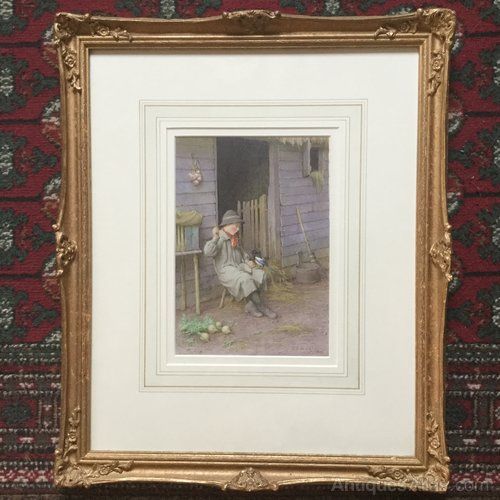


Rural English Watercolour
A rural english watercolour brings the historic countryside directly onto the wall through delicate pigments laid upon paper.
Rural English Watercolour
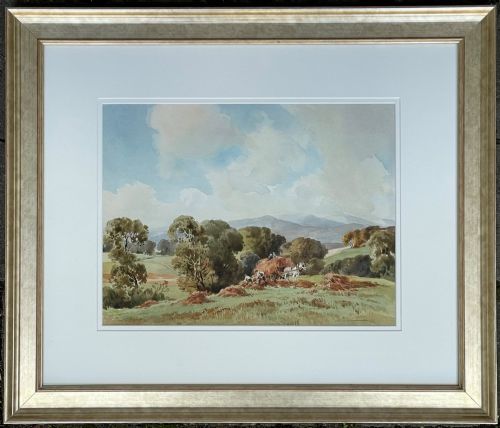
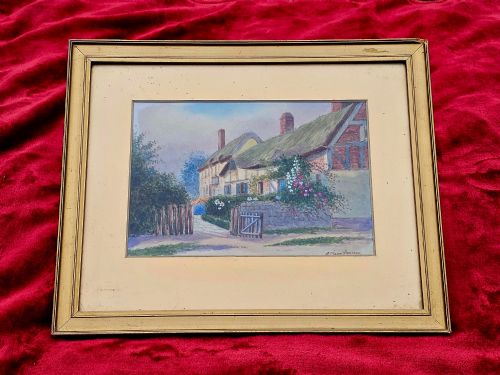
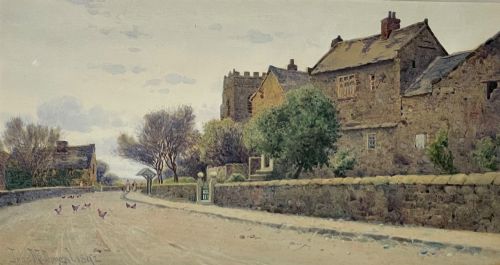
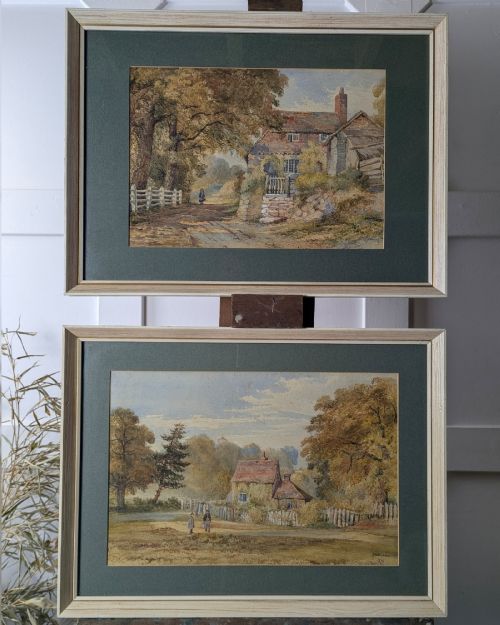
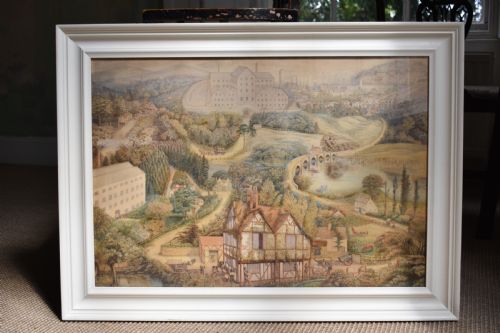
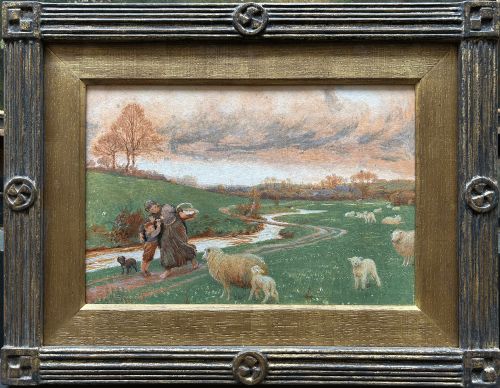
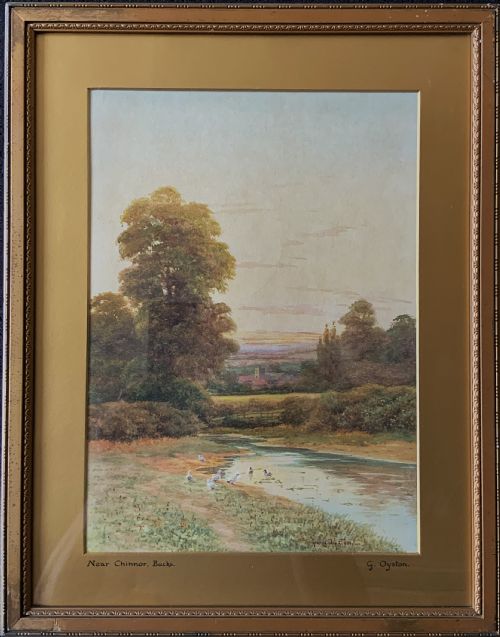
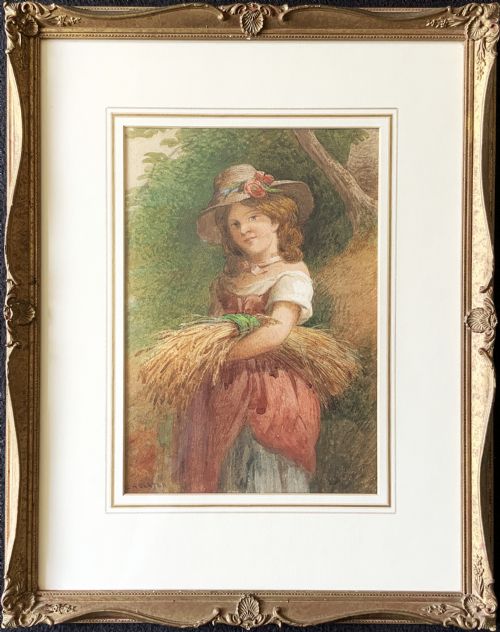
A rural english watercolour captures the traditional countryside through framed paintings, wall art, and fine art pieces created across the nineteenth and early twentieth centuries. These works frequently depict pastoral landscapes, village cottages, farmyards, and agricultural labour set within rural communities.
The selections available here range from nineteenth century depictions to early twentieth century examples, embracing Victorian, Edwardian, and British Impressionism styles. Buyers encounter both intimate village views and broader river landscapes signed by listed artists or presented as works of the English School.
Most pieces feature traditional framing utilising glass and wood, occasionally incorporating gold leaf or gilt wood surrounds. The subjects focus closely on the agrarian rhythm of the countryside, showing figures at work, livestock near pools, and pastoral scenes.
Quality and Execution
The strength of a rural english watercolour rests upon the artist's handling of light, atmosphere, and spatial depth within the pigment. Superior examples demonstrate confident brushwork and precise draughtsmanship that bring the landscape and figures to life without stiffness.
Condition and preservation play a vital role, particularly the stability of the paper support and the retention of vibrant pigment tones beneath the glass. Original framing materials and clear attribution to a named painter or specific location elevate the standing of an individual work.
The listings span multiple decades from the nineteenth century into the twentieth, utilising paper, watercolour pigment, and gilt wood.
Percy Lancaster·A. Marie Parsons·John McDougal·Robert A. Nottingham·George Oyston·Charles Henry Slater·Herman S Melville·Edgar Woollatt·Henry Charles Fox·Cuthbert Crossley·Fred Lawson·James William Booth·James Orrock·James Hardy Junior·John Atkinson·Colin H Greenwood·Henry Bailey·Linnie Watt·Robert Winchester Fraser·William Joseph Boyes·John Edward Bale·Bernard Walter Evans·William Stephen Coleman·Harry Sylvester Stannard·Will Anderson
The Rural English Watercolour Glossary
- Watercolour Pigment
- Finely ground colour particles mixed with a water-soluble binder for painting on paper. This medium allows for subtle washes and layered atmospheric effects.
- Gilt Wood
- Wood carved or moulded and coated with a thin layer of gold leaf or metallic paint. It frequently surrounds these paintings to enhance their historical presentation.
- Victorian Pastoral
- An artistic style celebrating rural life, agriculture, and pastoral scenery during the nineteenth century. These subjects idealise the peace and labour of the English countryside.
- British Impressionism
- A painting movement focusing on light, everyday subjects, and loose brushwork adapted from French techniques. Artists working in this manner prioritized outdoor observation.
- English School
- A collective term for artists trained or working within Britain who shared similar stylistic approaches. Many historical watercolours lacking a specific attribution are assigned to this designation.
Rural English Watercolour: Frequently Asked Questions
How should I frame and hang my watercolour?
Watercolours require conservation framing behind glass to protect the delicate pigments from dust, handling, and atmospheric moisture. Hang them away from direct sunlight to prevent the watercolour pigments from fading over time.
Selecting a simple wooden frame or a traditional gilt surround helps maintain the historical character of the artwork. Ensure the paper does not touch the glass directly by using a mount or spacer.
How do I identify the period of a landscape painting?
Stylistic clues within the landscape, such as the clothing of figures, agricultural methods, and architectural details, often point towards a specific era. Edwardian pieces frequently display a lighter palette and looser brushwork compared to tighter Victorian compositions.
Signatures, dates inscribed on the reverse, and framing styles also offer reliable evidence for dating the work. Comparing the handling of light and subject matter to known dated pieces helps narrow the timeframe further.
What subjects are typical in these pastoral scenes?
Artists frequently recorded everyday rural activities such as haymaking, tending livestock, and working horses alongside carts. Village cottages, country lanes, and river views near recognizable locations also feature prominently.
These compositions reflect a deep Victorian and Edwardian interest in preserving traditional agrarian life before rapid industrialization. Figures in the landscape are usually integrated naturally into the surrounding countryside.
Are these paintings usually signed by the artist?
Many works bear the artist's signature, often initialed or written clearly in the corner of the paper. Signed watercolours provide a direct link to the creator and allow for easier attribution.
Unsigned pieces are frequently attributed to the broader English School based on their technique, period materials, and regional style. Both signed and unsigned works offer genuine examples of historic landscape art.