



Rural English Countryside Painting
A rural english countryside painting captures the quiet agricultural life and quiet villages of past centuries, offering collectors a window into historical landscapes.
Rural English Countryside Painting
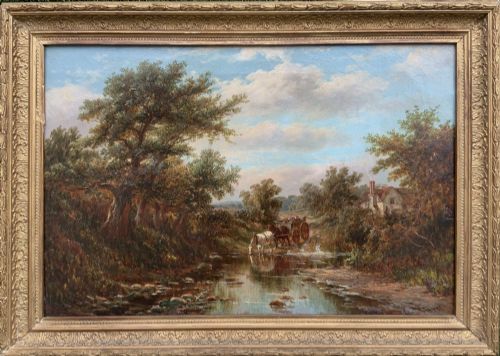
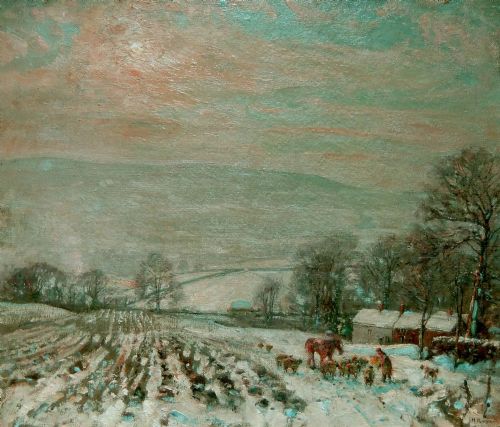
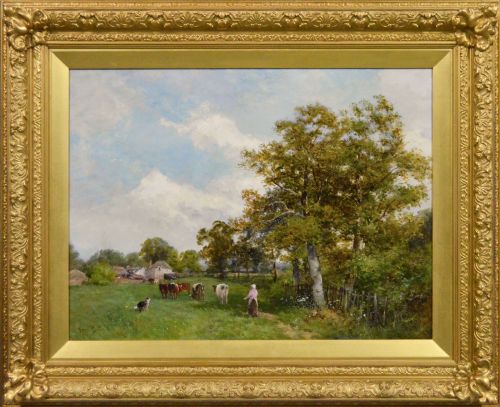
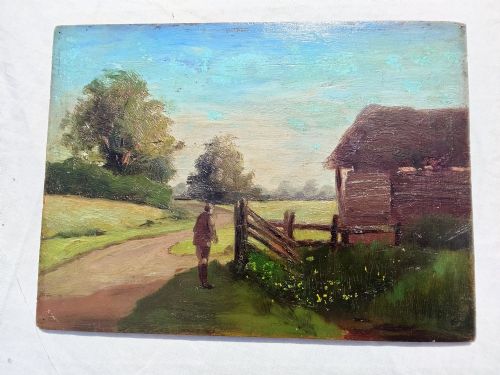
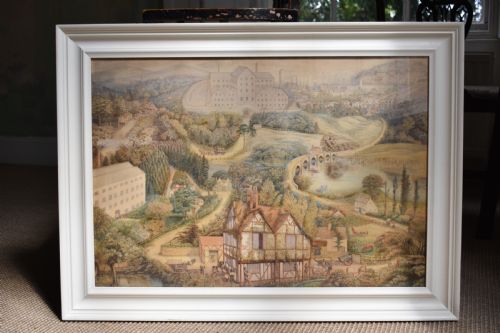
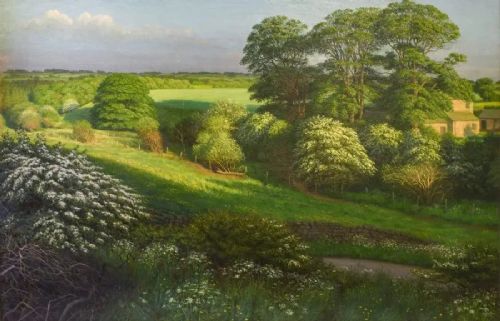
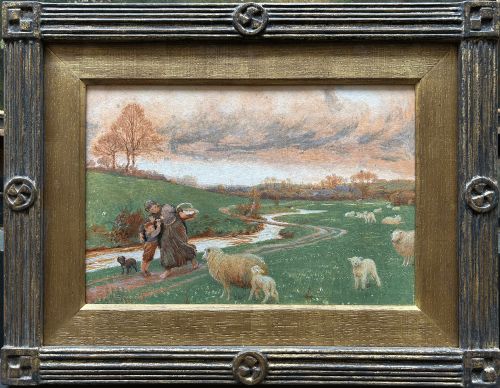
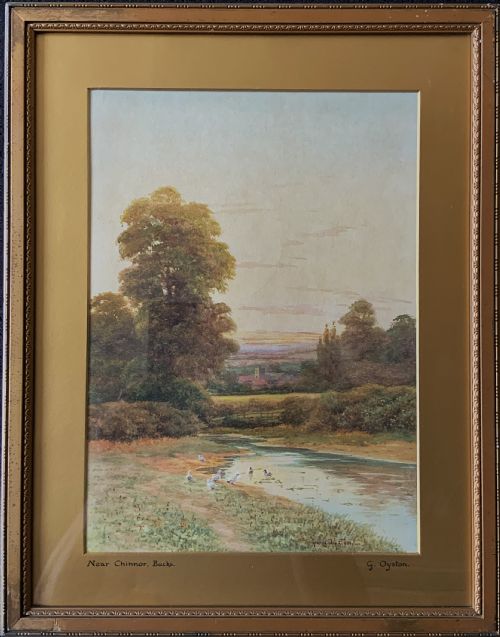
A rural english countryside painting typically portrays agricultural vistas, river scenes, farmsteads, and pastoral workers across the British Isles. These works capture the changing light and seasonal labours of rural life from the Victorian era into the twentieth century.
Collectors encounter pieces spanning from nineteenth-century academic works to Edwardian watercolours and British Impressionist canvases. The most frequent subjects feature cottages, grazing livestock, harvest scenes, and quiet country lanes rendered in oils or watercolours.
The regional diversity is wide, recording specific locations in Yorkshire, Nottinghamshire, Dorset, and Kent. Each rural english countryside painting reflects the distinct topography and atmosphere of its particular geographic setting.
How They Were Made
Artists worked primarily with oil paint on canvas or wooden board, and watercolour pigment on paper. These materials allowed painters to capture both the rich, heavy textures of farmland and the transparent, delicate atmospheric effects of skies and water.
Paint was applied using traditional brushwork techniques, sometimes influenced by the Barbizon school or British Impressionism. Framing in wood protected the paper and canvas supports, preserving the delicate layers of paint down to the present day.
Listings feature paper, canvas, and glass, spanning the nineteenth century through the Edwardian period.
What Varies in Quality
Quality rests in the artist's handling of light, perspective, and atmospheric depth within the landscape. Superior works demonstrate a confident command of colour and brushwork that brings movement to foliage, water, and livestock.
The specificity of the subject and the strength of the composition distinguish finer examples from standard topographical views. A well-executed rural english countryside painting balances naturalistic detail with a harmonious overall mood.
David Bates·George Oyston·Herbert Royle·John Linnell·Henry Charles Fox
The Rural English Countryside Painting Glossary
- Watercolour
- A paint consisting of colour ground with a water-soluble binder, typically used on paper supports. It allows for luminous washes and delicate detail in landscape depictions.
- Oil on canvas
- A mixture of pigment and drying oil applied to a woven fabric surface stretched over a wooden frame. This medium permits rich textures and deep colour saturation.
- British Impressionism
- An artistic movement focusing on light, everyday subjects, and open-air painting. Practitioners in this style sought to capture the immediate visual impression of a scene.
- Pastoral
- Pertaining to the countryside, agriculture, and the life of shepherds or farm labourers. These scenes romanticise rural simplicity and agrarian traditions.
- Provenance
- The documented history of ownership of an artwork. Clear provenance assists in verifying the authenticity and origin of a historical painting.
Rural English Countryside Painting: Frequently Asked Questions
What periods do these paintings cover?
The available works span from the nineteenth century through the Edwardian era up to the 1930s. They encompass Victorian pastoral traditions and early twentieth-century British realism.
Changes in artistic style reflect the evolution of landscape painting across these decades. Artists shifted from formal academic compositions toward freer interpretations of natural light.
Which mediums were commonly used?
Painters utilised oil paint on canvas or wooden boards alongside watercolour pigment on paper. Each medium offered distinct properties for capturing rural scenes.
Oils provided rich textures suited to heavy foliage and livestock, while watercolours excelled in rendering luminous skies and soft atmospheric weather.
How do I identify different regional settings?
Many works include inscriptions on the reverse or titles noting specific counties such as Yorkshire, Nottinghamshire, Kent, and Dorset. The local architecture and topography also offer clues to the location.
Artists frequently recorded recognisable landmarks, farmsteads, and rivers that anchor the painting to a precise geographic place.
How should I care for antique paintings?
Paintings on paper and canvas require protection from direct sunlight and excessive humidity to prevent fading and degradation. Stable indoor environments preserve the integrity of both pigments and supports.
Glazed watercolours benefit from framing with conservation-grade materials. Unframed canvases should be kept away from extreme temperature fluctuations.